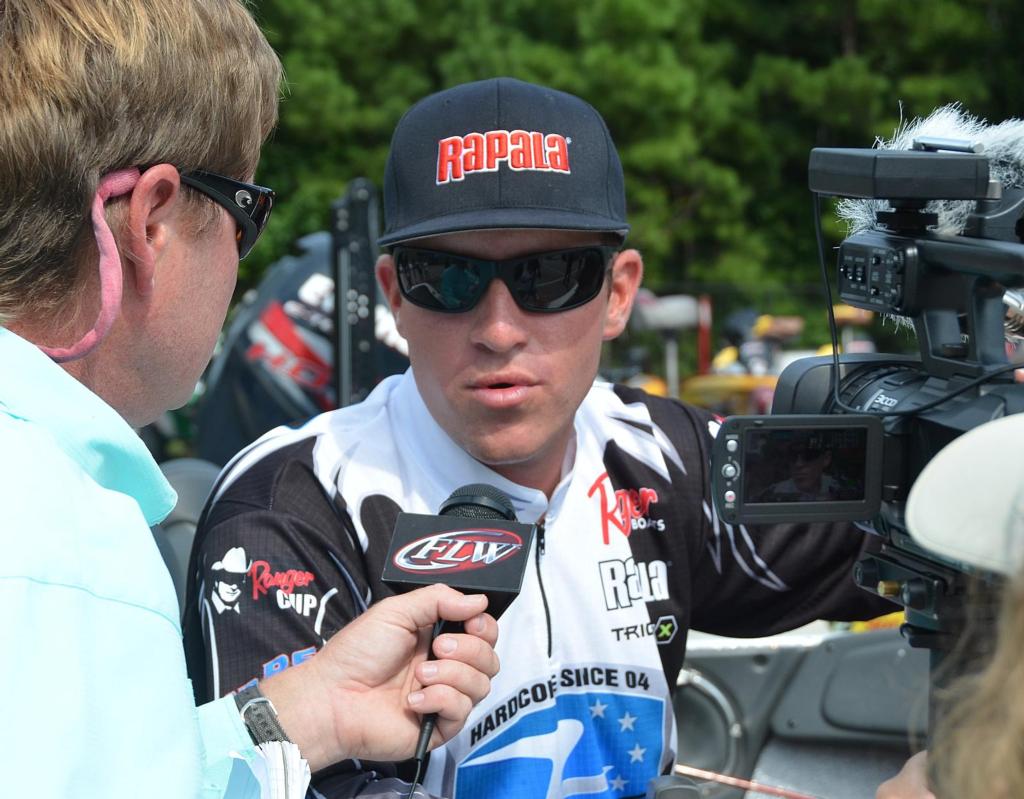
I have interviewed quite a few tournament-winning pros while working for FLW, and under the crunch of deadlines I’ve developed a four-question method for quickly getting to the heart of a pro’s winning program.
Here are the four questions I ask a professional angler after he wins a tournament: (1) What did you expect to find in practice before you arrived? (2) What did you find in practice? (3) How did you use your practice information to decide on the best program for the tournament? (4) How did you execute in the tournament?
With those four questions, I learn from No. 1 what the pro knew about a lake’s current conditions, forage, spawning stage, etc., and how he used that information to begin the search. No. 2 is where I learn how he broke down the lake and deciphered the clues being gathered along the way. No. 3 explains the output as a result of practice, and how he used his clues to create a game plan. The last question tells me what went right and wrong during the event, and also reveals his decision-making and major pattern changes.
Of course I ask a lot of follow-up questions, but those four are the core of putting together a post-tournament story. And really, it’s a good set of questions to ask yourself after every tournament, whether it’s a tour event or a $20 jackpot tournament against your buddies.
The questions reveal problems in your strategy, like fishing with preconceived notions about what the pattern should be but not having an open mind. Reviewing where you looked in practice might also reveal where you didn’t look. You can compare what you did with what the winner did, or what lures the winner used. I often find myself looking back on recent fishing trips and realizing that I should have tried a different lure or presentation, but in the moment on the water that lure never crossed my mind.
They say hindsight is 20/20, which suggests that there’s nothing you can do about the past. That’s true, but the past teaches us a lot about the future. And if we treat every tournament as a lesson, win or lose, we all have a lot we can learn. That starts with questioning what you saw and did out there on the lake.