BYRDSTOWN, Tenn. — On March 1 and 2, Dale Hollow Reservoir on the Tennessee-Kentucky border will host not one but two divisions of the Phoenix Bass Fishing League Presented by T-H Marine. On Saturday, the Mountain Division kicks off its season for the first of two consecutive trips to Dale Hollow. On Sunday, it’ll be the Music City Division opener (before a second trip to Dale Hollow and another double-header weekend with the Mountain Division on the Cumberland River impoundment March 22-23).
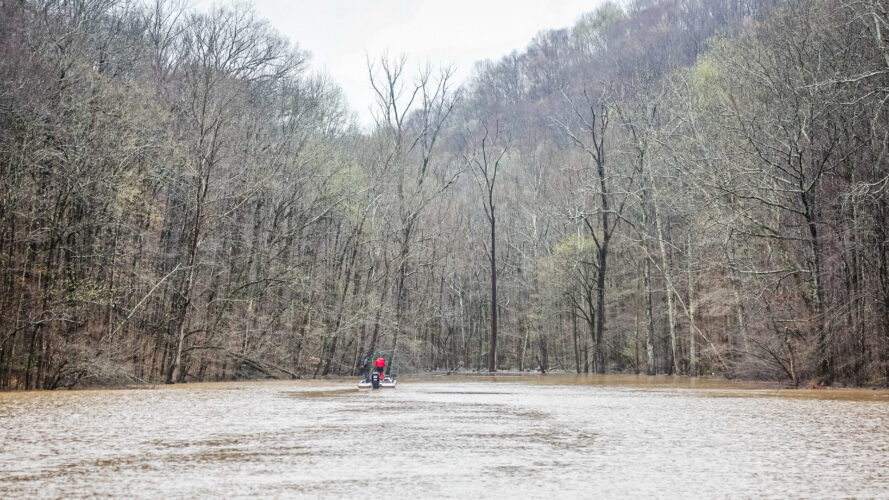
Historically, this time of year is often met with wildly unpredictable conditions – sometimes, it’s low lake levels and pleasant weather; other times it’s high, muddy water and full-on winter freeze. It’s hard to predict the weather a week and a half out, but it’s safe to assume the water levels will be higher than average for late February, and there’s a good chance there won’t be a ton of clear water to be found.
Recently, massive amounts of rain soaked the region, closely followed by a light winter storm that added a couple inches of snow to the equation. At the time of publication, Dale Hollow is just a foot below summer pool (currently 650.10), and there’s a chance lake levels increase before they really start coming down.
What that means for the Mountain and Music City Divisions: Versatility and adaptability will be key.
*Sign-ups for these events are in full swing. In 2025, the BFLs feature an expanded slate of Regional events, which give anglers more chances to qualify for the All-American and further minimize travel costs. This expansion ensures that grassroots anglers can fish closer to home on lakes they know and love for a chance to win a $50,000 Phoenix 819 Pro bass boat with a 200-horsepower outboard as a boater and a new $20,000 cash award as a co-angler, plus qualification into the BFL All-American.*
What to expect

When Dale Hollow takes on a lot of water in a hurry, the playing field gets a lot bigger, but the fishable water can often shrink up a bit, at least according to Christian Nash. Nash, who will be fishing the Mountain Division tournament on Saturday of the double-header, lives about 15 minutes from the lower end of Dale Hollow and has seven Top 10s on the lake (including a win last year). He says stained or muddy water can really concentrate baitfish, bass and anglers in areas with clearer water.
“The muddy water can be a little challenging,” he says. “The lake will fish smaller. Unless someone can find a little area in a creek with clearer water, it’ll be won ‘Scoping.”
That’s not super unusual for Dale Hollow, but the primary reason for forward-facing sonar being so key this time of year is that the shad tend to be more concentrated in specific areas of the lake in late February – primarily the areas with a little stain on the water, but not too much. And right now, that’s a mid-lake area packed with great offshore fishing opportunities.
“Typically, in the lower end, the fish are harder to catch,” Nash said. “There’s good fish in that cleaner water, but you don’t have to always have to have cleaner water to ‘Scope. I don’t like ‘Scoping muddy water, but just a little bit of stain, some of the bigger fish will pull up in that stained water. The shad go to that stained water a little bit more right now, too.”
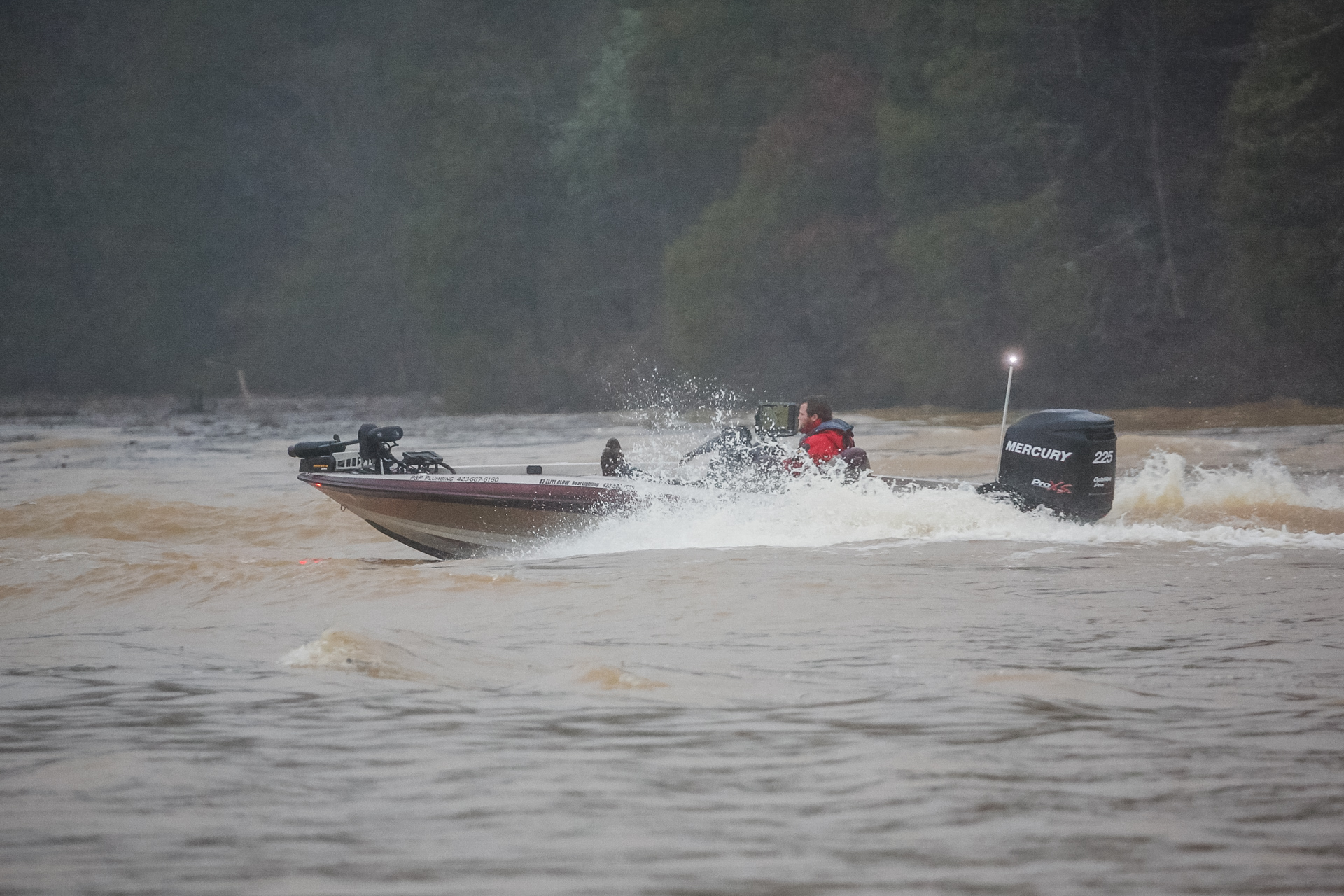
Still, there are always other patterns that play, especially on a lake with a healthy population of quality bass. Going upriver to flip and crank is always a popular tactic no matter the conditions, and Nash says there’s still the possibility that cranking and jerkbaits in the backs of some creeks could play. Additionally, while a lot of the shallow grass on Dale Hollow is all but gone thanks to the winter drawdown, there’s still some deep grass to be found, and brushpiles are a popular option for many.
As for baits, the ‘Scoping crowd will no doubt want to lean on jighead minnows, umbrella rigs and jerkbaits while crankbaits (including lipless crankbaits), jigs, vibrating jigs and spinnerbaits often play well in more traditional fishing scenarios.
Regardless of preferred tactics, Nash believes it’ll take 20-plus pounds for the win and somewhere around 18 pounds to get into the Top 10.
“You’re going to see some 20-pound bags brought in,” he says. “I don’t think you’ll see a lot of huge bags. I think 20, 21 pounds will be a good number and 18 or 19 will put you in contention. I don’t expect to see 23 or 24 pounds unless somebody gets lucky and catches some 6-pounders.”