
COLUMBIA, S.C. – The Phoenix Bass Fishing League All-American Presented by T-H Marine on Lake Murray was a classic herring-lake event in many ways. With the top anglers running points and triggering fish to eat on or near the surface, it was fast-paced for a lot of the field. However, run and gun wasn’t the only game plan – some anglers waited fish out on schooling points, and some mixed in alternative shallow fish.
Here’s what got it done on Murray.
1. Story wins with the classics
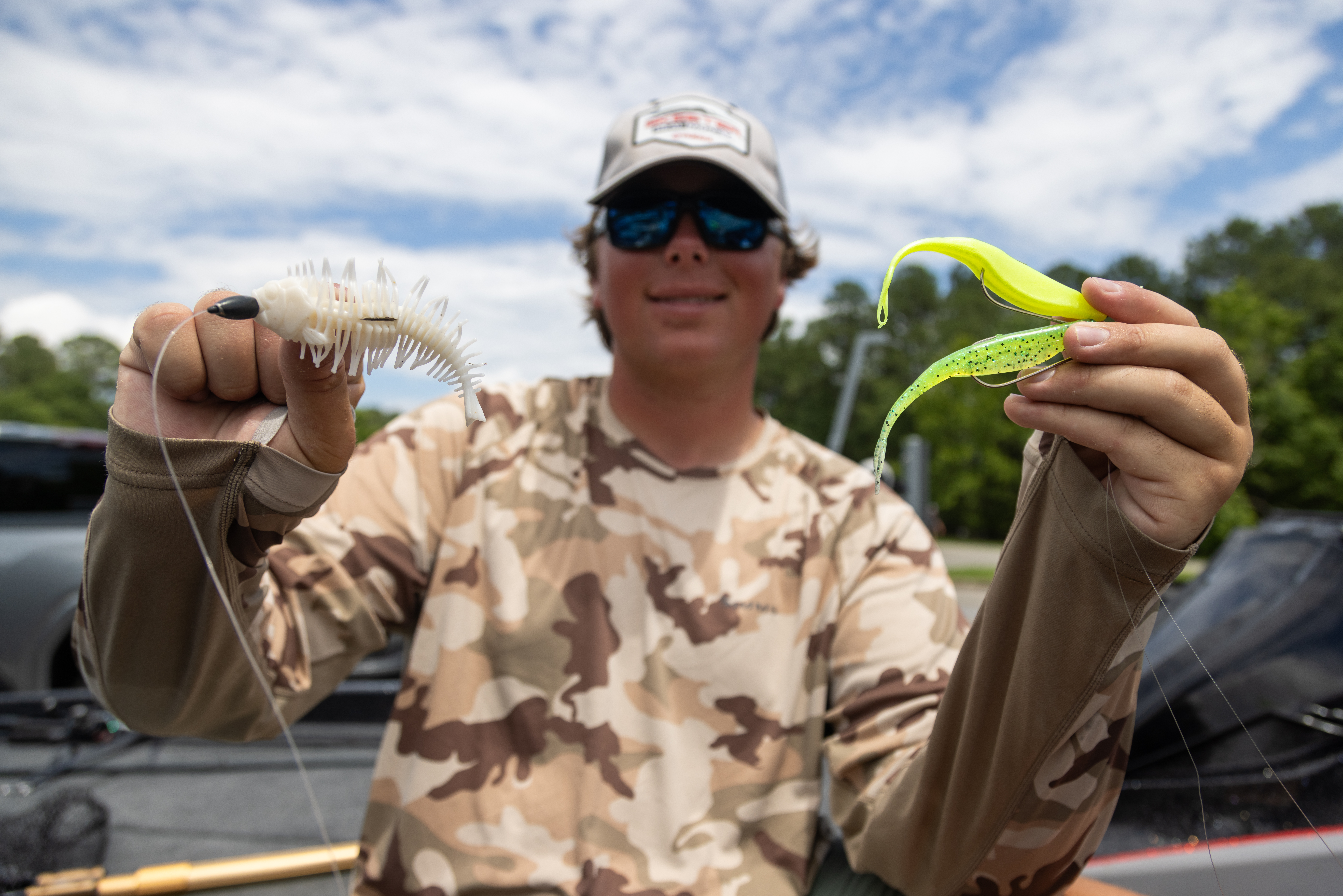
At 18 years old, Jack Story became the youngest ever to win the All-American, and he did it mostly with herring staples.
When he was fishing offshore for schooling bass, a Zoom Fluke in chartreuse or chartreuse herring did most of the damage for Story. On the final day, Story made his last cull with a bedding bass – likely one of the few left in Murray – and he pulled out a D-Style Geelacanth to do it.
2. Brooks Anderson mixes groups and brush
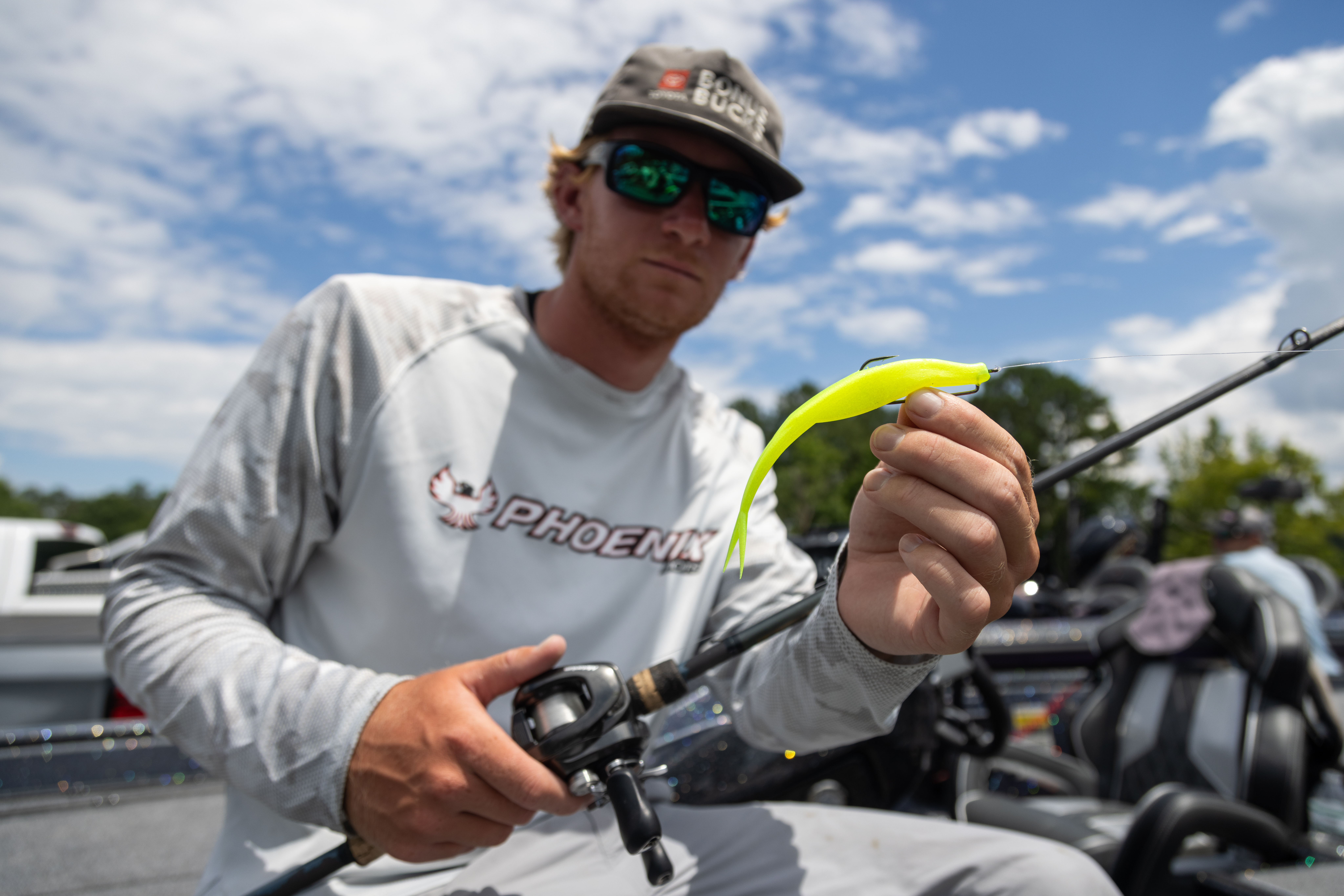
Catching 14 of his 15 fish on a Zoom Fluke in chartreuse, Brooks Anderson took his Lake Lanier skills to Murray with ease.
“I had a couple ideas going into the week,” Anderson said. “I pre-practiced for seven days or so; I marked a ton of brush, a bunch of cane. When I came back, those fish weren’t really in the piles. My game plan was to spend an hour or two every morning and blind cast on schooling fish. Then, I’d turn my ‘Scope on and make my rotations – mainly, I hit schools of fish not on brush. It seemed like every section of the lake had a few big schools. The final day, I checked some of the piles, and they were all over them that day.”
For his Fluke, Brooks Anderson used a 5/0 Gamakatsu Nano Alpha offset round bend hook and 14-pound Seaguar Tatsu.
3. Krej and a Jerk Shad work for Caz Anderson
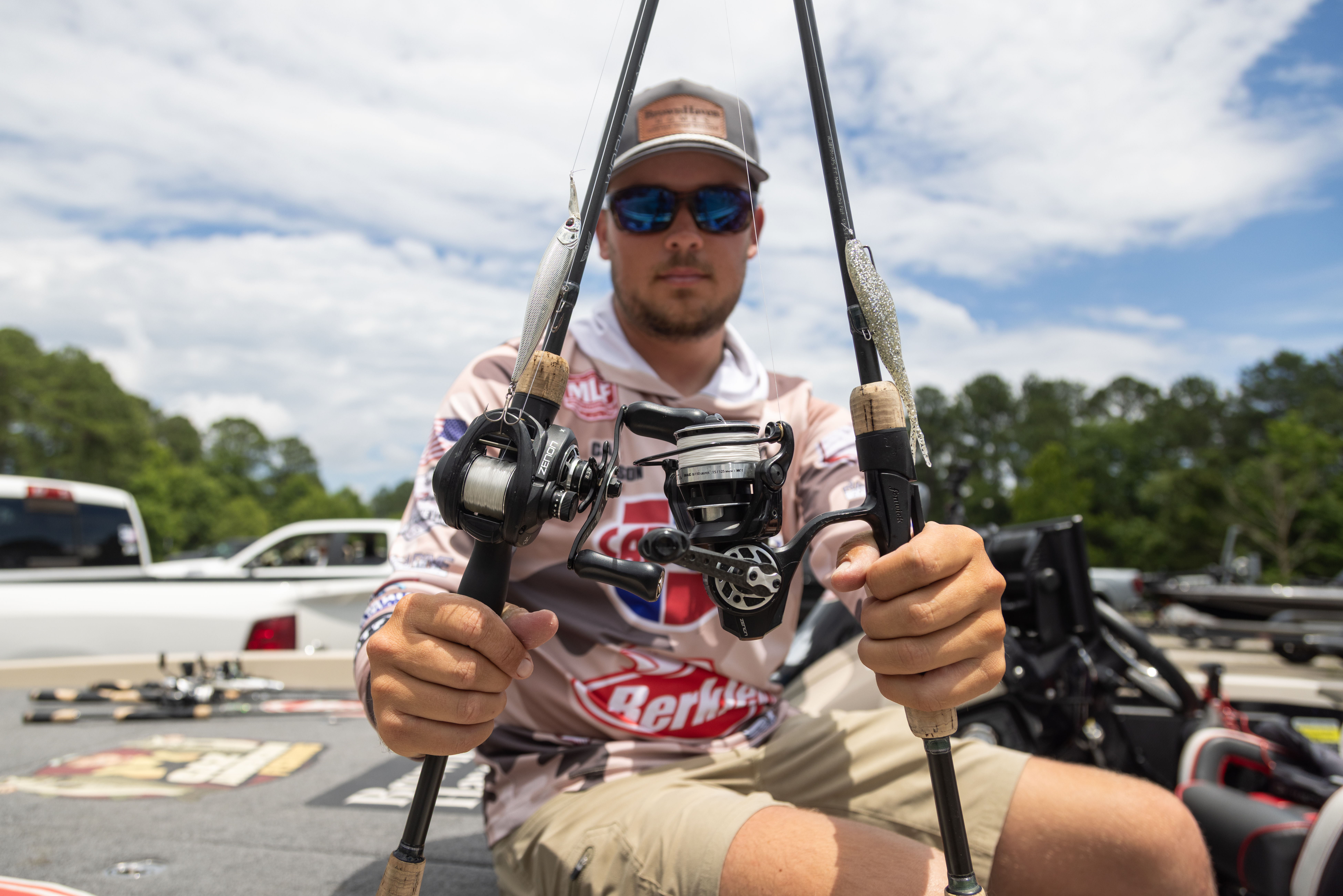
An expert at finishing third in the All-American Caz Anderson (no relation to Brooks), put up a strong showing using techniques that he is very familiar with.
Caz Anderson relied on a Berkley Krej and a Berkley PowerBait Jerk Shad for the most part.
“I caught my fish on Day 1 and the first part of Day 2 on the Krej, when it was windy,” Caz Anderson said. “When it slicked off, I picked up the Jerk Shad and was reeling it over the piles really slow, and the fish would come up and key on that really subtle presentation.”
Slight color changes were key when it came to the Jerk Shad.
“I liked the chartreuse and whites on the cloudy conditions – I’d usually start with that each day,” he said. “I would use chrome whenever the wind was blowing and it was sunnier, and I’d use translucent colors whenever the wind wasn’t blowing and it was sunny.”
Caz Anderson threw the hard bait on a 7-3, medium-heavy Fenwick World Class with a 7.3:1 Abu Garcia Revo SX VoltiQ. He fished his Jerk Shads on a spinning setup with a 7-1, medium power Fenwick World Class, a 3000-size spinning reel and 10-pound braid to a 15-pound leader. On Day 1 and Day 3, he added some significant fish without forward-facing sonar.
“I was fishing points early in the morning, trying to blind cast for schooling fish that were a little shallower,” he said. “I would fish up the lake in my no-‘Scope period. Those groups were really big, and they were not as smart, so your odds of hitting them were a little bit easier. Where I was catching most of my quality fish, down by the dam, those fish are going to bite the best the first time they get a bait presented to them that day.”
4. Key morning spot carries Frink

Tom Frink has had some notable success on herring lakes over the years, and despite not being a local to the fishery, he contended with a bunch of true experts.
His best bait was a Strike King Caffeine Shad, and he rigged it on a 5/0 Ryugi Limit hook.
“I had a morning spot that I knew was a big fish spot – honestly, I did most of my damage on it overall,” he said. “I was either straight winding it or sometimes giving it a little bit of action. Day 2, some of them weren’t even reacting to the slow, straight wind, so I tried the more old-school herring way of burning the bait and killing it. I caught a few fish doing that.
“It was a simple pattern. I had a bunch of offshore schools,” Frink said. “The last two days, they just didn’t eat very good. The second and third day, they got a lot tougher. They would come up on it, you’d feel them bite it, but at the last split second, they would hit it with their mouth closed or turn off of them or something.”
Frink used two setups for his soft jerkbait. One was a spinning setup with braid to fluoro, which he went with when he cast into the wind or wanted to fish the bait on top. When he wanted to fish the bait a little deeper, he used a baitcasting setup with 18-pound fluoro.
5. Murphy puts up a strong effort on the home pond

Lucas Murphy was one of two preeminent locals in the field, and he went into the final day with a great chance to win. Running the herring game and fishing for groups on brush and points, he did great on Day 1 and Day 2, but faltered on Day 3.
“The game plan was the same every day – I didn’t use ‘Scope in the morning, and I fished some main lake, shallow points that I consider late herring spawn points,” he said. “I know four or five of them that they stay on the latest. I can’t think of something I would do differently. I had the bites to do it, but it just didn’t work out.”
Murphy used a Strike King Caffeine Shad and a Strike King Caffeine Shad Jr., and he threw them on a 6-10, medium Lew’s spinning rod with a 2000-size Lew’s Custom Lite spinning reel.
6. C-rig powers McCluskey
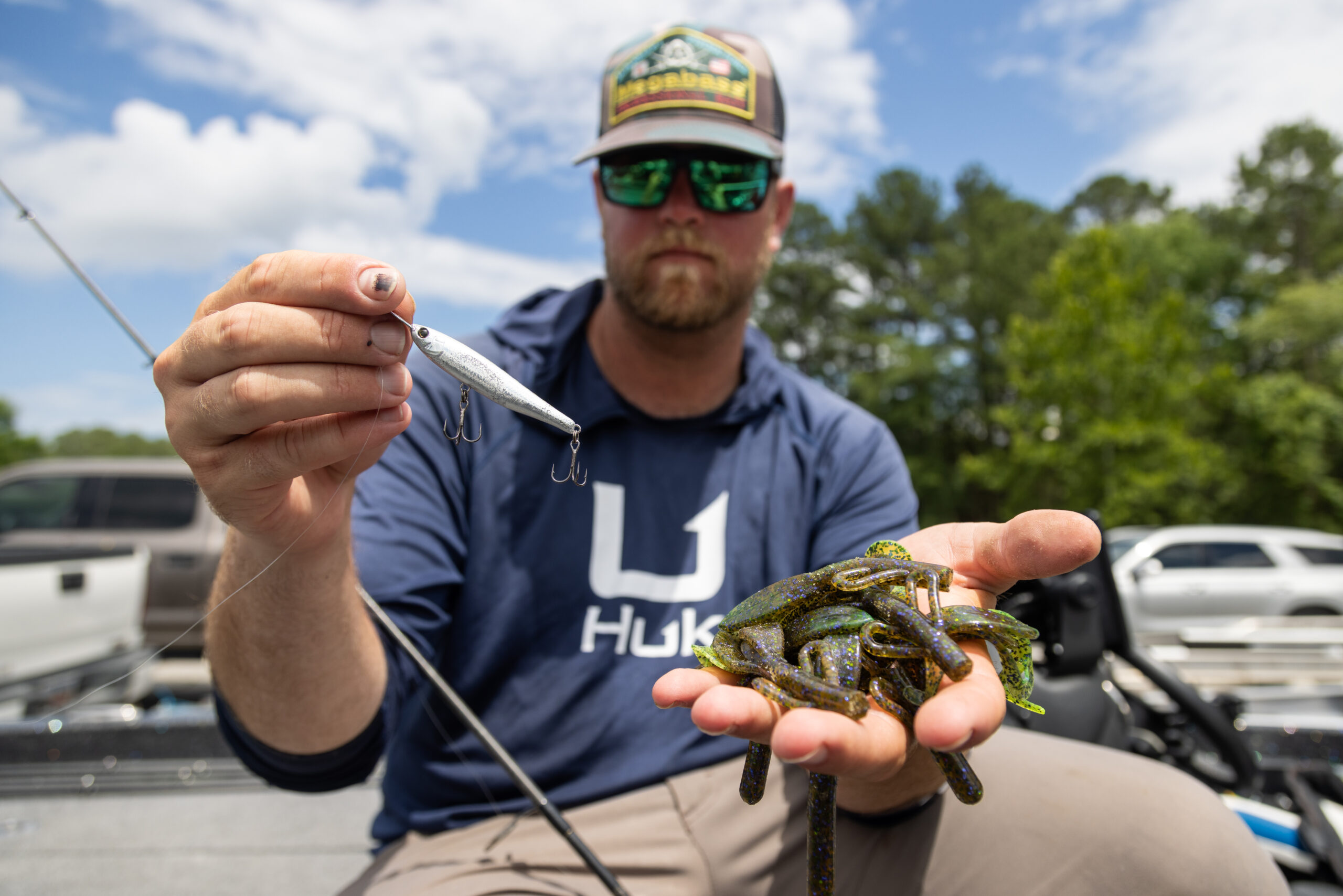
Considering the old-school nature of a Fluke, it’s only natural that Matt McCluskey bucked the trend in an equally classic direction.
For McCluskey, his best bait was a 3/4-ounce Carolina rig with a Zoom Midsize Brush Hog.
While idling from one place to another, he found one of his best areas in the tournament when fish started schooling.
“There were some bare spots in the grass on the top of the two humps and two sets of bluegill beds,” he said. “They’d come up schooling, and I’d catch them, but I would throw the Carolina rig at the bluegill beds for my bigger fish.”
In addition to the C-rig, he also mixed in a Jackall Riser 007 for schooling fish and to catch some that were set up on grass lines farther down the lake.
“I had multiple giant fish roll on my bait each day but could not convince them to bite like those other guys could,” he said.
For the C-rig, the Virginia angler used a 7-7, heavy Shimano Expride with a Shimano Curado 150 and 20- and 15-pound Seaguar InvizX for his mainline and leader, respectively. For the Riser, he used a 7-2, medium-light Shimano Poison Adrena and a 2500 Shimano Vanford with 10-pound Seaguar Smackdown tied to 10-pound Seaguar InvizX.
7. Fluke also plays for Lawson
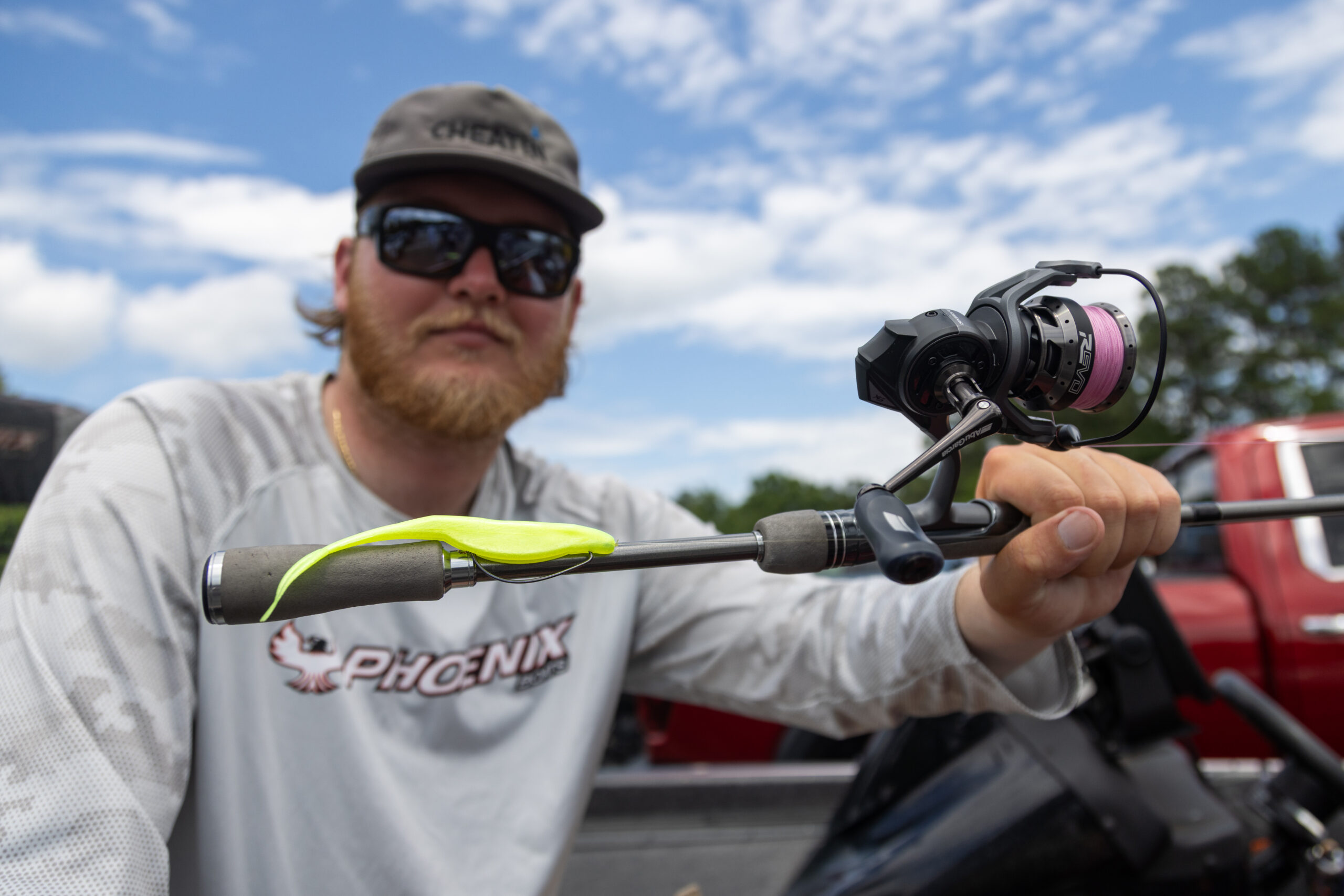
You’re not gonna believe this, but Landon Lawson did his best work with a Zoom Fluke.
“It was pretty straightforward,” he said. “I was just fishing for shallower fish that I felt like I had a chance of catching with ‘Scope and without. I was seeing hundreds, and I couldn’t even catch five the last day – if the wind didn’t blow, they didn’t bite.”
8. Mackie adapts well to a new challenge
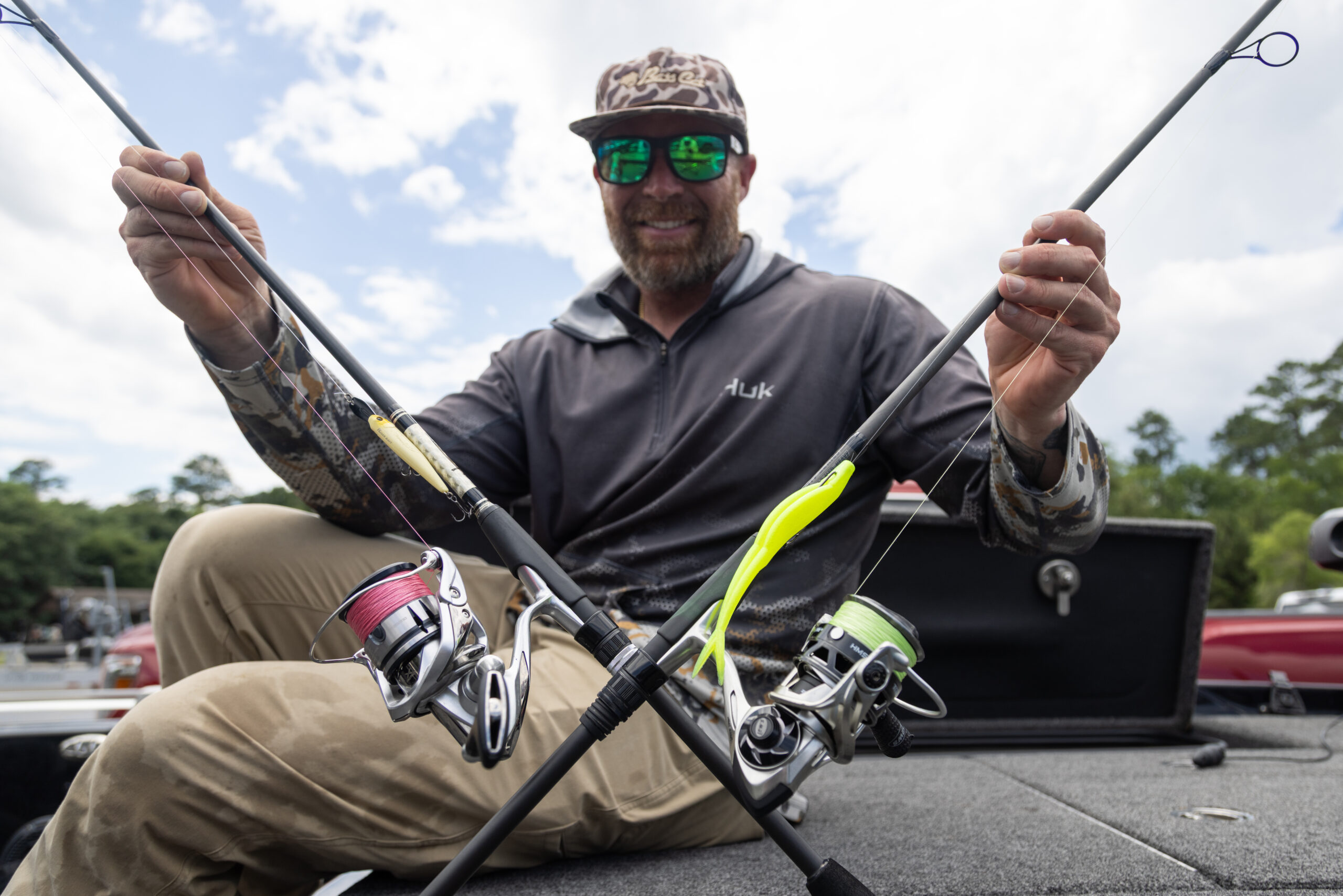
Not an expert on herring lakes, Cody Mackie looked pretty good in the All-American.
“I was pretty much just running points,” he said. “I went there for pre-practice, and I never caught a fish on a Fluke. I could see them; I couldn’t figure it out. Day 1 of practice, I didn’t figure anything out until about 6 o’clock. Tuesday morning, I had 22 pounds by 9 o’clock. Once it clicked, it clicked. I would start out in the morning shallow, and usually they would come up and show themselves.”
When he had his sonar fired up, Mackie noticed that super long casts were key.
“A lot of them, they would commit immediately if they were past my screen,” he said. “I would see a big school, and the ones that were biting it weren’t even on the screen.”
For Mackie, a Jackall Riser 007 and a Zoom Fluke in the 5-inch and 6-inch sizes worked. He used Joe Burns Rods for the full gamut.
9. Topwater key for Bates
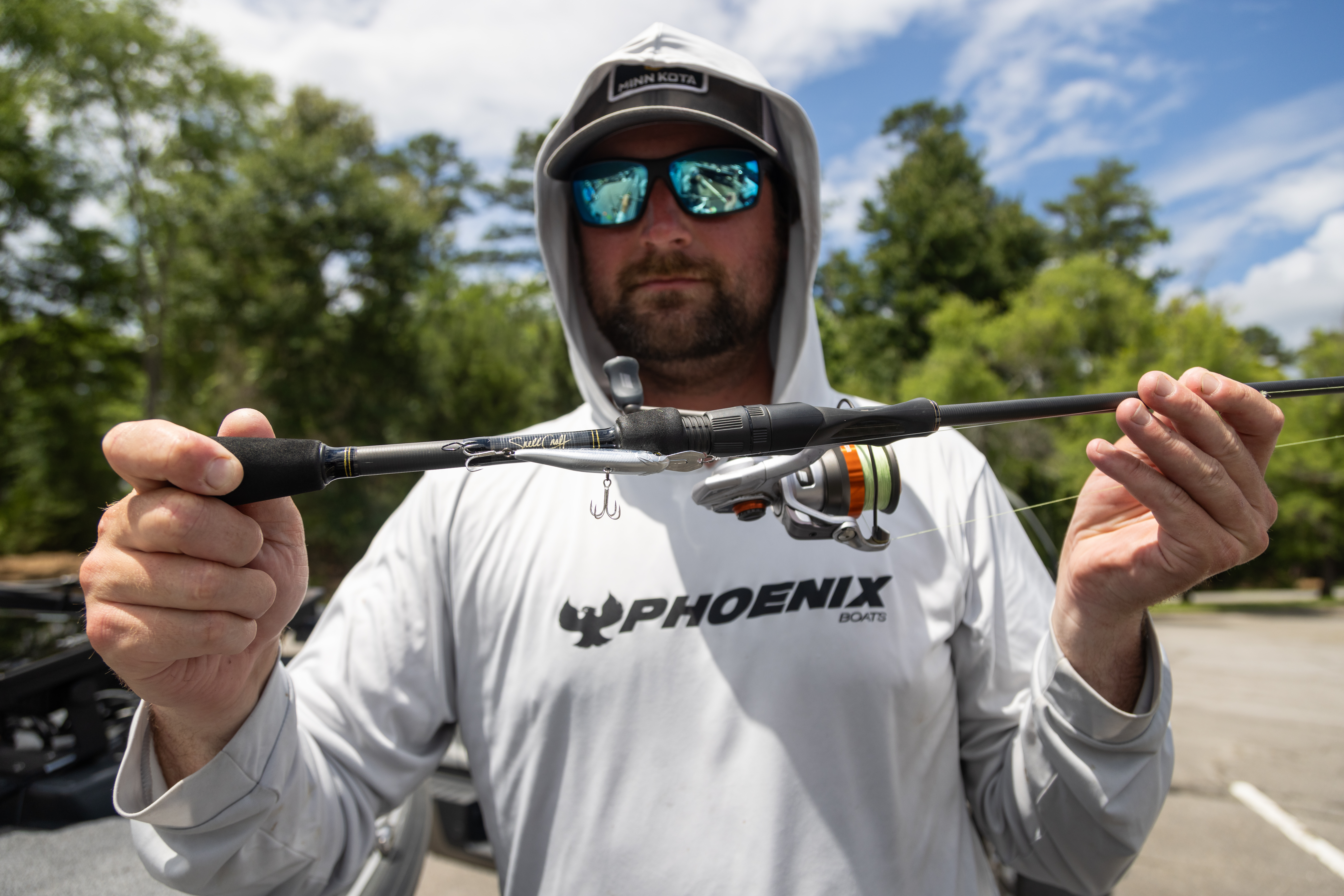
Like many, Will Bates did his best work lower on the lake with classic baits for herring fisheries.
The two best options were a Jackall Riser 007 and an Ima Skimmer 110, both fished on SnellCraft custom rods.
“I was fishing mostly cane,” Bates said. “There were a couple shoals with grass edges where they were sitting. The Skimmer seemed to be getting bigger bites – I couldn’t get them to eat any other way other than on top.”
Early in the event, Bates buoyed his weight with some easy keepers. But he went all-in for the win later.
“I had a shad spawn pattern up the river that I fished the first day with a white Berkley Frittside,” he said. “I had like 15 pounds in the first two hours, then I ran down and culled every fish out. I didn’t hit that after Day 1.”
10. Gossett mixes in fry guarders
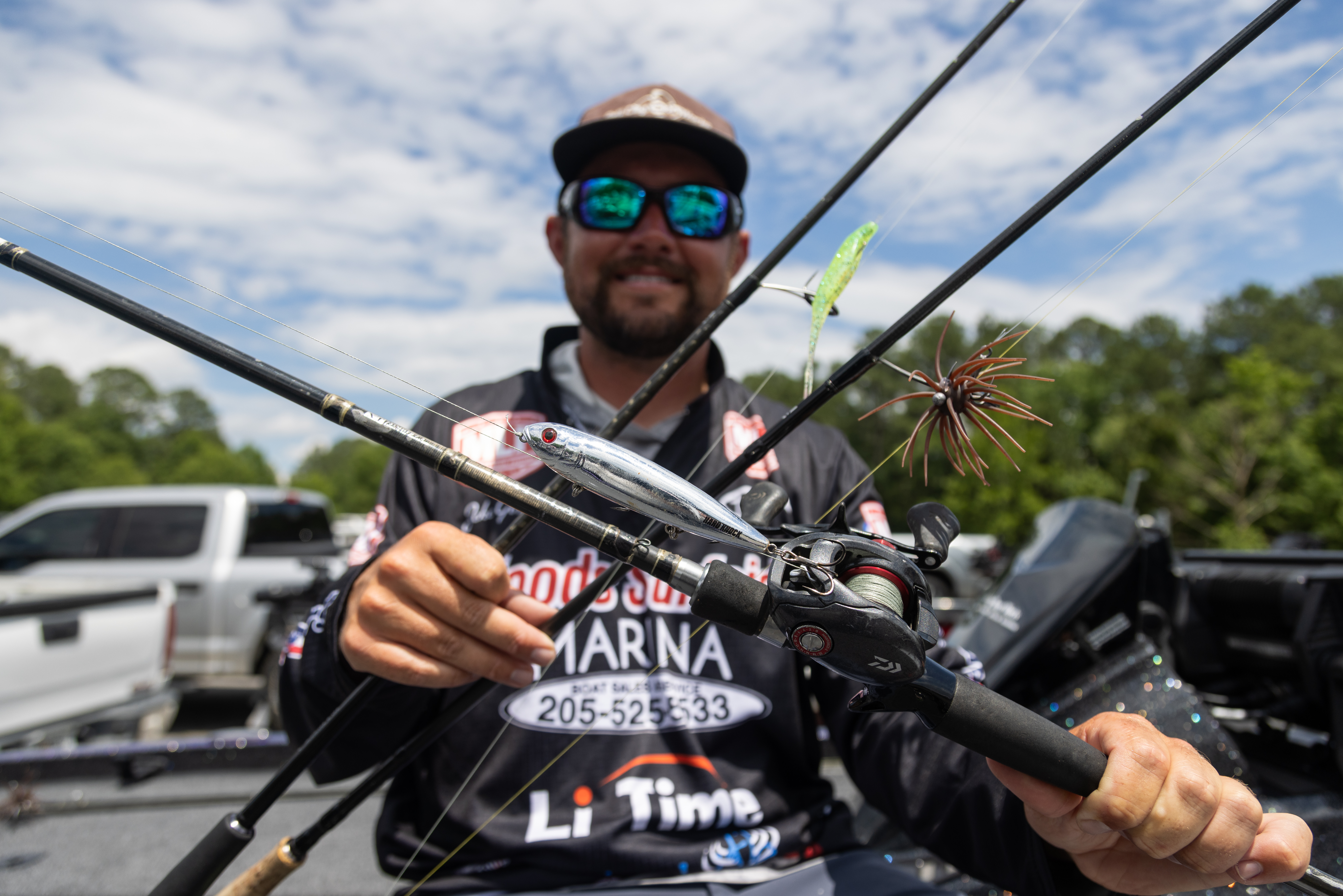
Zeke Gossett struggled a little on the final day, but he put up great days to start the event and did a lot of it before he even turned on his ‘Scope.
“I approached all three days the same,” he said. “In practice, I was catching fish really late in the afternoon, so I saved my ‘Scope time for the last three hours every day. The first day, I caught all my weight before I turned on ‘Scope, but I lost two big ones late in the day.”
Gossett did best with a Zoom Fluke in chartreuse herring as well as clear with green flake, and he also used a Strike King Sexy Dawg Hard Knock. When he plucked a few fry guarders, he did it with a 17mm Hideup Coike. He used 10-pound Vicious No-Fade Braid with a 14-pound Vicious Tora leader on his spinning setups,and 30-pound Vicious No-Fade Braid for his topwater.