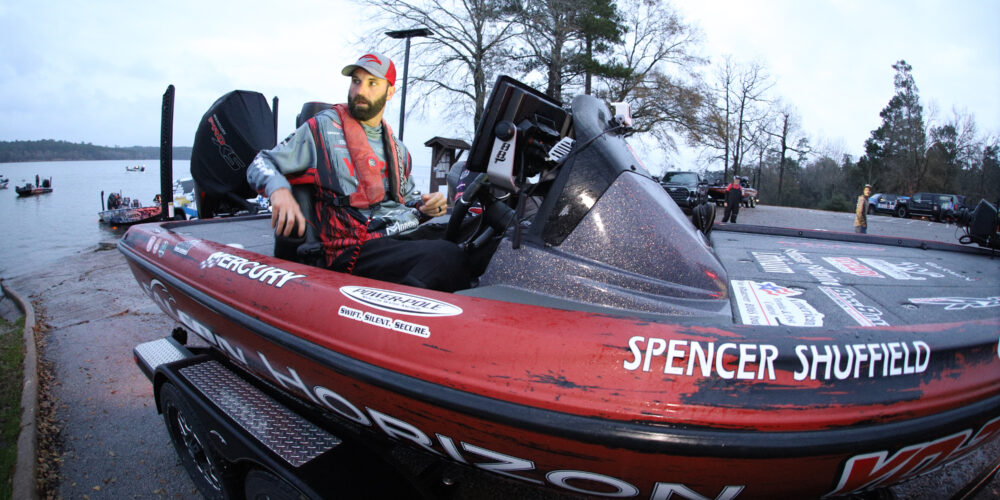
CONROE, Texas – The first event of a new season always brings intrigue. This year, it feels like there are even more unknowns than normal as the Bass Pro Tour kicks off its seventh year with B&W Trailer Hitches Stage 1 Presented by Power-Pole on Texas’ Lake Conroe.
The debut tournament of the 2025 campaign will mark the first Bass Pro Tour event with the league’s new forward-facing sonar restrictions. Add in the fact that a national tour hasn’t competed on Conroe since the BPT’s last visit in 2019, and there’s plenty of mystery in the air. A trio of pros recapped their two days of practice and offered their insights on how they think Stage 1 is going to go down.
Catch all the action live on MLFNOW! from 7:30 a.m. to 4 p.m. CT Thursday through Sunday on MajorLeagueFishing.com and the MyOutdoorTV (MOTV) app.
Expect FFS to dominate despite new rules
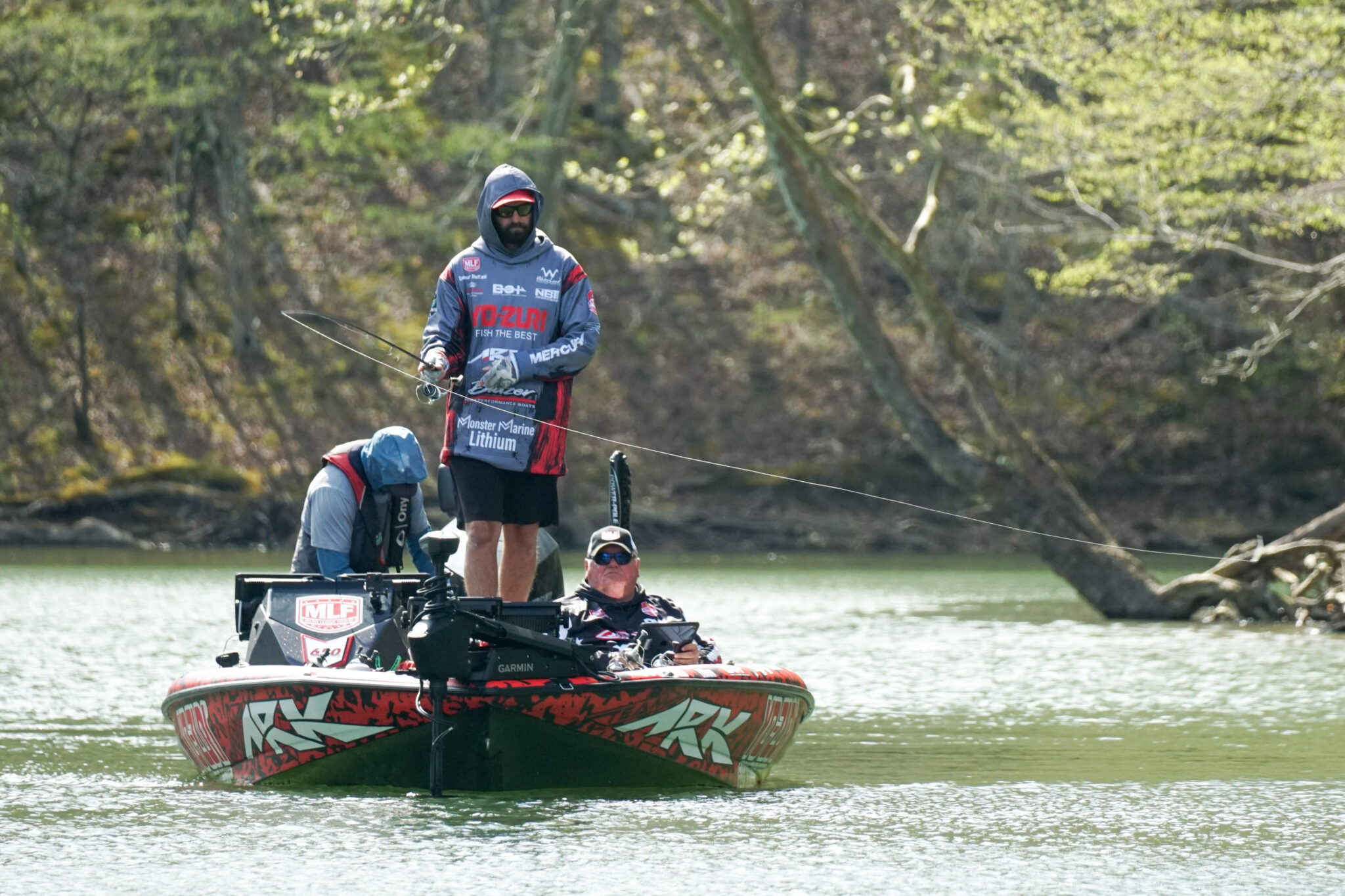
When asked about their respective practices, Justin Cooper, Spencer Shuffield and Bryan Thrift each responded with a similar sentiment: It’s been tough – if you’re not using forward-facing sonar. While the Bass Pro Tour’s new rules will only permit anglers to utilize the technology for one of three periods each day, all three of those pros expect it to dominate in terms of fish catches.
“It’s an excellent lake, full of fish,” Shuffield said of Conroe. “But it just so happens 90% of them are out in the middle with bait, and it’s going to be really hard to catch them fish without ‘Scope the way they are set up right now.”
Cooper, who doesn’t live too far from the area in Zwolle, Louisiana, said the cold snap that moved through the South last week turned off the bite for Conroe’s shallow bass. Those fish that are suspended and chasing schools of shad remain more active and easier to catch, but they’re nearly impossible to target without forward-facing sonar.
“I was coming in knowing it was going to be a grind, and after a couple days of practice, it’s tougher to get a bite than I anticipated just fishing – just going down the bank without LiveScope,” Cooper said. “I thought it would be a little better than what it was. It seems like it’s hard to get more than one bite in an area. You would think with the cold temps that they would be grouped up somewhere, and I just haven’t found that.”
All three anglers believe those who take full advantage of their forward-facing sonar periods might be able to advance to the Knockout and Championship Rounds on the strength of that bite alone.
“You could potentially see the guys that make the Knockout Round catch 90-plus percent of their weight in that one period,” Cooper said.
“It’s going to totally be dominated by that one period,” added Thrift.
While Shuffield thinks the new restrictions will force whoever wins the event to have a productive secondary pattern, too, he’s not totally discounting the idea that the winning weight could be caught during a single period on Championship Sunday.
“I’ll tell you this: You will not be able to win this tournament just fishing alone,” he said. “You could potentially win it on ‘Scope alone, but you would have to have an absolutely flawless final day with it.”
Picking the right period
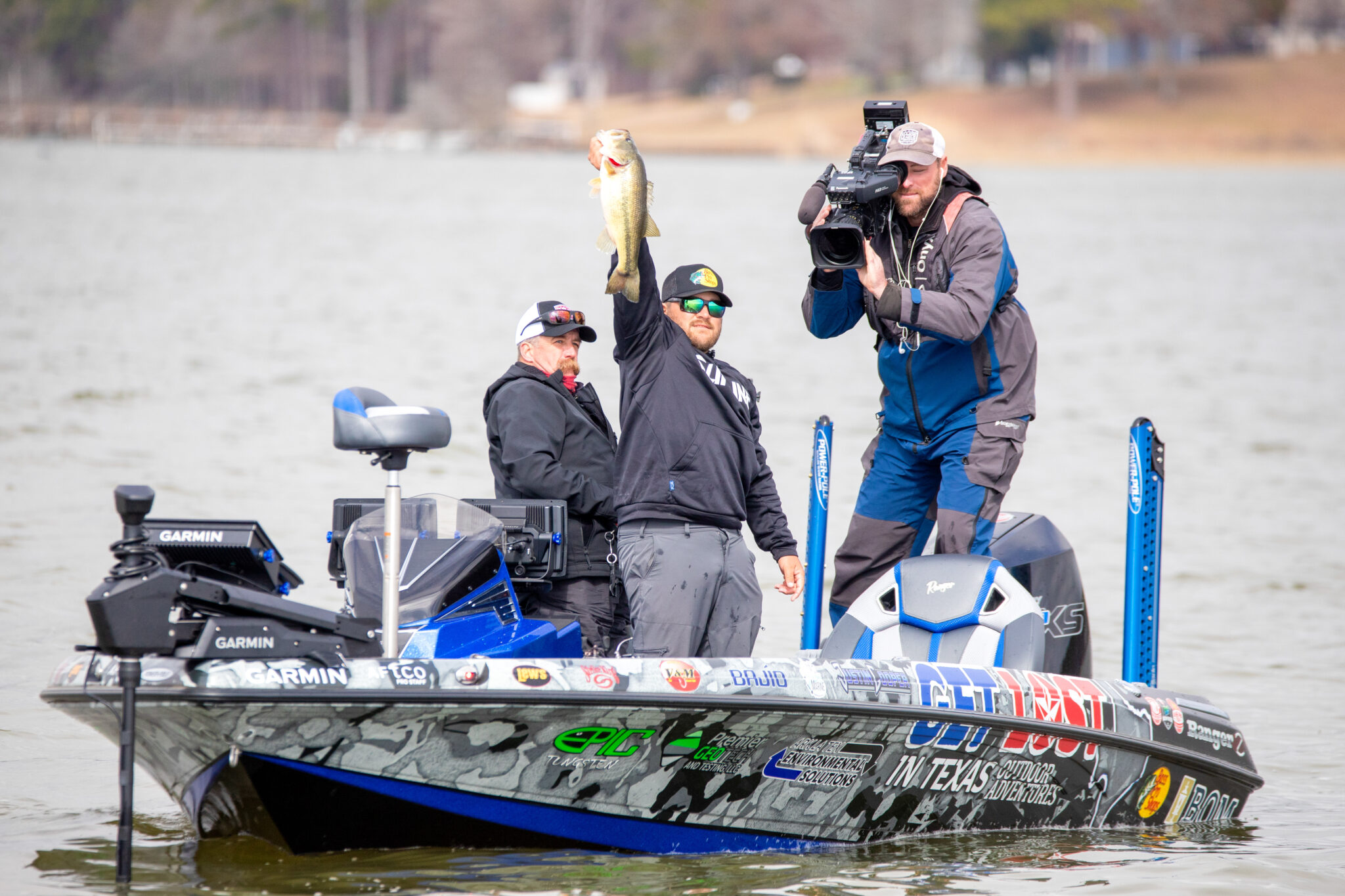
One of the biggest questions entering the 2025 season is which period pros will typically choose to use forward-facing sonar. The fact that suspended bait-chasers are expected to play such an outsized role on Conroe means choosing wisely will be more important than ever.
One factor that will impact the decision is weather. Both Shuffield and Cooper mentioned that, on days with wind in the forecast, they’ll likely try to identify the least windy period to turn on their transducers, as wind makes it more difficult to precisely target fish.
Beyond that, though, there doesn’t seem to be a consensus. Weather permitting, Shuffield wants to save his forward-facing period for the end of the day, when he has a better idea how much weight he needs.
“I don’t plan on using it until the third period, unless I see something crazy with the weather tomorrow that I feel like I better use it the second period instead, because the wind might be too bad during the third period or a thunderstorm blowing through, something like that,” Shuffield said.
Both Cooper and Thrift said they’re still trying to figure out the right approach and might vary their strategy by the day, but Cooper is leaning toward using forward-facing sonar in Period 1. He likes the idea of using the 30-minute ride-around prior to lines in to see exactly where the offshore fish are so he doesn’t have to waste any competition time relocating them.
“You pull into your area in Period 3 and they’re gone, well, now you’ve got to find them, and that could take 5 minutes, or it could take an hour and 15 minutes,” he explained. “Being able to utilize the ride-around, I think, is important. If you pull into your area and the wind isn’t terrible and the waves aren’t terrible and you’re seeing some fish during your ride-around, I think it’s going to be a hard decision not to use it when you know they’re there and time is not counted against you.”
With anglers seemingly taking different approaches to the FFS period, Shuffield expects to see some dramatic swings on SCORETRACKER®.
“I feel like a lot of guys are going to be 15, 20 pounds back of the cut line, potentially, and they’ll have a 30- or 40-pound period and jump back up into the Top 10,” he said.
Other X-Factors

A couple of key variables could alter the script and keep the forward-facing sonar bite from determining who makes the Championship Round and wins on Conroe. First is the weather. The recent cold snap has finally thawed, and it’s only forecast to get warmer. The overnight temperature is supposed to stay in the 60s heading into Thursday, with thunderstorms in the forecast for Day 1. The final three days are expected to see sunny skies and highs in the 70s.
Shuffield and Cooper believe the warming trend will help the shallow bite, both by pushing more fish toward the banks and making those in the shallows more active.
“Depending on the type of rain we get tomorrow with that storm coming through, if it’s like an inch or two of rain at 68 degrees, I can assure you there’s going to be a big push of baitfish go to the backs of those runoffs,” Shuffield said. “Bass will follow, and with the weather being like it’s supposed to be all weekend, they’re not going to leave. They’re going to stay shallow. So, somebody could potentially find an area or something tucked back that they’re going to move to and literally light up SCORETRACKER®.”
The other wild card is the big bass that call Conroe home. As tough as the shallow bite was during practice, a couple pros reported catching 9-pound-plus lunkers. That included Thrift, who caught his personal best bass at 11 pounds, 2 ounces. While he would have rather landed the lunker a couple days later, he had no remorse about catching it during practice.
“I’ve never caught a true, confirmed 10-pounder that I’ve weighed,” Thrift said. “So, now I’ve for sure got me a DD.”
As exciting as that was, Thrift isn’t exactly feeling like he unlocked a pattern for targeting giants. He simply happened to see the fish when he was panning around with his Humminbird MEGA Live 2.
“That was just good fortune,” he said. “I won’t even go fish in that area probably.”
Still, that proves that there are legitimate lunkers living in Conroe, and any angler who catches one could shoot up SCORETRACKER® in a hurry. That’s especially true since both Shuffield and Cooper believe the big ones are more likely to be caught during non-forward-facing sonar periods. Shuffield said most of the bass in the schools chasing bait are between 1-8 and 2 pounds (the variable scorable minimum this week is 1-8).
“Getting that big bite is important everywhere we go, but I think with our format now – and it’s going to be still a predominately ‘Scope tournament even though we can only do it a third of the day – man, if you can get that big bite, that’s going to be huge,” Cooper said.
What will it take?
Given the new restrictions and the lack of history on Conroe, it’s tough to know what to expect from a weight perspective. Shuffield thinks it’ll take 22 to 24 pounds per day across the two-day Qualifying Round to earn a spot in the Knockout Round. Cooper’s expectations are a tad higher.
“Sixty pounds is my goal, what I want to catch to make the Knockout,” Cooper said. “I think if you catch 60, you’re in there good. At the lowest to make Knockout Round, I think low- to mid-50s.”
Shuffield expects it to take around 80 pounds to win the Qualifying Round and earn a direct trip to the Championship Round – a wrinkle that’s returning in 2025. While a lot could change by Sunday, he thinks 40 to 50 pounds on the final day will be enough to earn an angler the first Bass Pro Tour trophy of 2025.