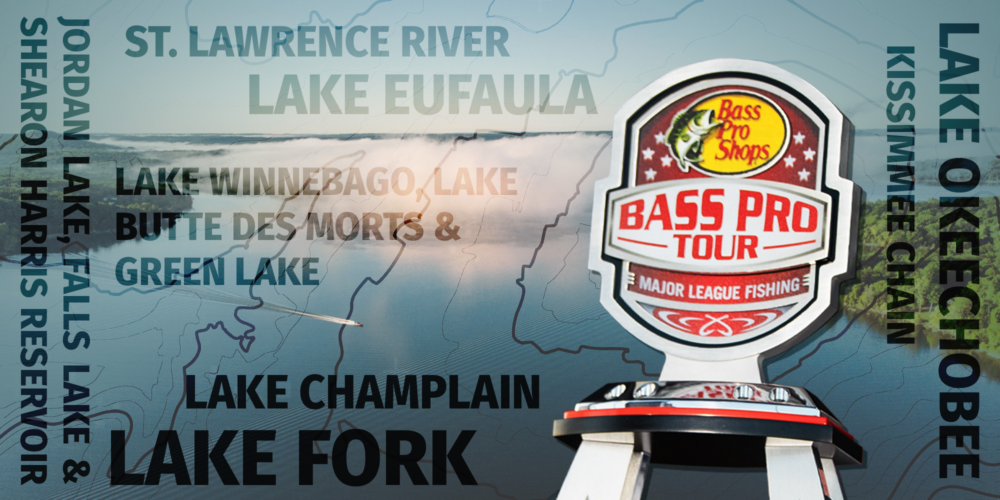
TULSA, Ok. – It seemed appropriate that the 2020 MLF Bass Pro Tour schedule was announced on Halloween Day: a bag full of tasty treats delivered in the form of trophy largemouth fisheries, world-class smallmouth fisheries and one of the most interesting eight-event schedules engineered in recent memory.
The 2020 Bass Pro Tour kicks off Feb. 7-12 on Lake Eufaula, Alabama, and finishes July 21-26 on Lake Champlain, Vermont, with stops on the big-fish waters of Lake Okeechobee, the Kissimmee Chain, Lake Fork, the St. Lawrence River, Falls/Harris/Jordan lakes and Lake Winnebago in between.
“All of these lakes at different times over the years have been known to be some of the best in the country,” said Michael Mulone, MLF’s Sr. Director of Events and Partnerships (i.e. “the schedule maker”). “Okeechobee, Fork, Toho, the St. Lawrence…these are fabled fisheries, and they’re all on the same schedule. Top to bottom, this is the most inclusive schedule for smallmouth, largemouth – for both quality and quantity – that I’ve ever seen.”
Starting Out Hot (In the Cold)
The Feb. 7-12 season opener at the 45,131-acre Lake Eufaula brings the 80-angler Bass Pro Tour field to a diverse Alabama/Georgia-border fishery capable of producing both numbers and size. This impoundment of the Chattahoochee River hosted an MLF Cup event in 2017 (won by Jacob Wheeler) and was a popular tour-level tournament destination in the 1990s and early 2000s: MLF pro Edwin Evers earned an Alabama Tour win on Eufaula in 2003, and Gary Klein won an Alabama Invitational there in 1993.
Eufaula is known for its brush-pile and river-ledge bite, but the early February competition window should see water temperatures in the low 60s, with big pre-spawn females moving toward spawning beds, and a strong bite around the lake’s shallow grass and docks as well.
“Out of all the events on the schedule, I might be the most intrigued by Eufaula,” Klein admitted. “When were fished Eufaula (for the Cup event) in 2017, I found that it was a brand new fishery because of the aquatic vegetation, with a huge population of fish that will bite well if we hit it right. If you look at the lake in its entirety, from top to bottom, you’ll understand that it’s actually multiple lakes within the same body of water. I think it’ll fish a lot like Lake Conroe did (in 2019): a lot of different techniques will catch quality fish there. I’m excited to see what Eufaula has to offer.”
A Sunshine State “Two-Fer”
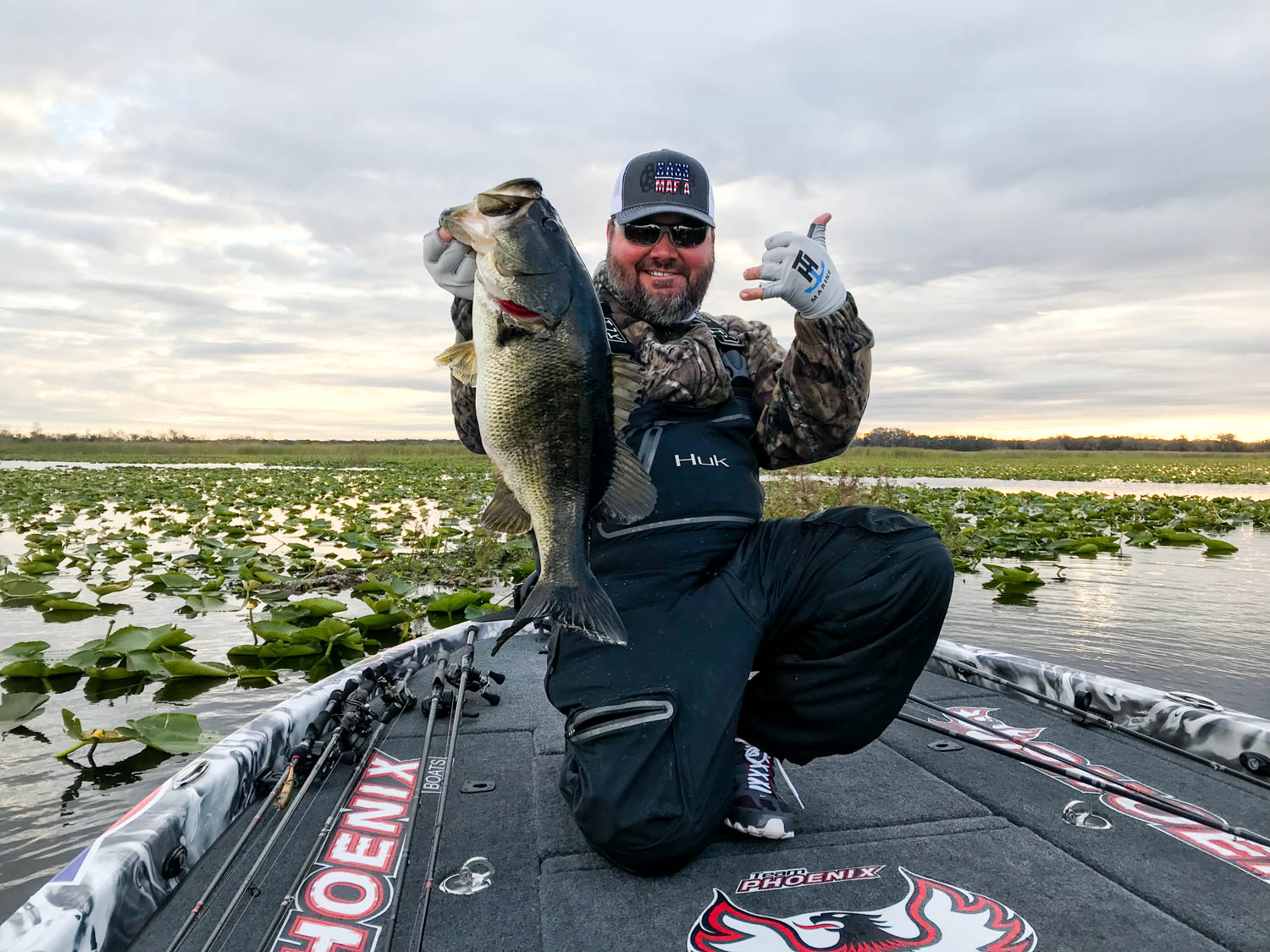
The schedule brings the 80-angler field to Lake Okeechobee in late February (Feb. 21-26) for Stage Two, and then returns to the Sunshine State in mid-May (May 15-20) for Stage Five on the Kissimmee Chain, an interesting “Florida two-fer” that provides the dichotomy of a very traditional tournament timing at Okeechobee, and a very non-traditional window on Toho and the other lakes of the Kissimmee Chain.
Depending on late-winter weather patterns, February can be one of the better big-fish months of the year on the “Big O”: MLF pro Tim Horton won a tour-level event on Okeechobee during the third week in February of 2017, highlighted by a day in which his five biggest fish averaged just over 6 pounds.
Florida Fish & Wildlife Commission (FWC) TrophyCatch statistics show that 11 fish over 8 pounds were weighed and released on Okeechobee in February of 2019 (including three 10-pounders); 21 8-plus-pounders were registered in 2017.
The mid-May return to the Kissimmee Chain – site of the inaugural Bass Pro Tour event, won by Jordan Lee – marks the first time in memory a tour-level event has fished the fabled chain of lakes in post-spawn. While Lake Toho, Lake Kissimmee and the other lakes in the chain are familiar water to all 80 MLF pros, the late-spring event date will require a reassessment of techniques, locations and strategies.
“Typically, May is the start of post-spawn, fish are still feeding pretty darn aggressively,” said Florida FWC biologist Marty Mann. “If we have hydrilla offshore in Toho, there’ll be plenty of fish offshore, but there’s always resident fish that stay inshore in the Kissimmee grass. It’ll be a mixed bag. I’ve been here for 20 years and I’ve never seen a major tour fish here in May, I think it’ll be a pretty cool event.”
Lunker Largemouth Lineup
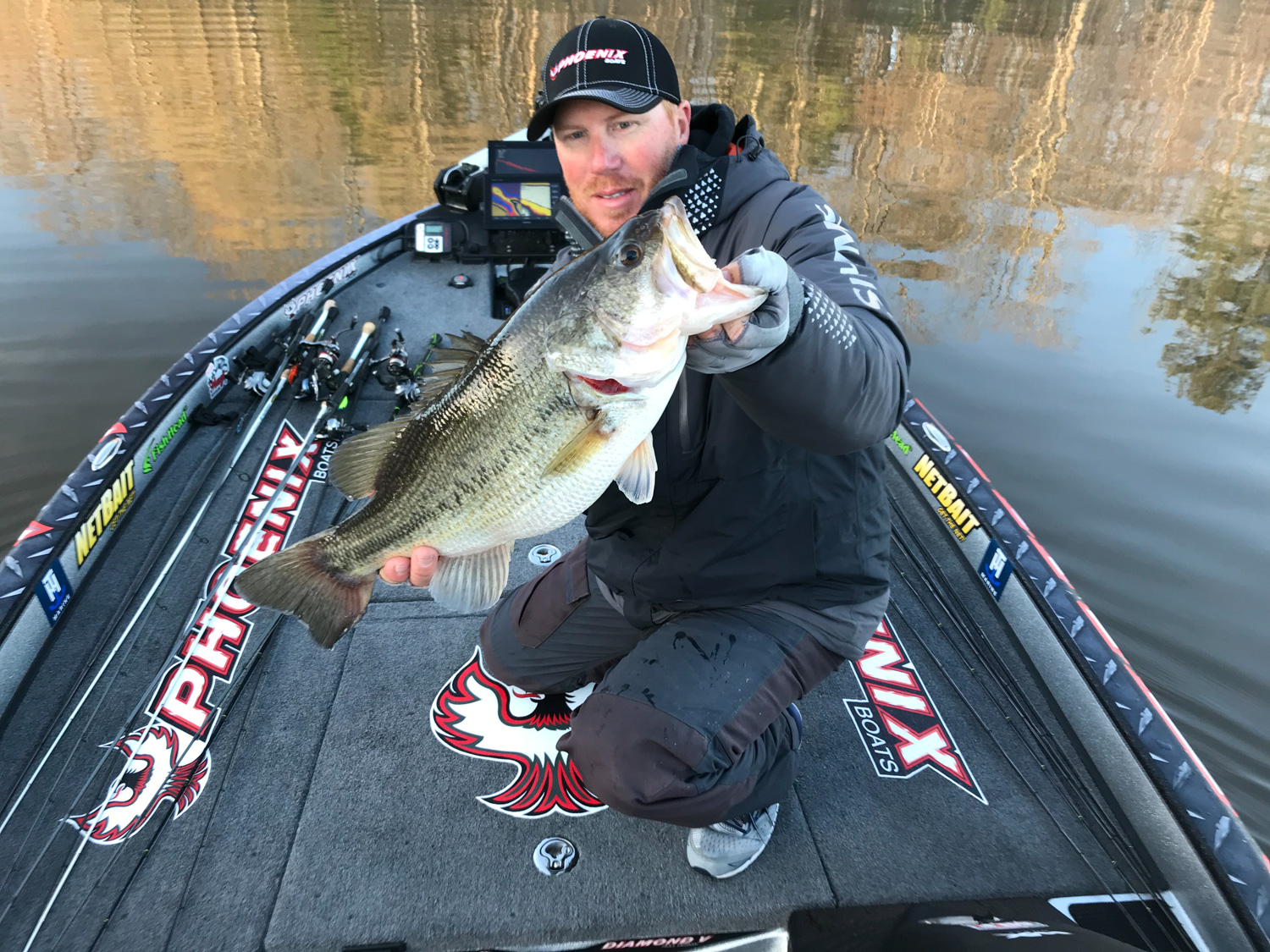
The 12 competition days that fall between March 13 and April 8 could provide the most dynamic window of largemouth fishing in tournament-fishing history as Stage Three lands on Lake Fork, Texas (March 13-18) and Stage Four arrives in Raleigh, North Carolina (April 3-8).
Fabled Lake Fork really needs no introduction: this impoundment of Lake Fork Creek (a tributary of the Sabine River) has produced an astounding 261 entries in the Toyota ShareLunker Program, which records fish caught and released that weigh 13 pounds or more. That’s more Texas giants than the 10 next lakes combined.
“Lake Fork is the greatest lake in the country,” said Texas pro Jeff Sprague, who lives 15 minutes west of Lake Fork. “It’s not as big as a Tennessee River lake, but per capita for big fish, Lake Fork is the best fishery in the country. We might be a little early (in mid-March), depending on the weather, but even if the fish aren’t on beds full out by then, were going to smash some big ones. We’ll catch some giants.”
The hidden gems of the three competition lakes for Raleigh (Falls Lake, Jordan Lake, Shearon Harris Reservoir) were revealed to the world during Stage Three of this year’s Bass Pro Tour, an event won by Jacob Powroznik. Powroznik managed to weigh three fish over 8 pounds during his championship run, and the six days of competition produced 140 fish weighing 5 pounds or better for the field (most of them during the Shotgun Rounds on Jordan).
Stage Four puts the 80-man field on the Raleigh lakes a week later than in 2019 – favorable weather could make Falls and Shearon Harris perform even better than they did this year, creating the potential for an even bigger slugfest.
“We hit Jordan as perfect as can be this year, but Falls disappointed me a little, and Shearon Harris fished differently than I expected it to,” admitted MLF NOW! analyst Marty Stone. “I can see more scenarios where Falls and Shearon Harris actually fish a lot better than they did this year, depending on the weather, the water level and the water temperature. But these are northern-strain largemouth, so they’re going to bite good regardless. But if things line up right, two of those three lakes could exceed what we saw from them in 2019.”
The Northerly Swing

The June 5-10 return to Neenah, Wisconsin – site of Stage Eight in 2019, won by Cliff Pace – puts the field of 80 on Lake Winnebago, Lake Butte des Morts and Green Lake three weeks earlier than the 2019 competition. That brings into play a stronger offshore smallmouth bite on Winnebago, more concentrated largemouth, and the potential for bigger weights overall.
“Edwin Evers looked me in the eye while he was on our stage and told me that his best day of smallmouth fishing in his life happened in June on Lake Winnebago,” Stone said. “I think 2020 will show us exactly what Winnebago has to offer.”
The Bass Pro Tour’s June 26-July 1 arrival on the lower St. Lawrence River lays the foundation for a record-setting display of smallmouth, combining one of the most lauded smallie fisheries in the world with the unlimited potential of the MLF format.
“The St. Lawrence is just an unbelievable fishery,” said Berkley pro Josh Bertrand, who recorded his first career tour-level win on the St. Lawrence in 2018. “We’ve never been there that time of year, so we’ll all have to figure out what that fishery is like in late June, but the smallmouth there will just blow your mind. And I wouldn’t be surprised if a couple of guys did well there on largemouth because that place has a lot of them. In our format, largemouth might be a sleeper.”
The season finale on Lake Champlain (July 21-26) puts the Bass Pro Tour on one of the best multi-species fisheries in North America, at a prime time to connect with stout numbers of both smallmouth and largemouth.
MLF pro Brandon Coulter dominated the 2019 MLF Challenge Select on Champlain (contested in late July of 2018) with 40 pounds of smallmouth; in that same event, Marty Robinson won an Elimination Round with more than 62 pounds of largemouth and Mark Rose hit a 28-pound target weight in under two hours of Sudden Death Round competition.