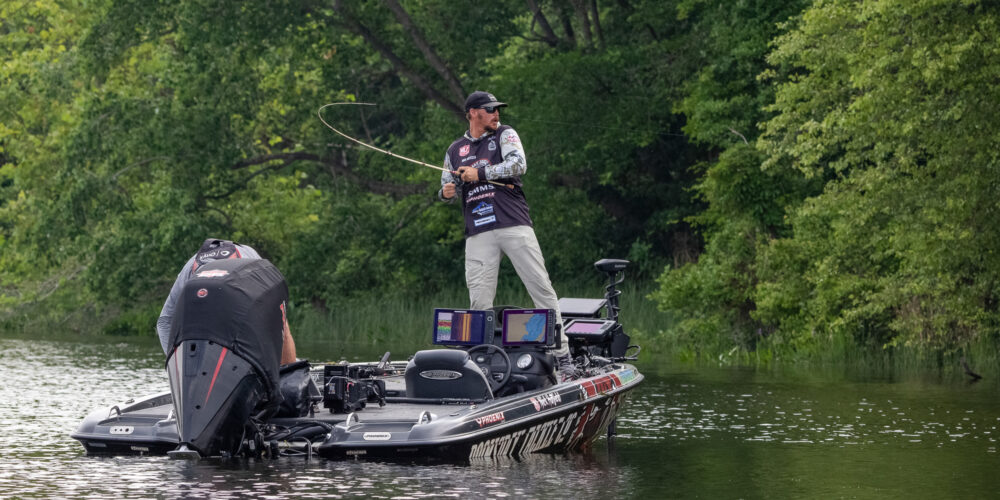
MARBURY, Md. — Zenni Stage 6 Presented by Athletic Brewing Company will take the Bass Pro Tour just a few miles south of Washington, D.C., to the Potomac River.
It’s not only because of the fishery’s proximity to the nation’s capital that it could be considered historic.
The Potomac has been a regular stop for bass fishing tournaments of all levels, hosting a total of 141 MLF/FLW events through the years. This, however, will mark the first ever visit for the Bass Pro Tour and its unique, every-fish-counts format.
Nick Hatfield, who won the last national event held on the fishery, a Tackle Warehouse Invitationals event in 2023, thinks the BPT format will showcase the river’s healthy population of largemouth.
“It’s an awesome fishery, and I’m really excited to get back over there and fish a Bass Pro Tour event there,” he said. “The place has got a ton of fish in it. It’s going to be a fun one.”
While Hatfield expects to see bass hit SCORETRACKER® in big numbers (and lots of old-school, power fishing staples to shine), strategy will still be paramount. Namely, the pros who contend for the $150,000 top prize will have to figure out how to find and manage areas with healthy grass and strategize around a less-than-favorable tide.
Find the grass, find the bass
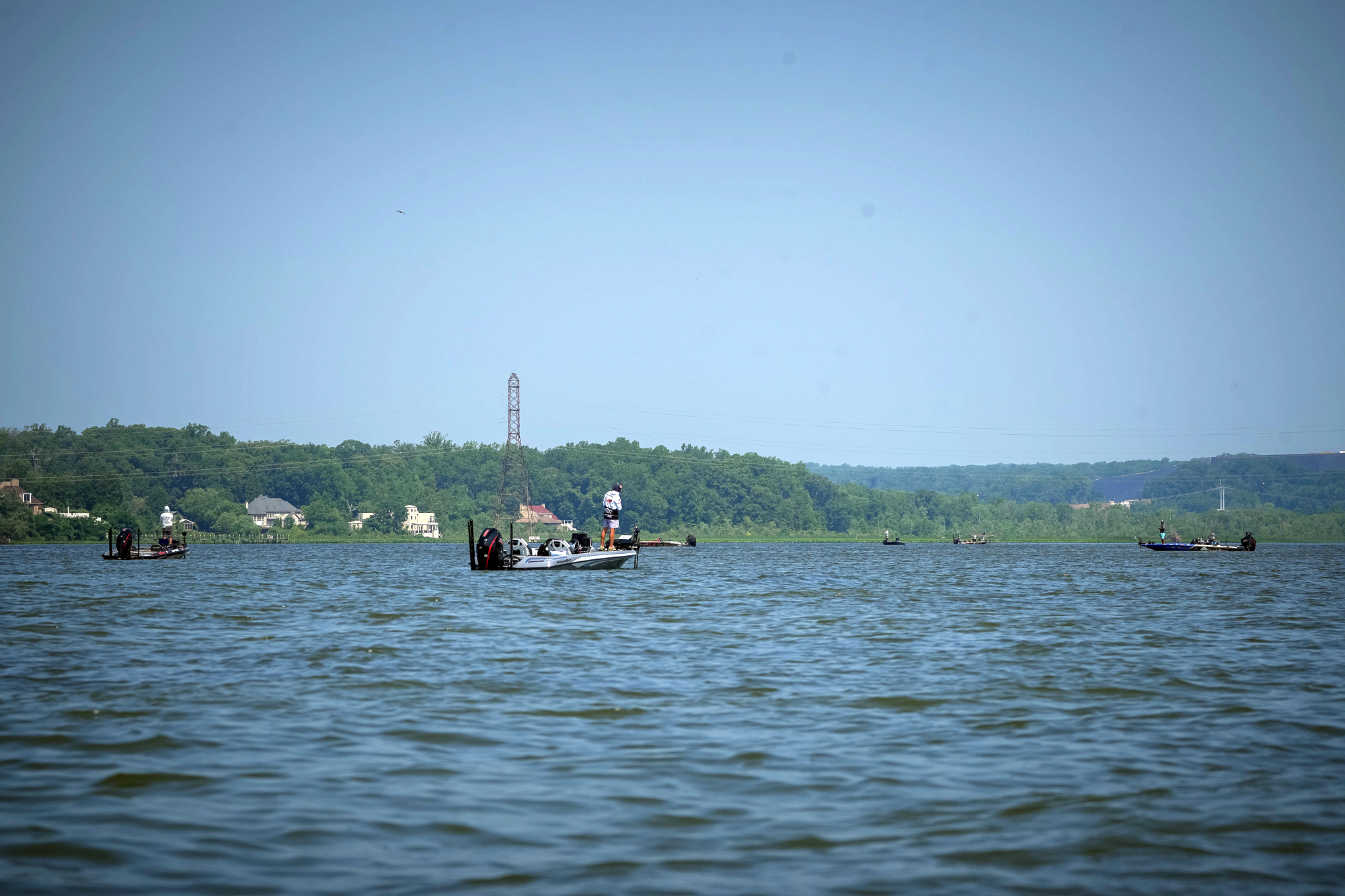
So far, the first Bass Pro Tour season with limits on how often anglers can utilize forward-facing sonar has produced a nice blend of traditional methods and new-school techniques. This event, however, should be all about old-fashioned power fishing.
Adrian Avena, who lives in New Jersey and has four career top-five finishes on the Potomac, said even though the spawn should be well in the rearview on the river, there’s rarely much of an offshore bite. Instead, the largemouth live amid shallow cover. While there’s no shortage of shallow habitat on the Potomac, the first thing anglers will look for is submerged vegetation.
“It’s predominately going to be dominated by grass fishing,” Avena predicted. “You’ll have places where you’ll be able to catch some off hard cover. But I think everything for the most part is going to be bank related. It doesn’t fish like the James River does, where you can catch them kind of offshore a little bit.”
Hatfield, who makes his home in Tennessee but has fished four events on the Potomac over the past four summers, offered a similar outlook, saying “it’s probably going to be an all-out grass smash.”
The mystery will be where anglers can find the healthiest grass – and thus the biggest population of bass. While a few areas tend to produce annually (Quantico and Mattawoman creeks have historically been popular), Hatfield said the grass growth can change each year based on weather and water salinity.
“It seems like certain years, certain places are firing better than they were the previous years – maybe Potomac Creek is hot and it wasn’t last year,” Hatfield explained. “It always seems to be like certain areas are hot when they might not have been the previous year.”
The areas with the best grass will likely get crowded. The good news is the BPT field is smaller than most. However, given the every-fish-counts format, Hatfield and Avena both expressed concern about the effects of fishing pressure across four days of competition.
“The biggest X-factor is going to be definitely pressure,” Avena said. “It’s just going to come down to if you can find a few places to yourself.”
For anglers who want to avoid the crowds, there are other options. Those looking for a flipping bite should be able to find one in the fields of lily pads. The Potomac also features no shortage of both man-made and natural wood cover, particularly on the northern end of the playing field. Justin Lucas won a 2016 Bassmaster Elite Series event off an industrial dock in that area, and Hatfield thinks someone who finds a key zone or piece of cover that he has to himself could fare well at this event.
“I think the hard cover stuff could be a real player in this event, just because a lot of times when I’ve been over there I’ve been able to catch more numbers doing that, not as many big ones,” he said. “I could see someone that knows more about that kind of cracking that code.”
Both Avena and Hatfield expect to see a lot of baitcasters on the Potomac, with bladed jigs, swim jigs, Texas rigs and topwaters all likely to be popular. Once anglers have located groups of fish, wacky rigs and drop-shots could be called upon for cleanup duty.
“I would say your typical ChatterBait, swim jig, Texas rig flipping bait,” Hatfield said. “You’re probably going to see some guys throwing finesse worms. You might even see a crankbait a little bit around that hard cover.”
Tides could be tricky

For anglers who aren’t used to it, the most challenging aspect of the Potomac is figuring out how the tide will impact the bite. Connected to the Atlantic Ocean via the Chesapeake Bay, the river experiences a shift of about 2 feet between high and low tide.
Anglers typically find low tide more productive, as the lower water concentrates bass in predictable areas. Unfortunately for the BPT field, low tide won’t arrive until about an hour before lines out on Day 1, and it gets later every day. For the Knockout and Championship Rounds, anglers won’t see low tide during the competition day.
“That lower water really concentrates fish, and with having that, it makes it super easy to catch them,” Avena explained. “They become super susceptible to being caught, because there’s only so many places they can be. I feel like having an event where you’re fishing a lot of high water, it is going to be a little bit more challenging.”
Normally, there are two ways to approach tidal fisheries: Either running with the tide – hitting multiple spots throughout the day at the best tide stage for each – or hunkering down in an area with a large enough population of bass that they can be caught all day. Avena, who cut his teeth fishing the upper Chesapeake, prefers to run the tide, but both he and Hatfield don’t think that’ll be as viable given the tide forecast. As a result, finding places that can produce during high tide will be vital.
“I think that local knowledge of knowing where the tide is high and you can go to get bites when it’s typically tougher on guys will be key,” Hatfield said.
Even though the tides might not be ideal, both Avena and Hatfield expect to see strong numbers of bass caught – especially since the variable minimum weight for this event will be 1 pound, 8 ounces. Hatfield admitted his prediction is a “complete guess,” but he pegged the weight needed to advance to the Knockout Round at 60 to 70 pounds. Avena doesn’t think it’ll be quite that high, but he thinks the top performers will well exceed that mark.
“If you can get somewhere around 50 pounds for the two days, I feel like you’re probably going to have a good shot at getting a check or maybe even making the cut,” Avena said. “But the Potomac’s got a lot of bass in it, man. I feel like a guy can catch 25 bass potentially in a day and win the tournament. To win, it might take somewhere in the 60s.”
Keep up with the action
All four days of competition will be streamed live on MLFNOW! from 7:30 a.m. to 4 p.m. ET. Tune in at MajorLeagueFishing.com, the MLF and MyOutdoorTV (MOTV) apps and the Major League Fishing channel on Rumble.