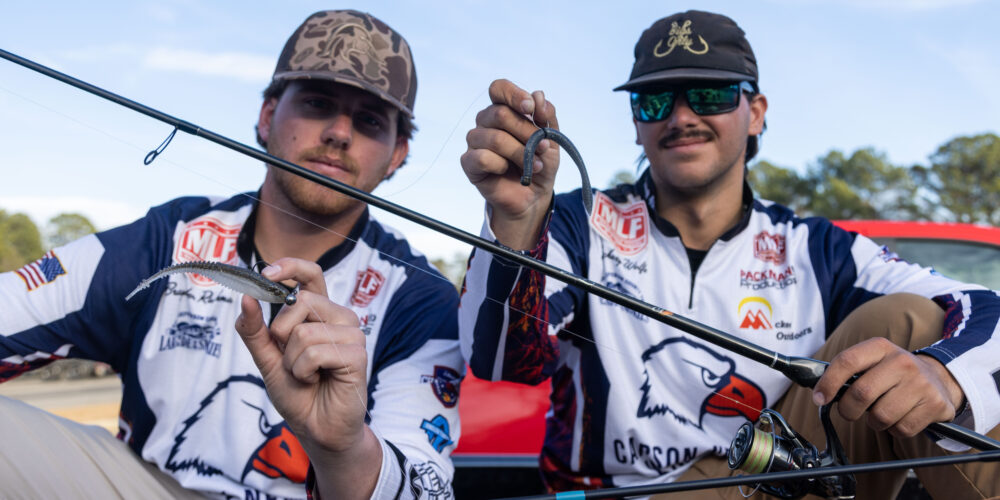
COLUMBIA, S.C. – The Columbia PFG College Fishing Presented by Abu Garcia National Championship on Lake Murray was a wintertime slugfest for the ages. Taking more than 70 pounds to win over three days, the top five all got more than 67 pounds, and 6-pounders hit the scales with alarming regularity. It was a showcase of how good modern collegiate anglers are and also a good case study of modern ways to catch bass.
Here’s what got it done in the Palmetto State.
1. Lander runs cover
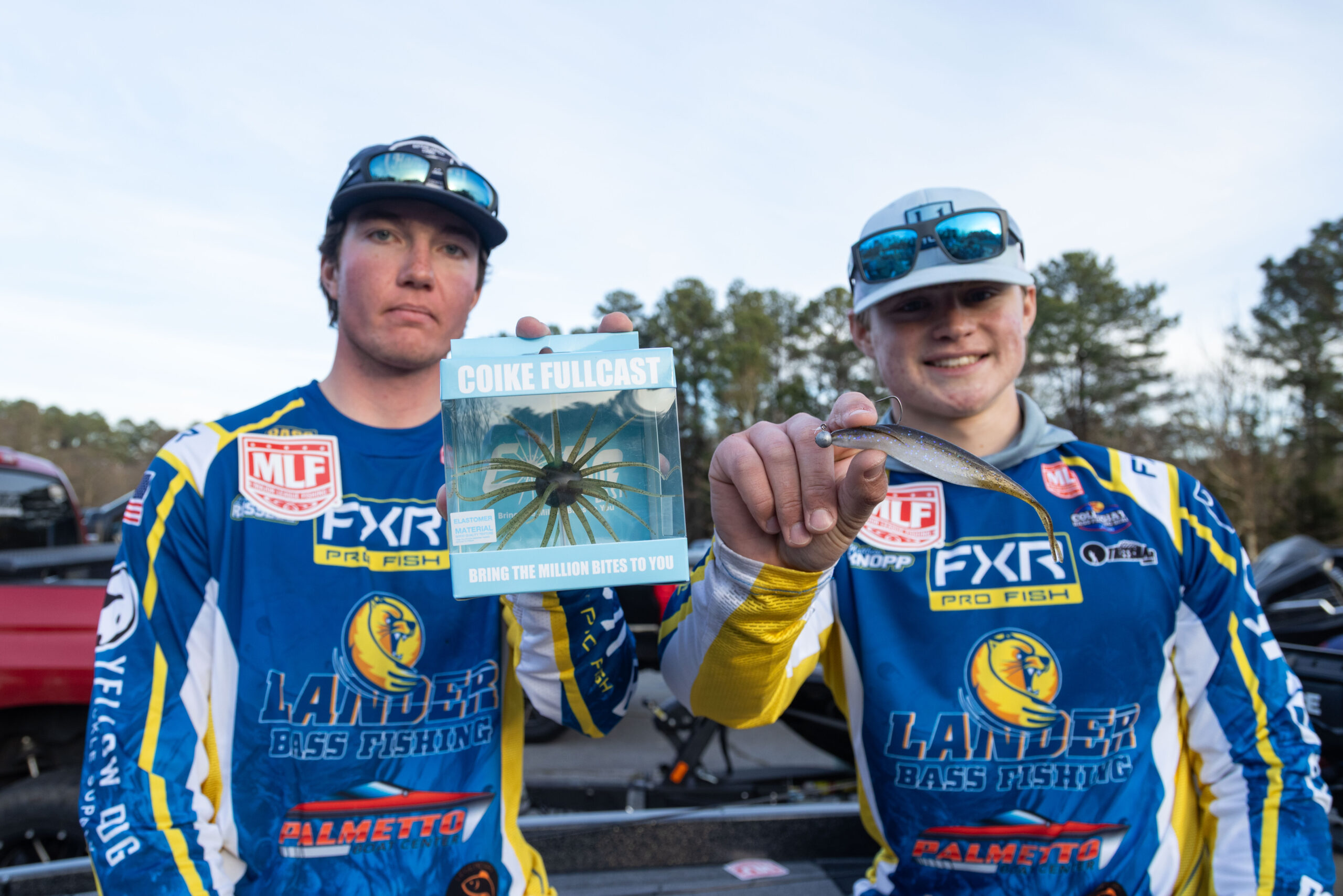
Fishing cover for the most part, the Lander University duo of Matthew Knopp and Logan Russell used a few trendy tools.
Foremost, they used various sizes of Hideup Coike, as well as a 6-inch Deps Sakamata Shad on a 3/16-ounce head. For the Coike, they used one setup on a 6-foot, 10-inch baitcaster with 10-pound line, and another on a medium-heavy baitcaster with 14-pound line.
Knopp said they hit stumps hard early but had to broaden their range as the tournament went on.
“We knew that it was going to be hard to get the stump fish to go, because all of the stumps down there had been run through,” Knopp said. “We started hitting cane and brushpiles and some spots we hadn’t fished before. One cast and go. One cast and go. One cast and go. We’d pull a 4-pounder off of a spot and go to the next one. The trick is just getting these fish to bite. Your boat has to be in the perfect position, and you have to make a perfect cast, because they’re so smart. You get one cast at them and they’re gone.”
2. Dubose and Milam add to the legend of Montevallo

By far the most successful modern program in MLF College Fishing, University of Montevallo put three teams in the Top 10, and James Dubose and Daylon Milam very much contended for the win.
Fishing shallow, the pair used a Berkley Stunna 112 and a Clutch Darter and then went finesse with a Neko rig on the final day.
“We were fishing shallow the entire time,” Milam said. “To locate the shallow schools, we’d throw the jerkbait and glide over the top of them to get them to come up to where we could see them. We had to finesse down the last day, because they were not biting.”
Though he had never been there before, the lake felt familiar to Milam, but he was not prepared for the weights.
“I was expecting a ditch bite with schools and wolf packs,” he said. “But it sets up a lot like one of my home lakes, West Point. It is laid out like that place, but it has herring in it. We didn’t know the weights were going to be that high, so we only ran our stuff one time the first day. The second day, we hit our spots twice. I didn’t know 22 pounds was going to be in 20th place.”
3. Gray and Brown go all-in on the minnow
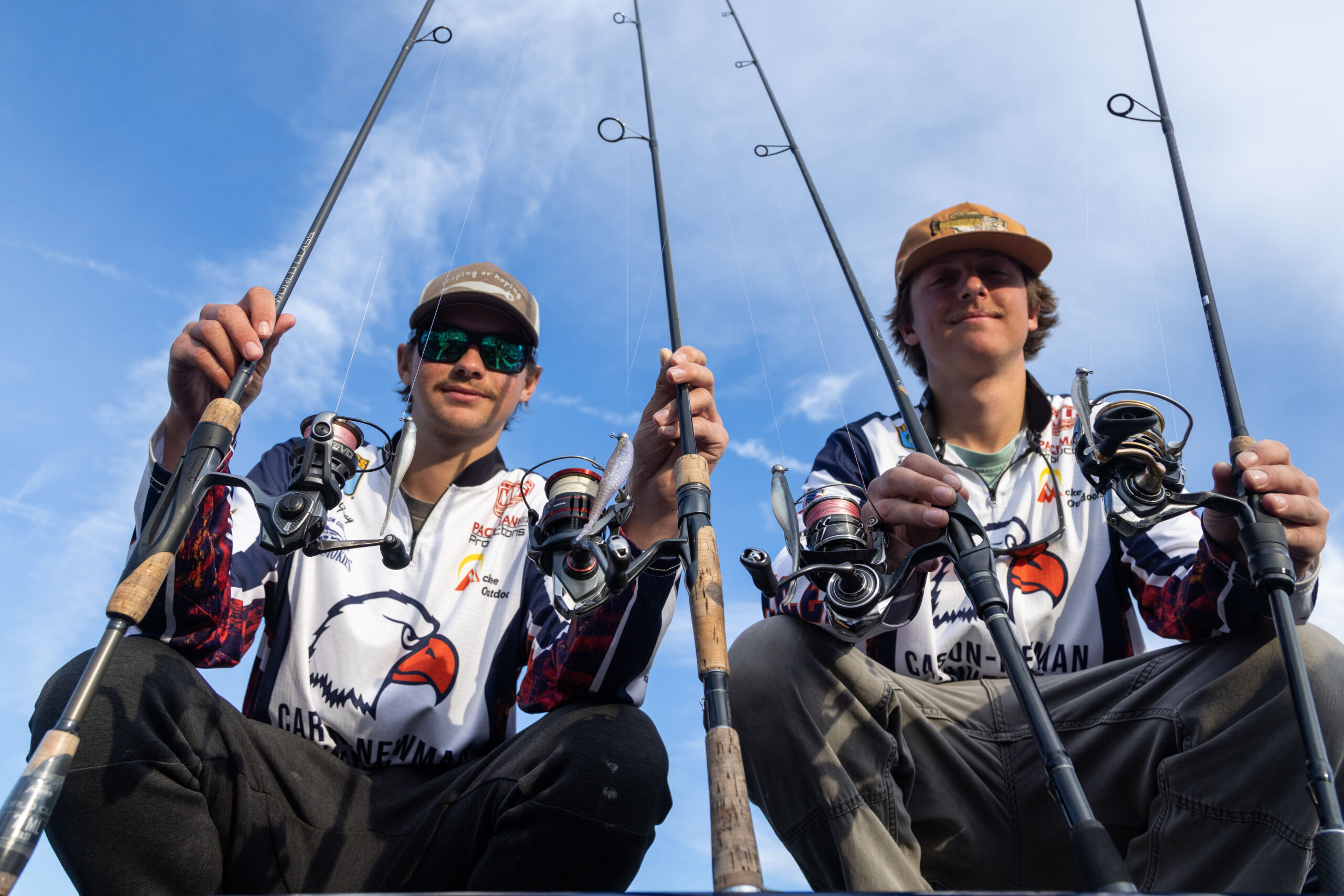
Leading the way for Carson-Newman University, Riley Brown and Nolan Gray relied on the classic minnow in all its wonderful variations.
The pair fished 4- and 5-inch Z-Man Scented Jerk ShadZ as well as a 4.25-inch Rapala CrushCity Freeloader and a 3.5-inch Rapala CrushCity Mooch Minnow. They used mostly Queen Tackle heads, which ranged from 1/4 and 3/8 ounce down to 1/8 ounce.
“The first day they were roaming across points, and we had some rock piles and little rocky points. Later in the day we bounced around in the stumps,” Gray said. “The last day, we started in grass and then fished stumps and brush.”
4. Mix of baits get it done for Berglund and White

The second of three Montevallo teams in the Top 10, Brennan Berglund and Colton White made use of diverse tactics.
A Berkley PowerBait MaxScent Hit Worm Magnum on a Neko with a 3/32-ounce Cipher Tungsten Nail Weight was part of the plan, and a 7-inch Willie Pete’s OG Willie glide, a Berkley Dime 6 in ghost special red craw and a 5-inch Willie Pete’s Minnow also worked.
“In practice we ran a lot of shallower stuff to try to generate bites – main lake points and secondary points, looking for the fish moving up,” White said. “As the tournament progressed, we moved to secondary points in creeks with major spawning areas, and we caught most of our fish from 20 to 35 feet.”
5. No repeat in the cards for Robison and Sorrow
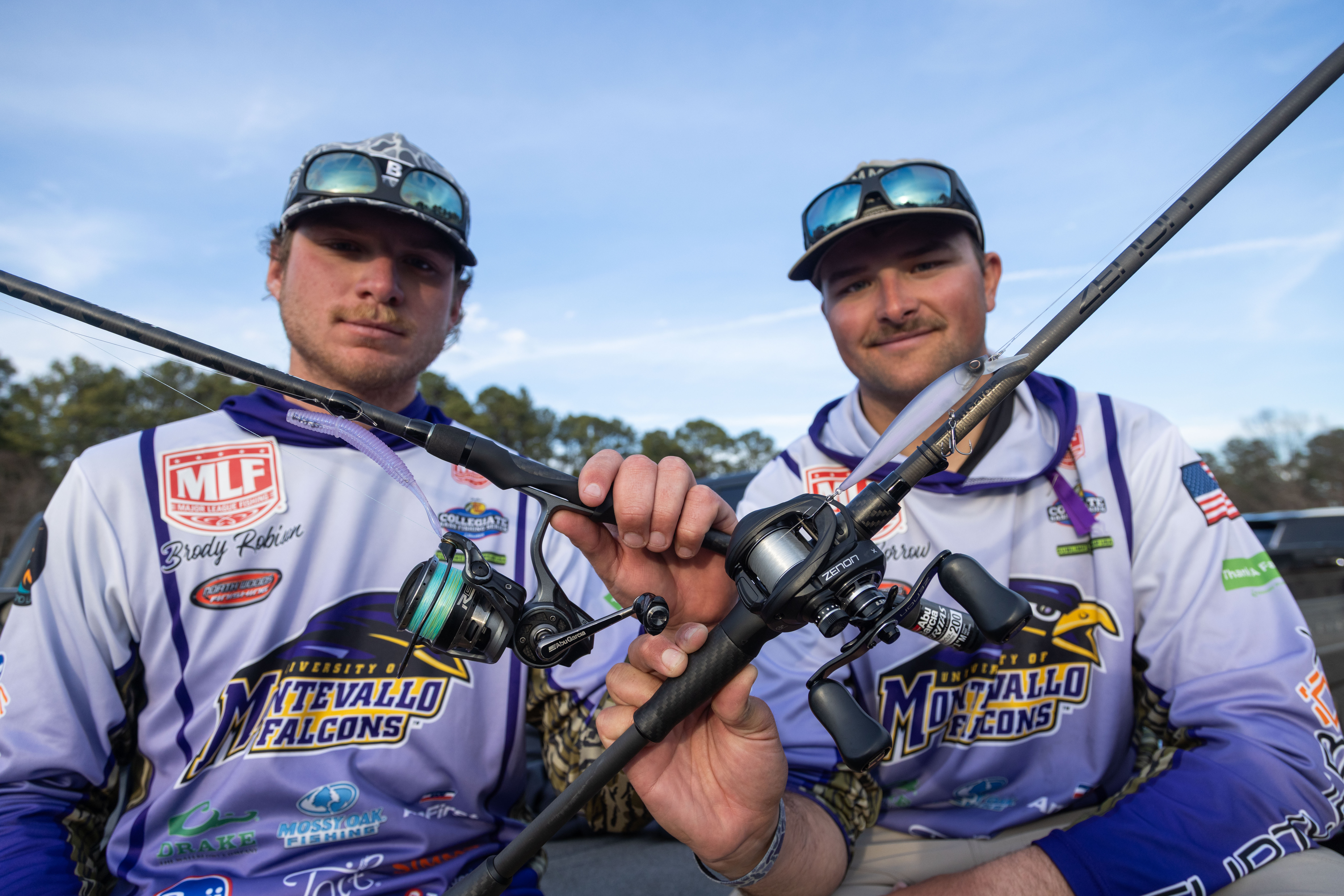
Last year’s champs, Brody Robison and Peyton Sorrow took the lead again on Day 1 with a massive 26-6 haul. From there, they couldn’t quite keep up the pace needed for the win.
The pair only used baits color-matched to their jerseys and caught their fish on a jighead minnow as well as a CAST Fishing Co. Nova in amethyst with a 1/8-ounce nail weight and a Berkley Stunna 112+1.
“We were focusing on prespawn areas, places that fish would be pulling out to and pulling up to,” Sorrow said. “We were mainly looking for secondary points. It didn’t really matter the bottom content, as long as it was clean. If there were stumps or rocks on the points, there would be a group of fish there. We were just running and gunning, and we were able to make a couple fish slip up here and there.”
6. Kuhnle and Rollison mix stumps and grass

The second Lander squad in the Top 10, Drew Kuhnle and Landon Rollison minnowed up their bass.
For Kuhnle and Rollison, a 4-inch Z-Man Scented Jerk ShadZ in shiner as well as a 3.75-inch Rapala CrushCity Jerk did their damage. They mostly rolled with a Queen Tackle Ghost jighead in 3/16 ounce.
“We were primarily fishing stumps with hydrilla,” Rollison said. “We found some stumps with patches growing around the stumps, and we think the fish wanted to sit on those, because the water was warming up a little quicker.”
The duo also fished grass lines, mostly in 15 to 25 feet, and a grass line with a single stump on it held their final-day 8-pounder.
“We pre-practiced a lot; we did a lot of graphing,” Kuhnle said. “We found two of our primary areas in pre-practice, and one of them we found on Day 2 of the tournament, just trying to fish some new water. Where the stumps would sit probably a foot over the grass line is where the bigger ones would sit, for sure.”
7. Tennessee stays deep
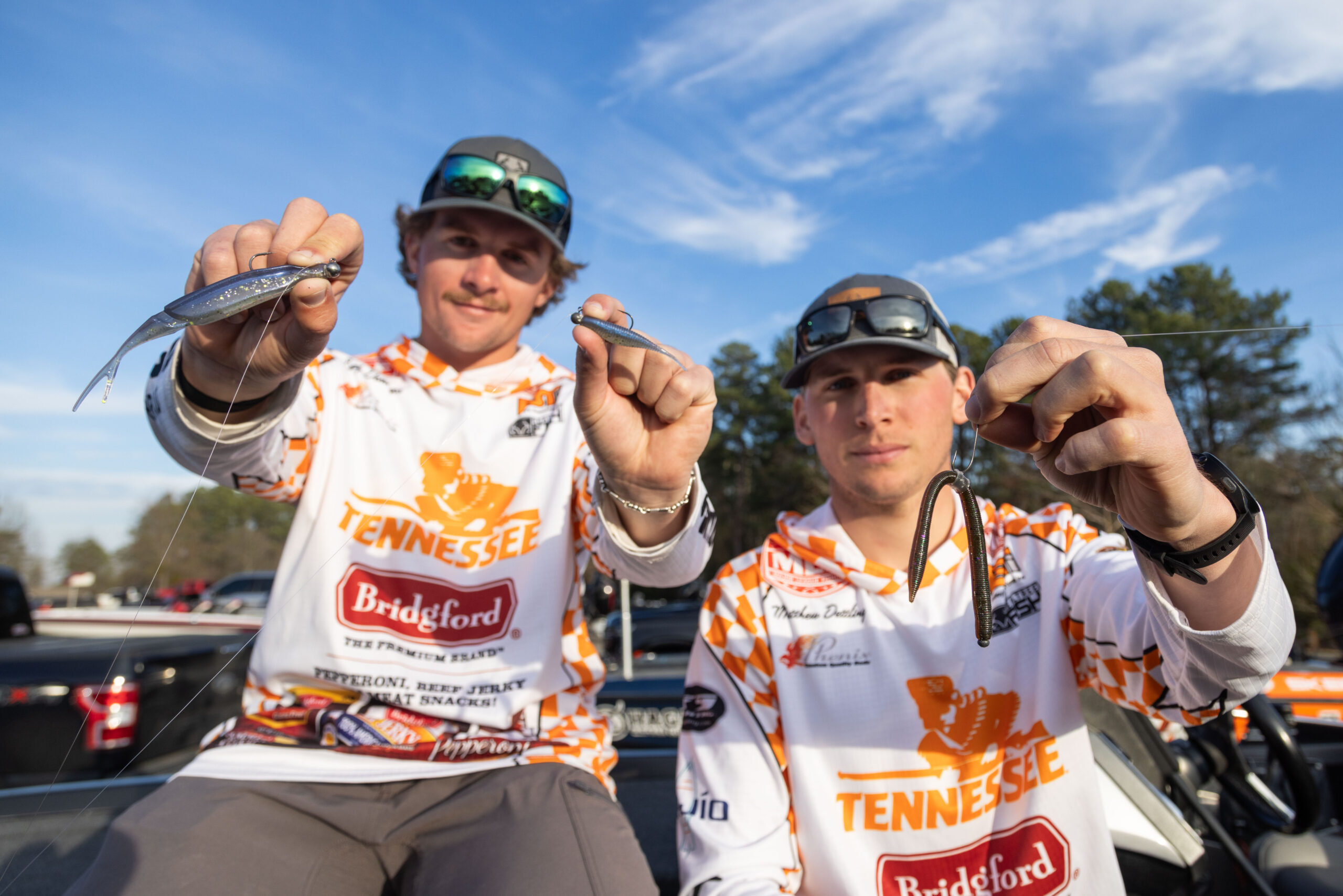
Matthew Dettling and Cody Domingos fished deeper than most in the Top 10 and were in second place after Day 2.
Their best bait early in the event was a 6-inch Yamamoto Hinge Minnow on a 3/16-ounce head. Later in the event, a Yamamoto Scope Shad on a 1/8-ounce head and a Yamamoto Sensei Worm on a 1/16-ounce Neko rig worked better.
“Our primary plan was targeting deep offshore structure, primarily on creek channel bends on the mouths of big creeks and creek arms,” Domingos said. “Anywhere with a sharp break, and if that area had some hard structure, like a stump or a rock vein, that was what we were keying in on.”
Fishing from 30 to 50 feet deep, the pair started strong but pressured their fish.
“Our first couple days, the majority of the weight came on the bigger minnow,” Domingos said. “There were a lot of fish, so we were trying to draw some of the bigger fish in the schools. On the back half of the second day, the fish were getting smarter and smarter, and that’s when we tied on the Scope Shad. It seemed like if you could get it down to them on a good cast they would bite it really well.”
8. Bruckman and Wolfe make the Neko play big
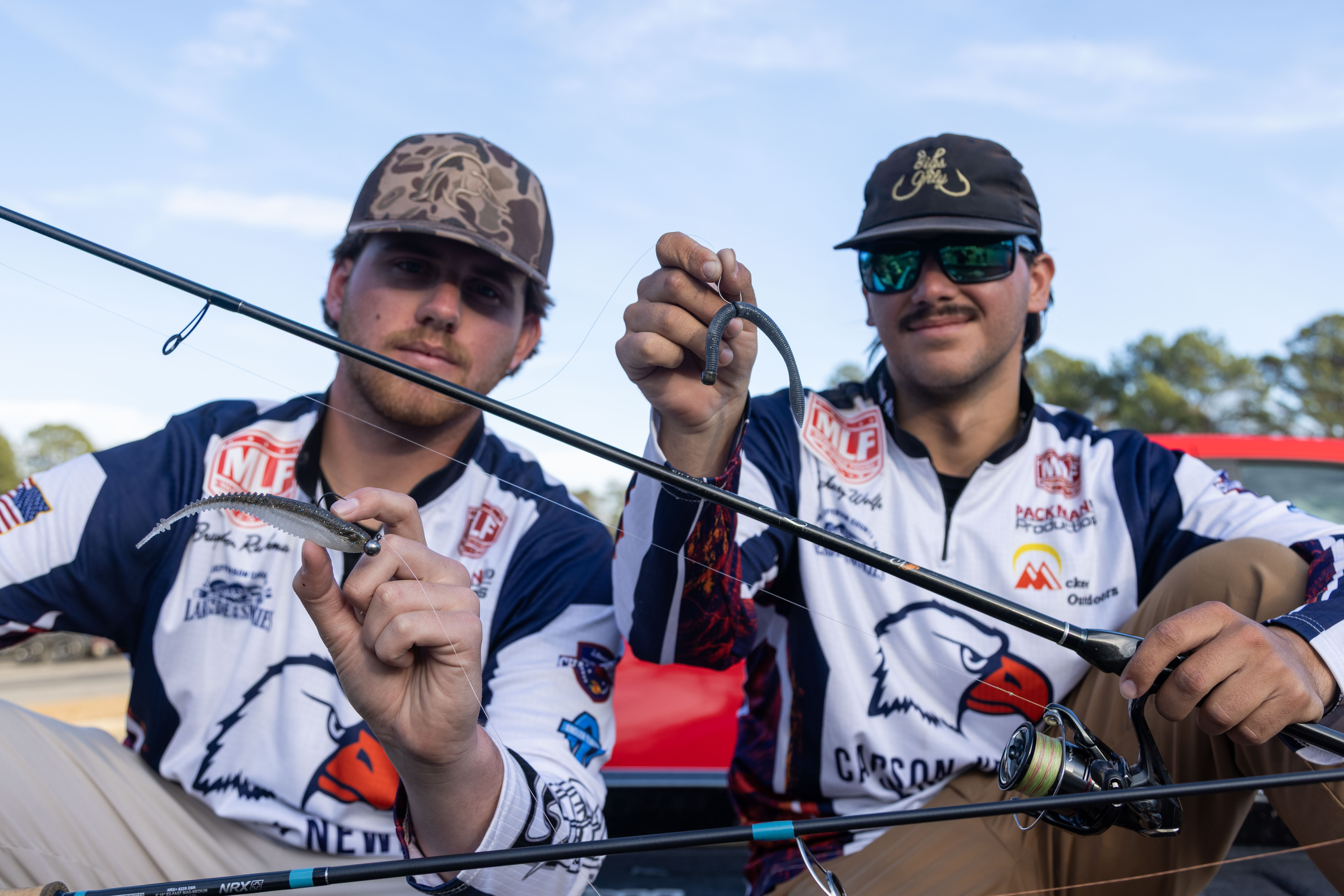
Blasting 25-12 on Day 1, Brayden Ruckman and Zach Wolfe of Carson-Newman got off to a big start.
For the C-N squad, a 5.25-inch Rapala CrushCity Freeloader in gizzard shad and Tennessee shad on a 3/8-ounce head played, as did a Daiwa Yamamoto Neko Fat in natural shad. For the worm, the pair lobbed it on a Neko rig, using 3/16- and 1/4-ounce weights to plumb 18 to 35 feet of water.
“We caught ‘em off of a bunch of stuff I found in pre-practice – it was all brushpiles and cane and stumps,” Wolfe said. “They were kind of roamers on points, just blasting around down there. We weighed most of our fish on the Neko. I think the minnow fish got so pressured, they really only bit in the morning for us. You wanted that heavy weight so you could hit them, and then so they wouldn’t get too good a look at (the worm) on the way down.”
9. Emmanuel makes it happen deep
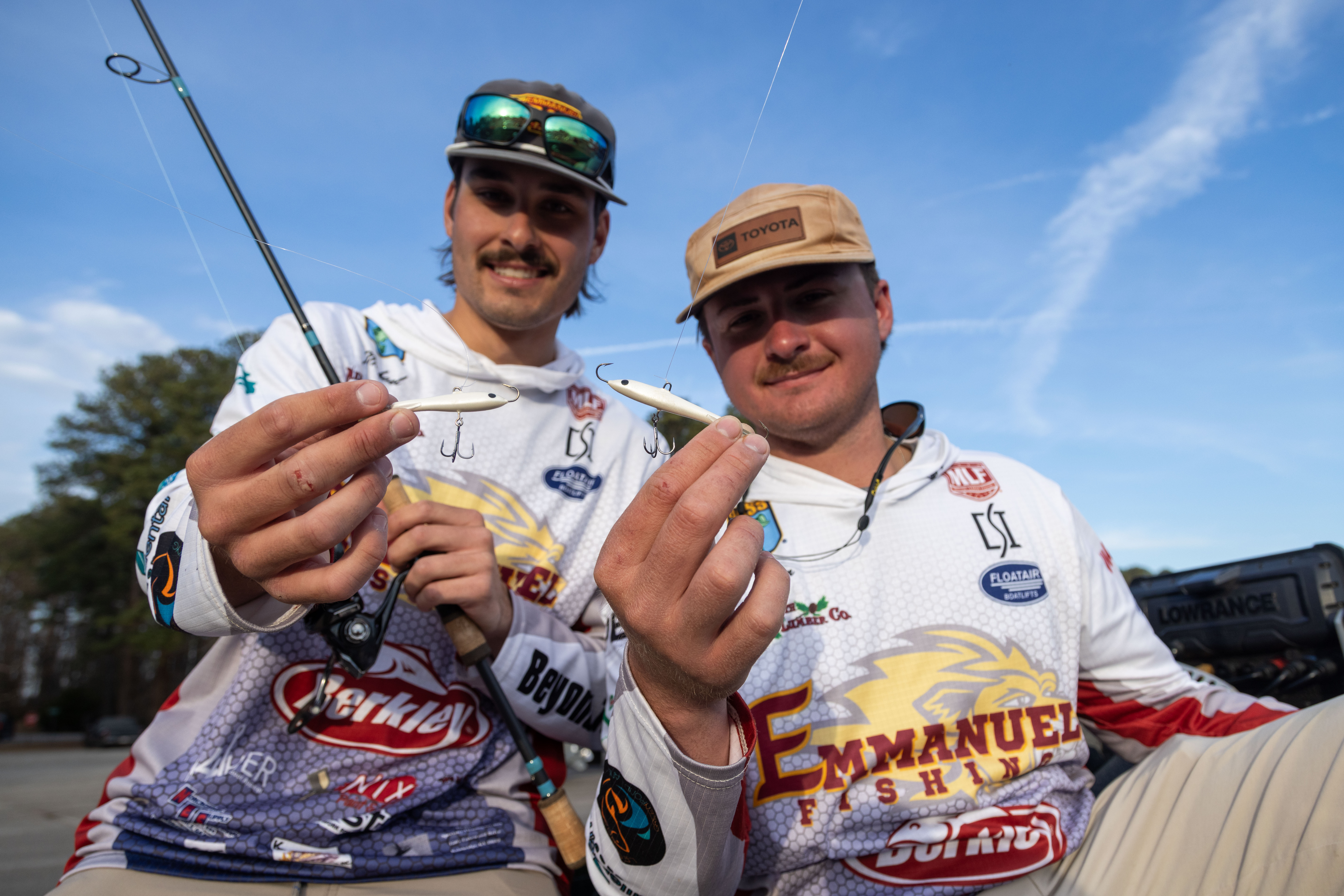
Michael Avery and Peyton Dunn of Emmanuel University fished deep all week and caught almost every one of their fish in 50 to 70 feet of water.
“We found it the second day of practice, like the last hour, and caught two over 5 and a 4,” Dunn said. “It was the hard lines and ditches, some in the main lake and some in creeks. We’d go down them, you’d only see one or two blobs on your LiveScope, on the bottom, and you’d throw down there and about 10 would rise up every time.”
To get down to such deep fish efficiently and get bites, the team relied almost exclusively on a 7/8-ounce Rapala Jigging Rap in pearl white. Shallower, they used a Berkley Stunna 112.
10. LSU-Shreveport stumbles on Day 3

Miles Smith and Levi Thibodaux racked up 48-2 through two days and caught a lot of fish along the way. On Day 3, they only managed four keepers and fell from first to 10th.
Early in the event, they did well fishing grass with a Megabass Vision 110+1 and a Rapala DT 6. After mornings in grass, the pair turned to docks and a Big Bite Baits Nekorama with a 1/16-ounce nail, thrown on a 7-foot, medium-light Zook spinning rod.
“When it was going, we were going through the grass drains, and one of us was cranking and one of us was ‘Scoping with the jerkbait,” Thibodaux said. “Then, we’d go and fish docks and try to pick up another good one or two on the Neko.”
Fishing in 5 to 9 feet of water, the two were on a truly unique and excellent bite the first two days. Unfortunately, that fell apart on the last day.
“We left them biting the day before,” Thibodaux said. “I really don’t know, I’m baffled. I wish we had a backup plan, I really do, but we didn’t find anything out deep.”