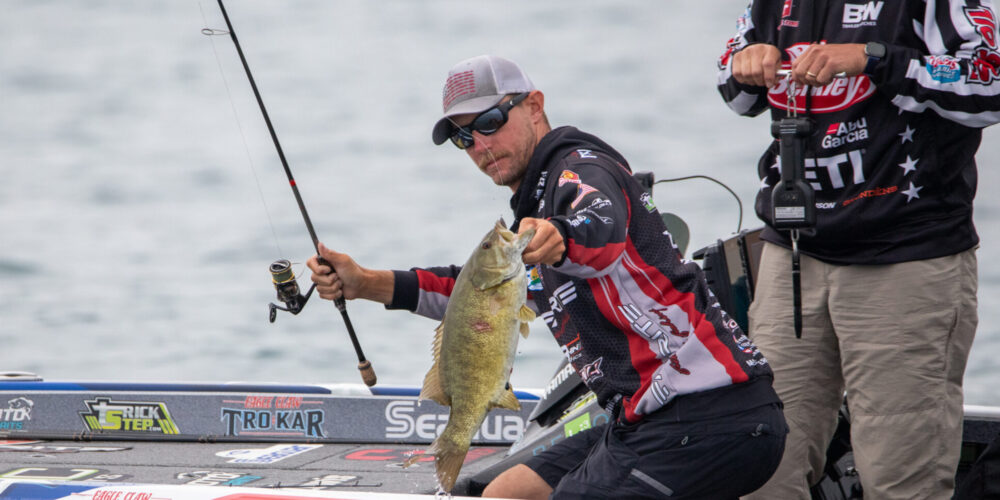
BAY CITY, Mich. — The Bass Pro Tour will wrap up the 2025 season at Toyota Stage 7 Presented by Ranger Boats on Saginaw Bay and the Saginaw River this week. With the Fishing Clash Angler of the Year title, spots in the REDCREST 2026 field and requalification for the Bass Pro Tour all up in the air – not to mention the $150,000 paycheck and red trophy up for grabs for the winner of every BPT event – there’s lots on the line for just about every angler in the field. So, it seems fitting that the pros will have to tackle the largest venue of the season with perhaps the most question marks.
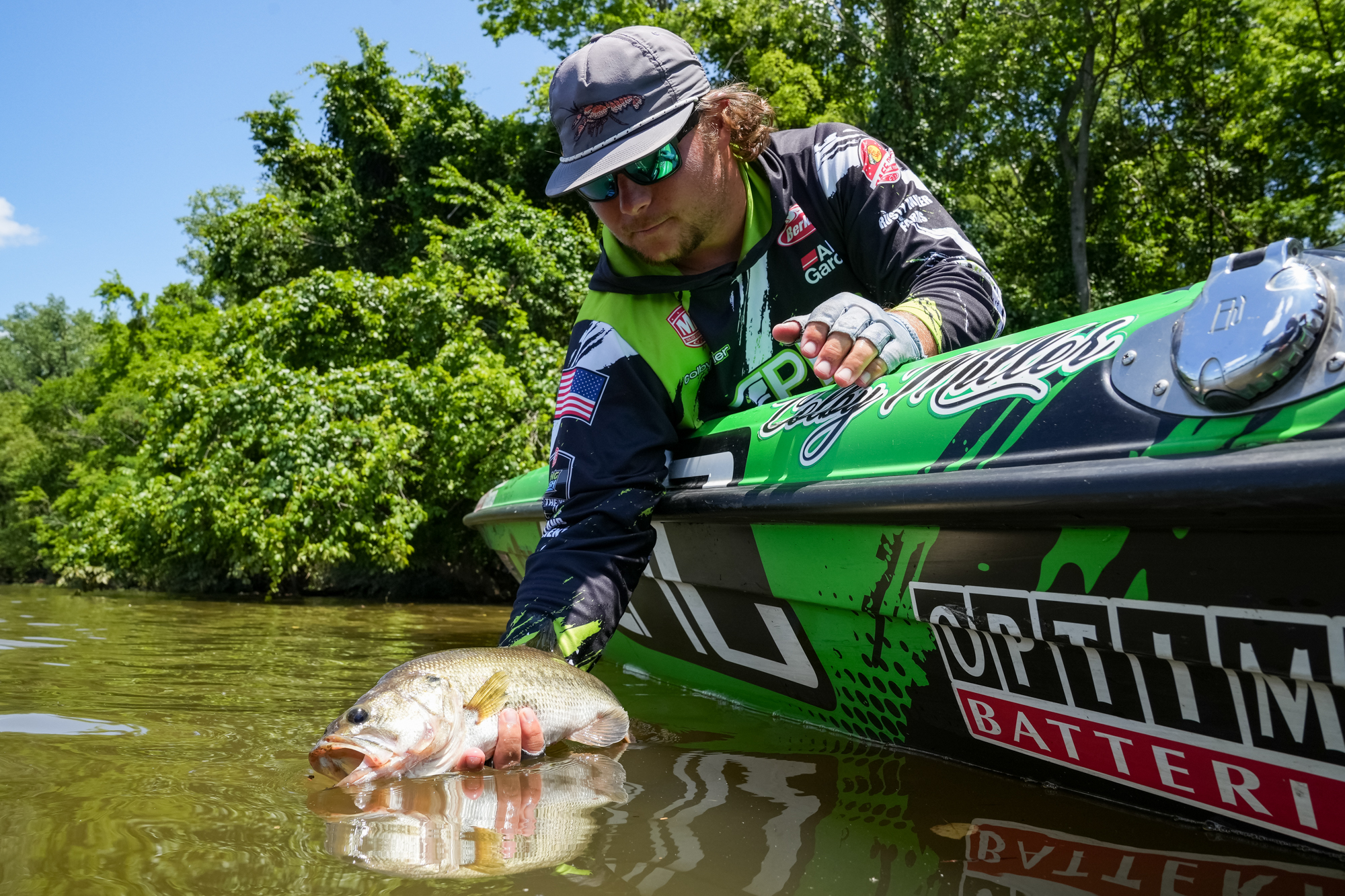
Part of Lake Huron, Saginaw Bay spans more than 700,000 acres – and that doesn’t include the 22-mile Saginaw River, which is also in play at this event. Both the bay and river are lined by miles of shallow, largemouth-laden cover, while smallmouth roam the open water of the outer bay. BPT rookie Colby Miller explained the challenge of trying to get a grasp on such a vast venue in just two days of official practice.
“It’s been just hard to break down, really,” he said. “So much water and so little time. I’m just kind of picking an area and rolling with it.”
Unlike Miller, most of the Bass Pro Tour field has been to Saginaw Bay before, which should help them narrow things down. The fishery hosted the season finale in 2023. However, that event, which was won by Matt Becker, will likely look quite a bit different than the return visit as it was contested with a five-fish limit instead of the current every-fish-counts format. Throw in lower water levels and different competition boundaries, and even those anglers who fared well in 2023 are rethinking where to spend their time and even which species to target.
Word of mouth on smallmouth vs. largemouth
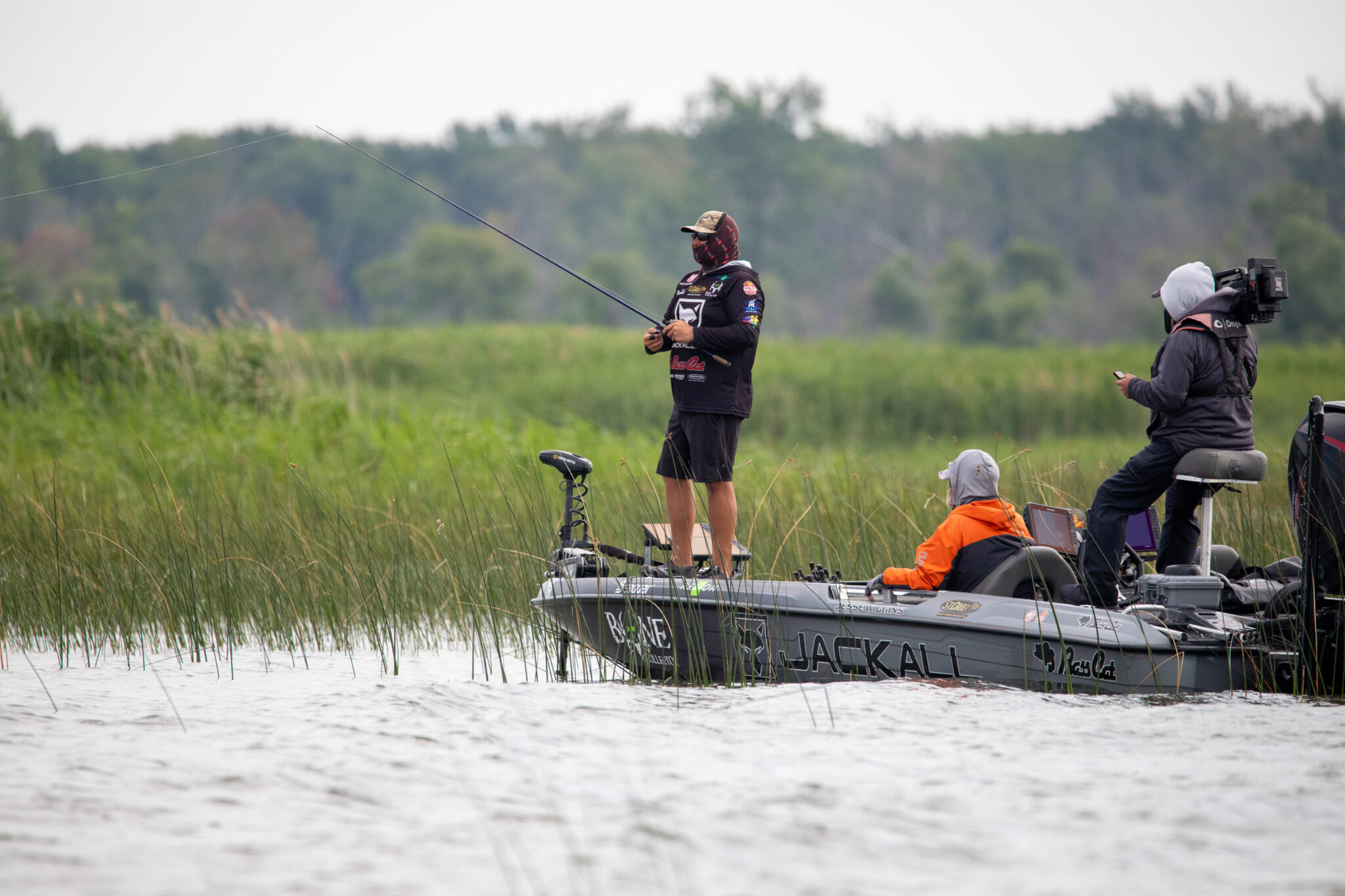
In 2023, Becker prevailed on Saginaw Bay (and claimed the AOY crown in the process) by catching all smallmouth across the final two days. Meanwhile, Jesse Wiggins won the “largemouth derby,” finishing third on the strength of all green fish.
Illustrating the mystery of this event, both anglers are considering a new strategy this time around. Wiggins predicted smallmouth will play a bigger role than in 2023, when most of the field targeted largemouth. Becker, on the other hand, thinks largemouth will loom even larger this year.
“I definitely had a different approach to this one with it being every fish counts versus five fish,” Becker said. “If it was still five-fish format, I definitely would be all-in on the smallmouth. But every fish counts, I feel like the largemouth are going to play a lot more.”
There are reasons to believe both species could produce a victory. Largemouth certainly seem to be more plentiful. In 2023, they represented more than 80% of all scorable bass that hit the scales. Power fishing for largemouth around shallow cover also figures to be more dependable day to day than chasing the notoriously nomadic summer smallmouth.
On the other hand, the water level in Saginaw Bay is reportedly about 6 inches lower than it was in 2023. While that might not seem like much, it’s made some of the shallow, grassy flats inaccessible for much of the field (perhaps an edge for the aluminum boats of Keith Poche and Keith Carson). Meanwhile, there’s more smallmouth water in play on the outer reaches of the bay. Both Wiggins and Miller reported finding a solid smallmouth bite during practice – although catching them without forward-facing sonar could be tricky.
“I think the smallmouth are definitely going to play,” Wiggins said. “There’s a bunch of them, and they’re biting.”
As a result, fans might see quite a few anglers employ a combination pattern. All three of Becker, Miller and Wiggins said they hope to use their lone period each day with forward-facing sonar to chase smallmouth with drop-shots and jighead minnows on spinning rods, then break out the baitcasters and braid and head shallow to wrangle largemouth.
“I think you’ll definitely see some guys mix and match, and then you’ll definitely see guys all largemouth and potentially see some guys commit to all smallmouth,” Becker said. “But it’ll be interesting to see how it plays out as far as catching (smallmouth) without ‘Scope.”
Watching the wind and other X-factors
Wiggins noted that, “in a perfect world,” he plans to use forward-facing sonar to load up on smallmouth – which tend to run larger on average – before switching gears and targeting largemouth, which he thinks he’ll be able to catch at a faster pace with his transducers turned off.
But he acknowledged there are a few variables that could complicate that plan. Chief among them is the wind. Anglers often have to negotiate strong winds and big waves on the Great Lakes, and we saw that on Saginaw in 2023, when storms blew in during the Championship Round and trashed Kevin VanDam’s offshore smallmouth bite, hurting his bid to win his final touring event.
As of this writing, the wind is forecast to increase as the event progresses. If conditions get too rough, Miller and Wiggins expect to see most of the field sticking to largemouth. However, it could impact the shallow bite, too. The wind is expected to blow out of the south Friday through Sunday, which could push water into Lake Huron proper and further drop the water level in the bay.
“It’s definitely going to blow,” Miller said. “I think more on Day 2 than Day 1. So, I’m really hoping that Day 1, I can really lean on the smallmouth and get a pretty good weight rounded up. And then Day 2, if the wind is too bad, probably just try to go largemouth fishing.”
The other challenge with a combination approach is not wasting too much time traveling from smallmouth to largemouth habitat (or vice versa). Wiggins said his strategy is contingent on finding productive largemouth water near the area where he caught smallmouth during practice – trying to run across the bay is too time consuming. Expect to see some anglers taking advantage of the trailering policy in effect this week by putting their boat on the trailer, driving to a new ramp and re-launching during the competition day.
“My game plan is I’m just going to go for smallmouth during the ‘Scope period and maybe some of the period without ‘Scope, and as of now, I’m going to have to load the boat up and get on the trailer and drive to another ramp to go largemouth fishing,” Miller said. “Too many miles in between, and wind being a variable, you lose too much time.”
One last wrinkle to keep an eye on is the offshore largemouth bite. Most of the green fish were caught by flipping, frogging and swimming jigs around shallow reeds and other emergent cover in 2023, but a few anglers successfully plied submerged grass beds. Those sweet spots aren’t easy to find, but given the lower water level, Becker thinks that if an angler can locate productive offshore grass and has it to himself, it could carry him a long way.
“I feel like it’s really opened up the opportunity to see more offshore largemouth,” he said. “I feel like that’s really the wild card in this event – somebody figuring out largemouth that are off the bank in submerged grass or hard cover, whatever it may be. That little bit deeper largemouth, I think, could be key.”
All those variables make it difficult to forecast how much weight it will take to make the Knockout Round cut and hoist the trophy. But all three anglers expect to see bass hit SCORETRACKER® in big numbers, and there’s a chance this event surpasses Stage 6 on the Potomac River (93 pounds, 11 ounces) to set a new heaviest cut weight of the season.
“I think it’s going to be probably around 40 to 50 pounds a day,” Becker said. “I know that’s a big range. Somewhere between 80 and 100 pounds for two days, I think, will make the Knockout Round. I think it’s going to be pretty stout weights.”
Follow all the action
Stream all four days of competition live from 7:30 a.m. to 4 p.m. ET each day on MLFNOW! at MajorLeagueFishing.com, the MLF and MyOutdoorTV (MOTV) apps and Rumble.com. Plus, stay tuned to the website for photo galleries and full coverage of both the event and the Angler of the Year race.