————————————–
Editor’s note: This is just one article from a recent issue of FLW Outdoors Magazine, which publishes both a Bass Edition and a Walleye Edition. To learn more about the magazine and how to subscribe, click here.
————————————–
For many, it is a joyous occasion. A day that symbolizes the end of augers, tiny rods and frozen everything.
It is the day an angler stows his ice-fishing gear for the season.
No more snowmobiles or hours spent peering into a hole. Warm weather is coming, and it is time to start prepping for open water.
That starts with the ceremonial stowing. Boots get placed back in the depths of closets, while augers are hidden out of sight and out of mind in garages, basements and crawl spaces. The space heaters are again placed in the spots outlined in dust on work-room shelves, and the boxes of ice-fishing lures … actually, hold off on stowing those.
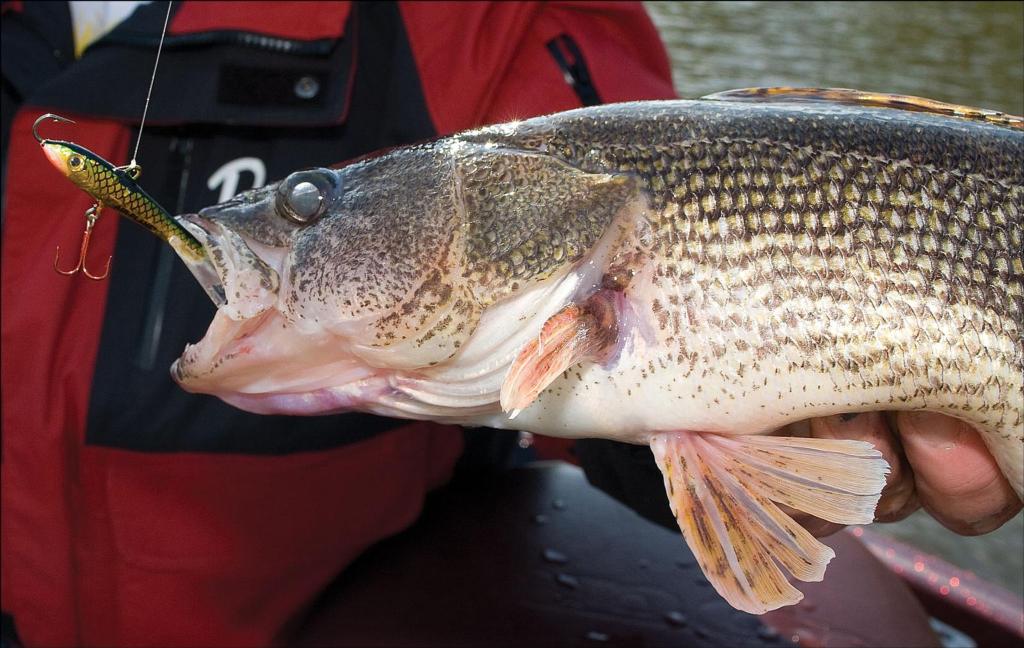
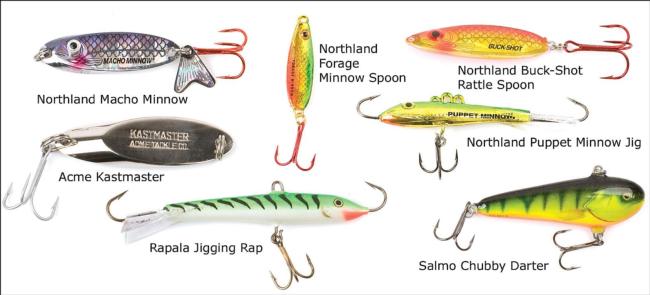
Northland Puppet Minnows, Northland Buck-Shot Rattle Spoons, Salmo Chubby Darters and other ice-fishing lures have a stereotype of being solely for the winter months. It is as if the lures only work when there is 18 inches of ice somewhere above them. Thing is, they are still lures that mimic what walleyes want to eat. And anglers like Dusty Minke have taken to never storing their ice boxes.
“It has been kind of a secret,” said Minke, who hails from Forest Lake, Minn. “I know of a few people who do it, but not many. The thing is, in the right situations they work awesome when there is no ice on the water.”
It may take some outside thinking to clear the mental roadblock of using ice-fishing lures in open water. However, once the roadblock is gone, the lures will catch fish year-round.
Ridding the stigma
Look at a Puppet Minnow. Its slender shape is designed to imitate a shiner or minnow, just like a Rapala Original Floater or other minnow lure. Now look at an ice-fishing spoon. Its tumble and flutter recreate the look of a minnow or shad on its way out. And neither looks any less like a shiner in April or June than in January.
At least that was the thinking that led to Minke and a few other anglers giving them a try.
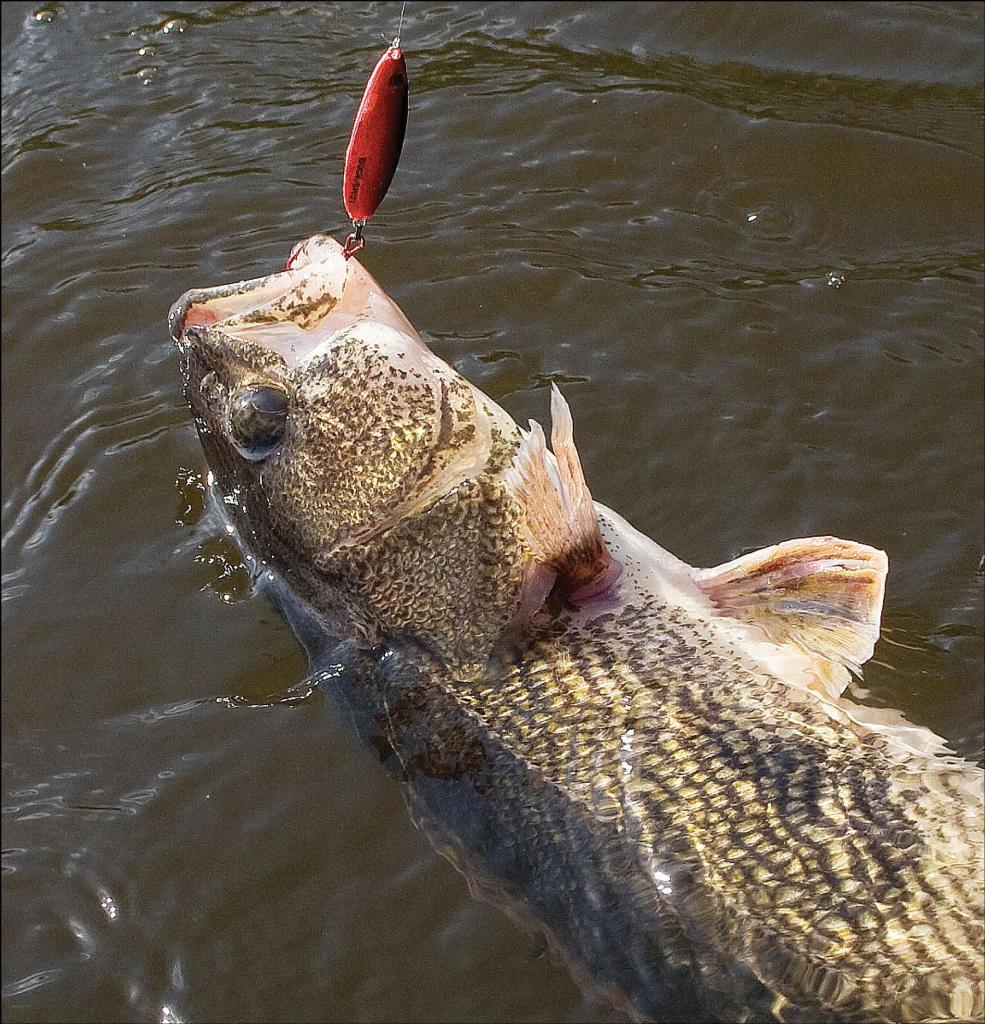 “It’s mainly about the profile,” Minke said. “A lot of ice-fishing lures look exactly like baitfish. They have to because the water is so clear and walleyes can get such good looks at lures below the ice. Now take those lures and put them in situations where the fish don’t get as good a look, where they just see the profile and the action, and they will catch fish.”
Ice-fishing lures were designed to catch fish in a stationary spot. Ironically, in open water they are best for covering water. Unlike a crankbait or even a jig tipped with a minnow, the lures have little action on their own. Instead, the action comes from anglers pumping and ripping them quickly and aggressively, then letting them fall. That type of action lends itself to a faster approach for covering water. That is not to say the lures can’t still be used for slower presentations, though that will be touched upon later.
One of the best times to use them is when fish are being marked on a depth finder, yet they just won’t commit to biting a lure. Often, dropping down and ripping an ice-fishing lure in their faces, just like during winter fishing, will get them to open their maws.
Of course, anglers will want to make a switch in their gear. To feel every rip and have more control over the lures, go with 12- to 14-pound braided line and a 2- to 4-foot leader of fluorocarbon, depending on the water clarity. It is also important to match the lures with the right rod. Ice-fishing rods aren’t the best for casting. Instead, go with a 7-foot rod with medium action and a fast tip. The fast tip is nice for quick rips and setting the hook, however, the medium action is necessary to avoid fatigue while working the lures. Be careful not to use too stiff a rod, though.
“With the braided line, if you use too stiff a rod you will miss a lot of fish,” Minke said. “You will actually be ripping the lure away from the fish on the hookset. That is why I like a lot of action and play in my rod so it gives the fish that extra split second to eat the lure.”
There is one word of caution before anglers start tossing their ice-fishing lures during the warmer months. Because of their treble hooks, be careful about using ice-fishing lures around heavy or snaggy cover.
“The only thing I can see that anglers wouldn’t like about using ice-fishing lures in open water is they can lose them,” Minke said. “It’s not like losing a 50-cent jig. Each one is $3 or $4. They are still cheaper than crankbaits, but most guys don’t want to lose too many.”
That point aside, ice-fishing lures open opportunities unexplored by conventional summer tactics, while also expanding on tried-and-true techniques.
Vertical jigging
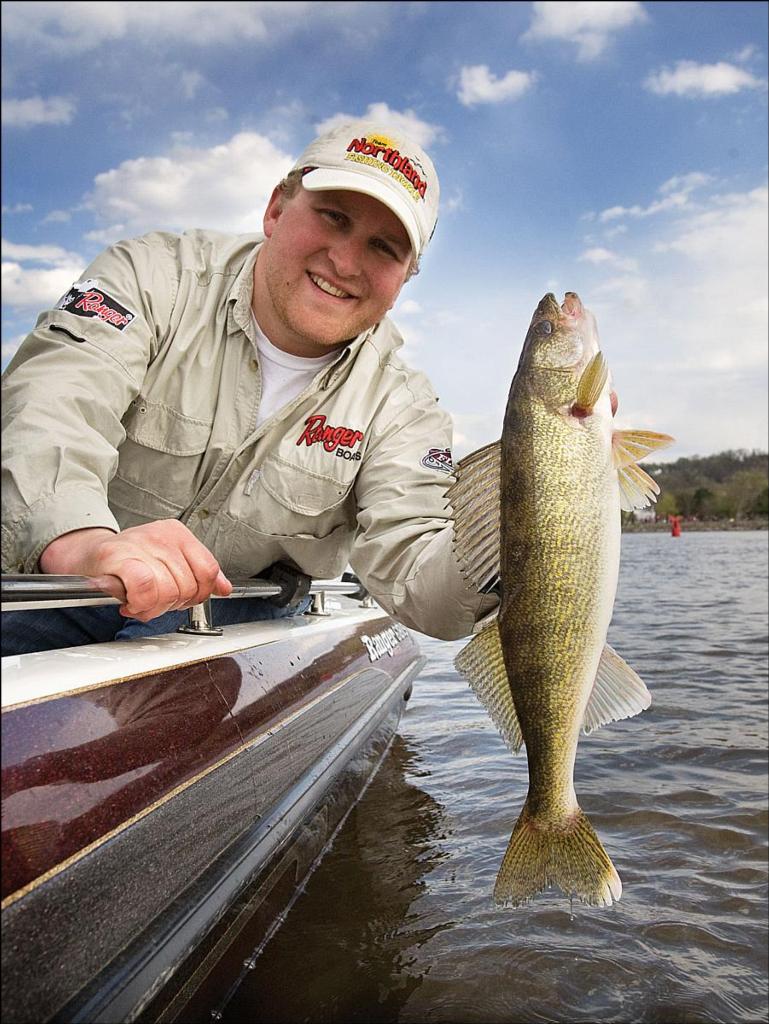
Not surprisingly, vertical jigging provides the perfect scenario for ice-fishing lures in open water.
“That is what the lures were designed for originally,” Minke said. “Of course they will do as well jigged from a boat as they will through the ice.”
Just as he would do with his stool while ice-fishing, in open water Minke will position his boat right over a mid-lake hump or deep hole in a river channel and snap jig a Buck-Shot Rattle Spoon or Northland Macho Minnow just off the bottom. Even the cadence can remain the same for open water as hard water. If the fish are really active, keep pumping the lure upward, making sure to feel for bites on the fall. If the fish are more timid, go with a pump-pause-shimmy-pump cadence. The shimmy, which is accomplished by lightly shaking the tip of the rod to impart subtle vibrations to the lure, is often what gets a fish to bite after the pumps call it in.
The ability to attract fish is why Minke and his ice-fishing brethren like this technique better than a jig and minnow. While the jig can get all the way to the bottom to tempt fish, it is a subtle lure, even when being snapped. In clear water that may be fine, but in stained or deep water, the ability to call in a fish from the other side of a hump with flash and vibration can change the outlook for a day.
Again, speed is the other reason for choosing ice-fishing lures. Instead of spending an hour methodically fishing a hump with a jig and minnow, Minke will let the wind or current quickly drift him over the structure. It is faster than fishing with jigs and more precise than trolling. Plus, the aggressive action of an ice-fishing lure alerts any walleyes in the area of its presence. If they are hungry or active they will bite. If not, Minke will give a few pumps and move on to the next structure. He can basically work two or three structures in the time it would take to work one with a jig and minnow, picking off the active fish as he goes.
Will he miss some fish this way? Probably. But he will also come in contact with more fish by hopping from structure to structure instead of soaking a minnow on one.
“The hardest part is just trusting your lure,” Minke said. “Typically you can’t see the lure on your electronics like you can while ice fishing. So you don’t always know if the fish are responding to the lure. You just have to trust they are. And if they aren’t, I’ll know quickly because I’ve hit all the spots and haven’t caught many fish. Then I can switch to a jig or another technique.”
Sometimes, a switch to another ice-fishing lure may be all that is necessary. If the fish are in the area and are not responding to aggressive movements, switching from a spoon to a minnow-profile lure, like a Rapala Jigging Rap or Puppet Minnow, and methodically shimmying it just off the bottom can serve the same purpose as a jig. Just like below the ice, switching lures, colors and cadences works for open-water vertical jigging.
Also be sure to match the right weight to the depth. Minke has caught fish on ice-fishing lures in 6 feet of water and in 40 feet during the open-water season. The catches didn’t come on one lure size. Spoons as small as 1/4 ounce in the shallows up to hefty 2-ounce spoons around the faces of dams or in current are all options. Carry a variety, and match the size to the conditions.
“The main thing is keeping the line vertical, just like it is while ice-fishing,” Minke said.
Casting
There is little doubt the makers of ice-fishing lures didn’t plan on the lures being cast. But both ice-fishing spoons and minnow-profile lures can be cast with success, the former being a little more familiar than the latter.
Ripping and dropping 1/2- and 1-ounce spoons, like Acme Kastmasters, around weeds may not be every angler’s go-to technique, but it is gaining popularity. The flash and flutter is perfect for aggressive walleyes, while still being enough commotion to induce reaction strikes.
This same technique can be done with ice-fishing spoons. The Macho Minnow has a similar body shape as a Kastmaster, just with a tail for added sound. Cast it over weeds and rip-reel-rip it back to the boat, letting it flutter a little into holes in the weeds.
The technique does do a number on the forearms, which is one of the reasons Minke likes to go smaller and lighter with his ice-fishing choices around weeds.
“If I’m casting around weeds I like a small Northland Forage Minnow Spoon,” Minke said. “It has a lot of flutter, so it will stay up above the weeds. I’ll flutter it into holes and along weed edges. It doesn’t have the flash of a bigger spoon, but it still really mimics a dying minnow.”
The Puppet Minnows, Jigging Raps and Chubby Darters are just as effective, though not around weeds. Because of their treble hooks, they must be fished in areas with little cover. Sandbars immediately come to mind.
Using the same rod and line setup as with vertical jigging, let the lure settle to the bottom and rip and drop it back to the boat like a jig and minnow. However, the minnow-profile lures bring much more to the table than any jig.
The action is the most noticeable difference. While jigs typically come back on a straight or relatively straight line, a minnow lure will shoot forward on the rip and then circle back. The results look similar to a dying or fleeing minnow as it darts and circles left and right. It will also stir up more bottom and have more flash while jetting around, both of which can be seen from farther distances. The Puppet Minnow is especially suited for this technique because it has multiple line ties. When casting, tie to the front eyelet to get the most forward movement on the rip.
Hooking percentage is another key. The aggressive action typically draws strong strikes regardless. However, the added treble hooks mean fewer missed strikes, especially with eater-sized fish, which will usually be snared on the treble.
“Plus, you save money on bait,” Minke said. “Instead of going through minnows, which can be picked off by fish and cover, I can just use the lure. It still looks every bit like a shiner, but I don’t have to buy a dozen of them and worry about keeping them alive.”
Nope. No minnow bucket or aerator necessary when using a Jigging Rap or Puppet Minnow. They just store neatly in a tackle box. The same box that now doesn’t have to be stowed just because it is getting warm outside.