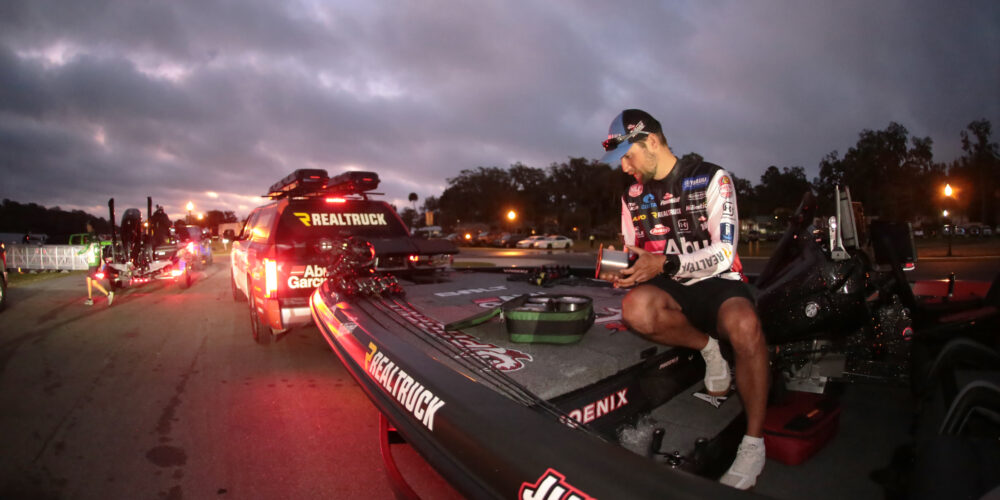
LEESBURG, Fla. — Leading up to practice for Suzuki Marine Stage 2 Presented by YETI, it looked like the unusual recent weather in Florida might create the perfect storm (or lack thereof) for a spawning slugfest on the Harris Chain of Lakes.
After a freezing cold snap gripped the Sunshine State in January, temperatures have reached the high 70s to mid 80s just about every day over the past few weeks, boosting water temperatures more than 20 degrees. Throw in a full moon on Wednesday night, and some pros expected spawning bass to flock to the banks.
However, at least during the two days of official practice, that doesn’t seem to have materialized.
“My practice sucked,” Florida native Terry Scroggins said. “It was terrible.”
While pro anglers are notorious for downplaying their practices, Scroggins wasn’t the only one who found it tough to get bites. Brent Chapman, who finished third when the Bass Pro Tour visited the Harris Chain in May 2021, said the bite appears much slower this time around. Justin Lucas described his practice as “average.”
That said, Scroggins – who knows Florida bass better than just about everyone – said if there was ever an event when practice doesn’t matter, it’s this one. He believes the fish are on the move, which could result in some wild swings from one day to the next and an angler who struggled during practice happening upon the motherlode during Thursday’s opening day of competition.
“This tournament might be won by somebody that doesn’t think they’ve got a chance to win, and then they just land on them in the tournament,” he said.
Uncertainty about what the bass are doing
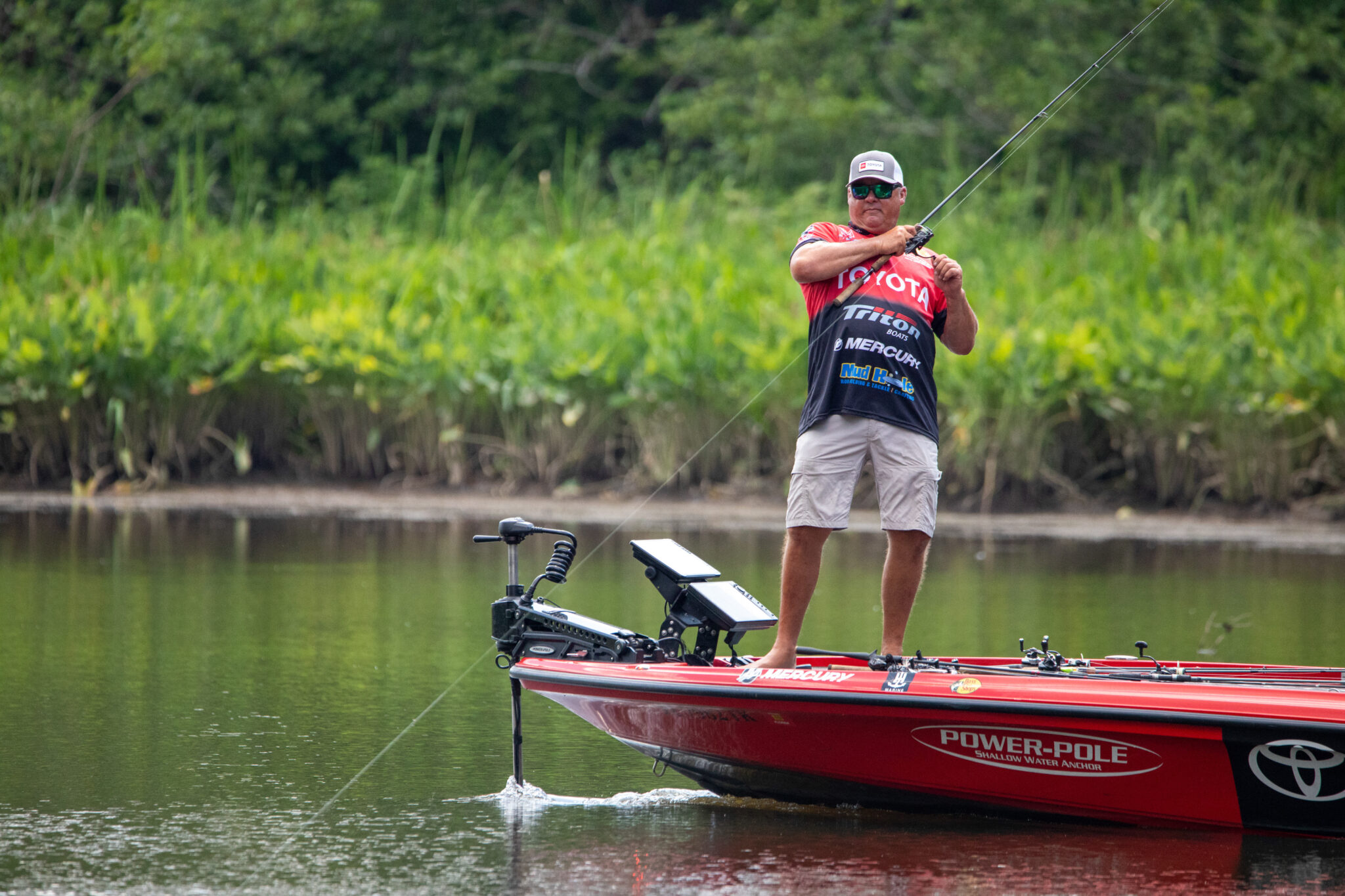
There could be a few reasons why anglers haven’t found big numbers of bedding bass. For one thing, even though Scroggins said he saw water temperatures as high as 70 degrees during practice (which should be prime spawning territory), the fact that it warmed up so quickly might mean most fish haven’t yet completed their prespawn transitions.
“I don’t feel like the majority of the fish have really pulled up to spawn yet,” Scroggins said. “As far as the main lake itself, I think they’re getting ready to pull up to spawn.”
Chapman, on the other hand, thinks the first big wave of fish already spawned and left the shallows. With those fish perhaps in a postspawn funk and others thinking more about bedding than eating, that’s resulted in a stingy bite.
“All the fish will bite really good before you get fish on the beds, but then you’ll get like a few fish on the beds, and for some reason, the whole lake, it gets the fish in a funk,” Chapman theorized. “That’s what it kind of seems like here to me.”
Scroggins also noted that a big bass event with more than 500 boats hit the Harris Chain last Friday through Sunday. Most of the fish that had moved to the shallows before then probably got either picked off or pressured.
“We practiced on Monday and Tuesday, and I think that throttling last weekend just set them back a little bit,” he said. “Hopefully by the tournament, they’ll get biting again.”
While the spawning wave many anglers anticipated might not have materialized, Lucas doesn’t necessarily think that means offshore schools of fish will dominate this event. For one thing, more fish could move shallow, especially given the full moon Wednesday night. Bass could also be staging around shoreline cover waiting to move onto beds. Lucas thinks viewers on MLFNOW! could see roughly half the field beating the banks while the other half targets offshore habitat like submerged vegetation and shell beds.
“I think it’s going to be 50/50,” Lucas said. “You’re going to have 50% of the guys on the bank flipping and casting and have some guys offshore.”
A flipping throwback?
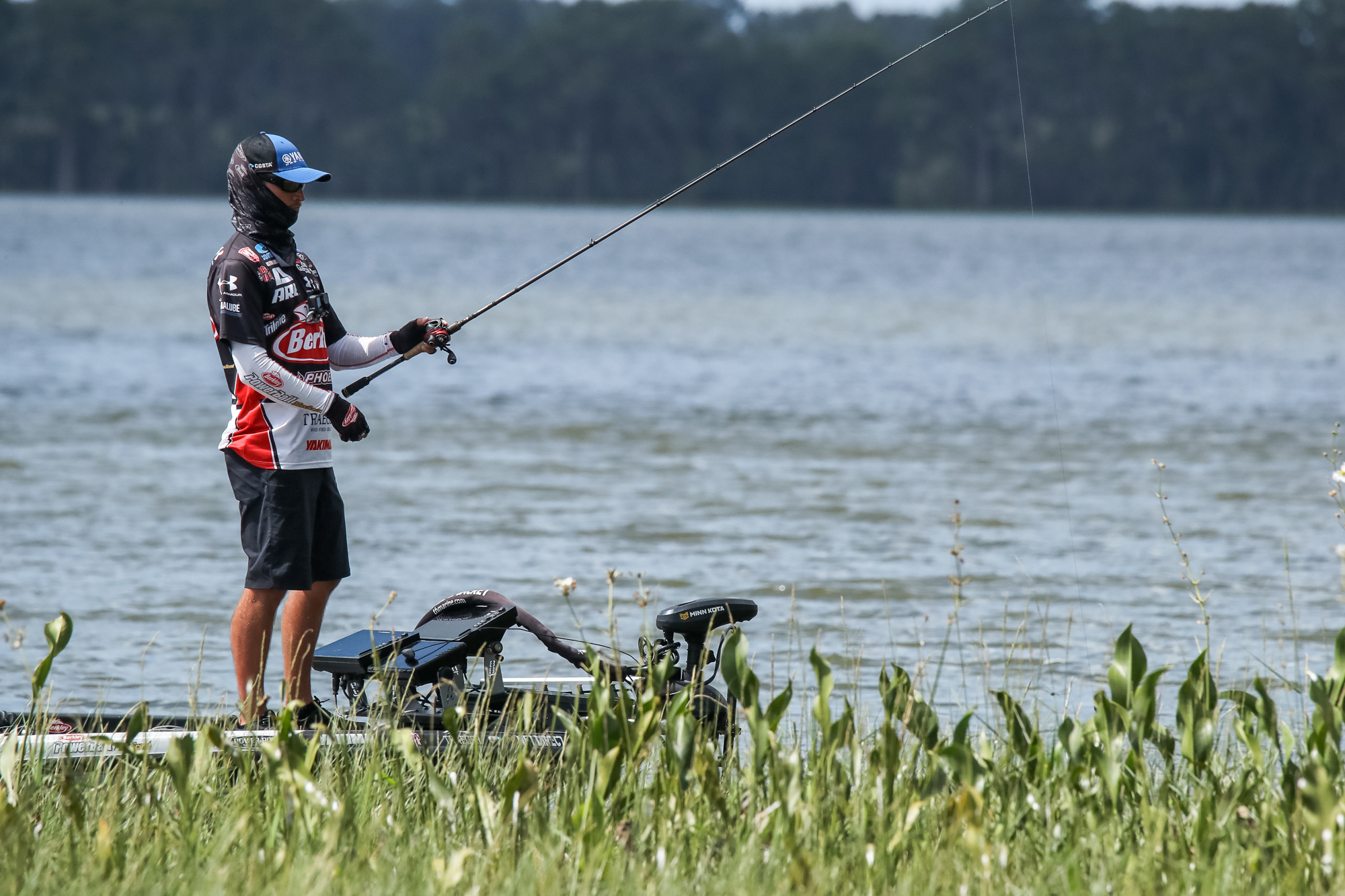
It’s been a while since we’ve seen a top-level tournament in which most of the contenders amassed their weight by flipping and/or punching. But Lucas and Chapman both think the big sticks could experience a revival on the Harris Chain.
“It’s Florida, the fish are spawning, around the spawn, and there’s plenty of targets to hit,” Chapman said. “So, if there’s ever going to be a time when a guy can do it old-school flipping, it’s now. I’ve definitely got my moving baits mixed in there, but it just seemed like in practice, for the amount of time I threw a moving bait, I could flip and generate three to four times the amount of bites.”
Lucas experienced a similar phenomenon. Regardless of whether shoreline cover or offshore schools emerge as the way to win, he thinks reaction baits will take a backseat to slower, more bottom-oriented presentations.
“I think swimming a worm will be popular,” Lucas said. “I think flipping something like a Berkley PowerBait MaxScent General is going to be popular. Maybe flipping something a little bit bigger if the water is dirtier. I think a lot of bottom baits – not as much of a moving bait tournament as much as a soft-plastic, slow-fishing tournament.”
Of course, there’s one variable that could change all that – forward-facing sonar. Even with the Bass Pro Tour limiting anglers to one period per day in which they can use the technology, it still largely determined who advanced to the Knockout and Championship Rounds during Stage 1 on Lake Conroe.
At the Harris Chain, anglers don’t think it’ll play nearly as big a role. Chapman thinks catch rates might still be a tad higher when anglers are using forward-facing sonar than when their transducers are turned off, but he doesn’t expect to see anglers racking up 40-plus pounds in a single period and then struggling the rest of the day, as was often the case on Conroe.
“I haven’t caught any that I can say I caught really looking at them on forward-facing sonar,” he said. “But the thing you take for granted is just being able to use it to find the grass edges and position yourself better. You might be getting a lot more bites because you’re able to see that grass edge, versus in competition when you can’t use it, you won’t be as efficient.”
Picking the right lake will be paramount
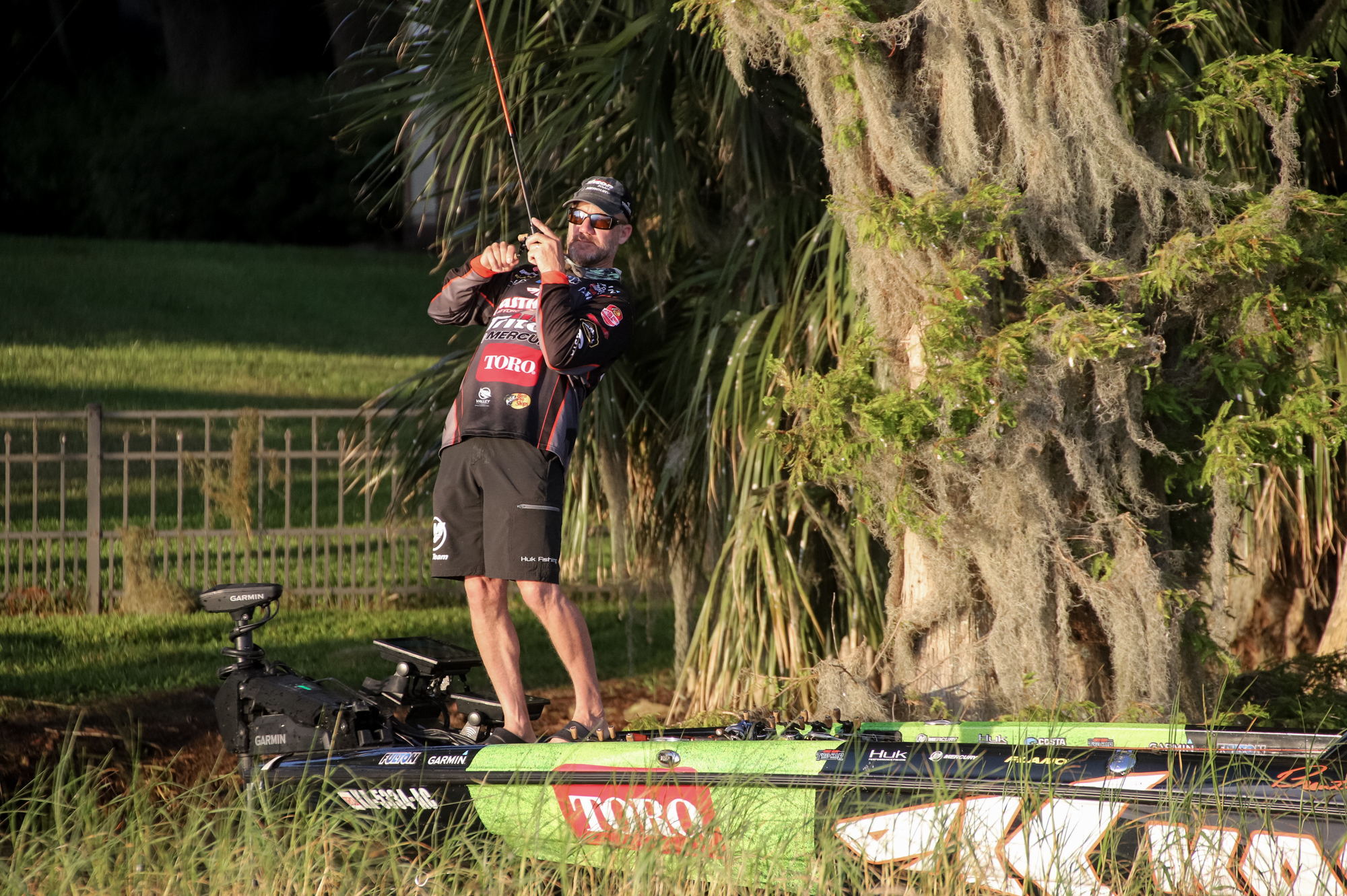
Figuring out the right baits and techniques to trigger bites will only be part of the equation for competitors this week. Who can find the most productive zones within the sprawling Harris Chain will be a significant storyline, especially since its locks and idle zones can make traveling from one area to another time-consuming.
Complicating the decision of where to fish is the fact that the largest lake on the chain, Lake Apopka, recently experienced a significant fish kill. That news was enough to scare off Scroggins, who said he typically likes Apopka the best. However, Lucas still thinks some anglers could find success there.
“I think there’s still going to be some fish caught down in Apopka,” he said. “Not every fish died. So, I think it’s going to be a player.”
Scroggins tried to sample every other lake in the chain during practice (not easy in two days). He’s torn between making the long run to Lake Griffin, which includes a trip through a lock, or staying more central in lakes Dora and Beauclair – illustrating the dilemma the field will face.
“When you go lock through, you’re committed to (Griffin),” Scroggins said. “You’re stuck there. So, I’ve got that, and then I’ve got the Dora/Beauclair area. I’m probably going to go there because I’ve got more options. If something doesn’t work, you’re not really stuck just being there.”
Chapman, meanwhile, plans to maximize his fishing time by staying in Lake Harris, where anglers will take off from Venetian Gardens.
“All the lakes are pretty good, but the way I look at it is Harris is where 90% of the tournaments go out of, so this lake gets continually restocked,” Chapman said. “I’m like, why do I want to run past fish and potentially run an extra 45 minutes or an hour and lose fishing time when I feel like there’s a lot of fish right here as well?”
Time will tell which anglers can put all the puzzle pieces together – where to fish, what to throw, which habitat to target. Across the field, the anglers expect the number of scorable bass to be lower than at Conroe, but Scroggins thinks fans will see some big ones hit SCORETRACKER®.
All three of Scroggins, Chapman and Lucas admitted they don’t really know what to expect weight-wise but speculated it will take between 25 and 30 pounds per day to qualify for the Knockout and Championship Rounds.
“I think if you have 25 pounds a day, you’ll make the Knockout,” Lucas said. “I think if you have 25 pounds again in the Knockout, you could get in the (Championship). And then who knows what’s going to happen on the final day.”
Catch all the action on MLFNOW! from 7:30 a.m. to 4 p.m. ET each day at MajorLeagueFishing.com, the MLF mobile app, MyOutdoorTV (MOTV) and the Major League Fishing channel on Rumble.