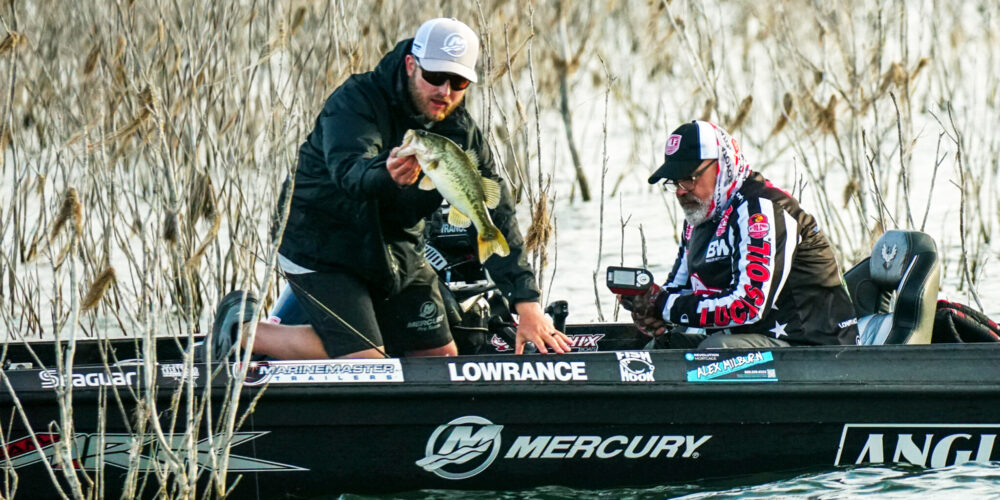
It can be one of the most daunting situations in bass fishing: You look out over a lake and see thousands of trees emerging from the water. Whether it be a forest of standing timber that’s been flooded since the creation of a reservoir, a sea of cypress trees lining the shallows or a situation where the water level rose and suddenly there’s miles of shoreline cover in play, knowing there’s more habitat than you could possibly fish in a day can intimidate even the most experienced anglers.
Not so for Bass Pro Tour angler Bradley Roy, though. That’s one of his favorite scenarios.
The Mercury pro has developed a knack for finding bass that live in vast fields of wood. He showed that earlier this season, when he finished fifth in the two-day Qualifying Round on Texas’ Lake O.H. Ivie – a forest of flooded salt cedars – before ultimately finishing 15th at Stage 4. The biggest win of his career came in a similar scenario, when he flipped trees at Bussey Brake in Louisiana to win the 2022 BPT season opener.
Roy shared some of his tips for making huge swaths of flooded wood feel manageable and getting the bass out of gnarly cover.
Shrink the playing field
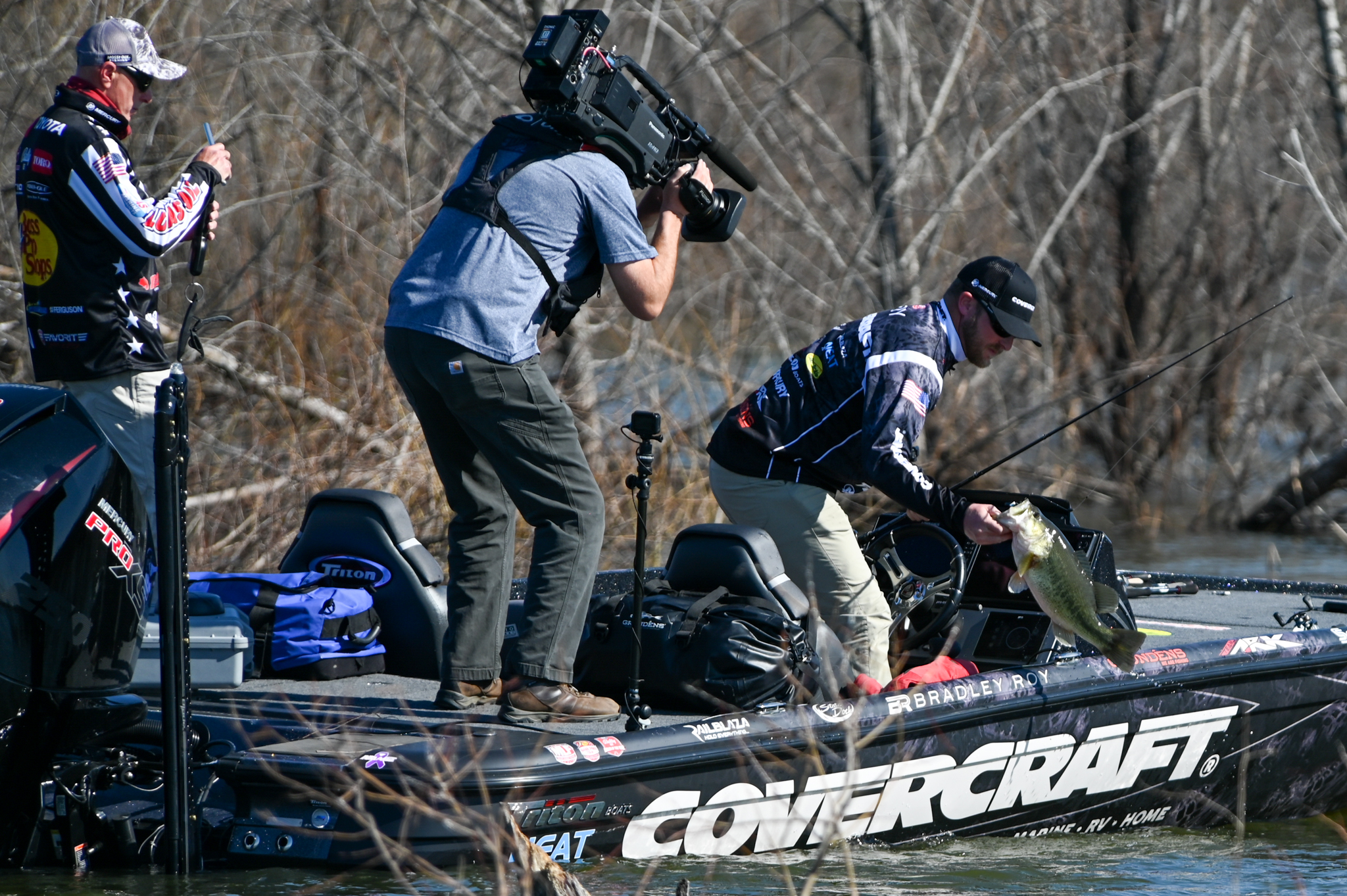
Roy can often start to narrow down the number of targets that might hold bass before he ever hits the water. His experience has taught him where fish are likely to congregate based on a few environmental factors.
Most important, especially when dealing with shallow cover, is water level. If the water is rising, the bass are more likely to be on the inside edges of the cover (closest to the bank). Conversely, if it’s falling, Roy starts his search on the outermost habitat.
“If the lake is still coming up, a lot of time they like to be on the backside of that stuff,” Roy said. “If they’re dropping the lake, a lot of times they’ll be on the front side of that stuff a little more. So, paying attention to all those different factors is really what leads you to an easier way to break it down.”
Time of year is also a significant factor. If it’s near the spawn, Roy is only going to focus on cover where the bottom is shallow enough for a bass’ bed to get some sunlight. That exact depth can vary based on water clarity, but he’s generally not going to be fishing trees in 25 feet of water. A summer thermocline, too, can limit how deep the bass will live.
For a starting spot, Roy gravitates to contour irregularities – channel edges, points and places that allow him to fish multiple depths near one another.
“There’s points, there’s contour change, things of that nature,” he said. “Bass are what I call edge creatures. They like to follow the edge.”
Once he starts fishing, it’s all about listening to the bass. As soon as he generates a few bites, Roy analyzes where they came from. If there’s multiple types of wood in the mix, did he get bit off the same sort of tree? Was the depth consistent? If he got two bites in 4 feet, for instance, he might look for some trees in 2 feet and some in 6 to see if that matters.
If he’s getting bit, it doesn’t take long to pinpoint the high-percentage trees or areas, and Roy can then move more quickly and target only those.
“Once you visualize and start to put it together and get a bite, it’s funny how it actually starts to pop out to you,” he said. “When you’re going down the bank, you’re like, ‘That’s the one.’ There may be a million trees there, but that looks like the tree that there’s going to be one on.”
Wrangling bass from wood
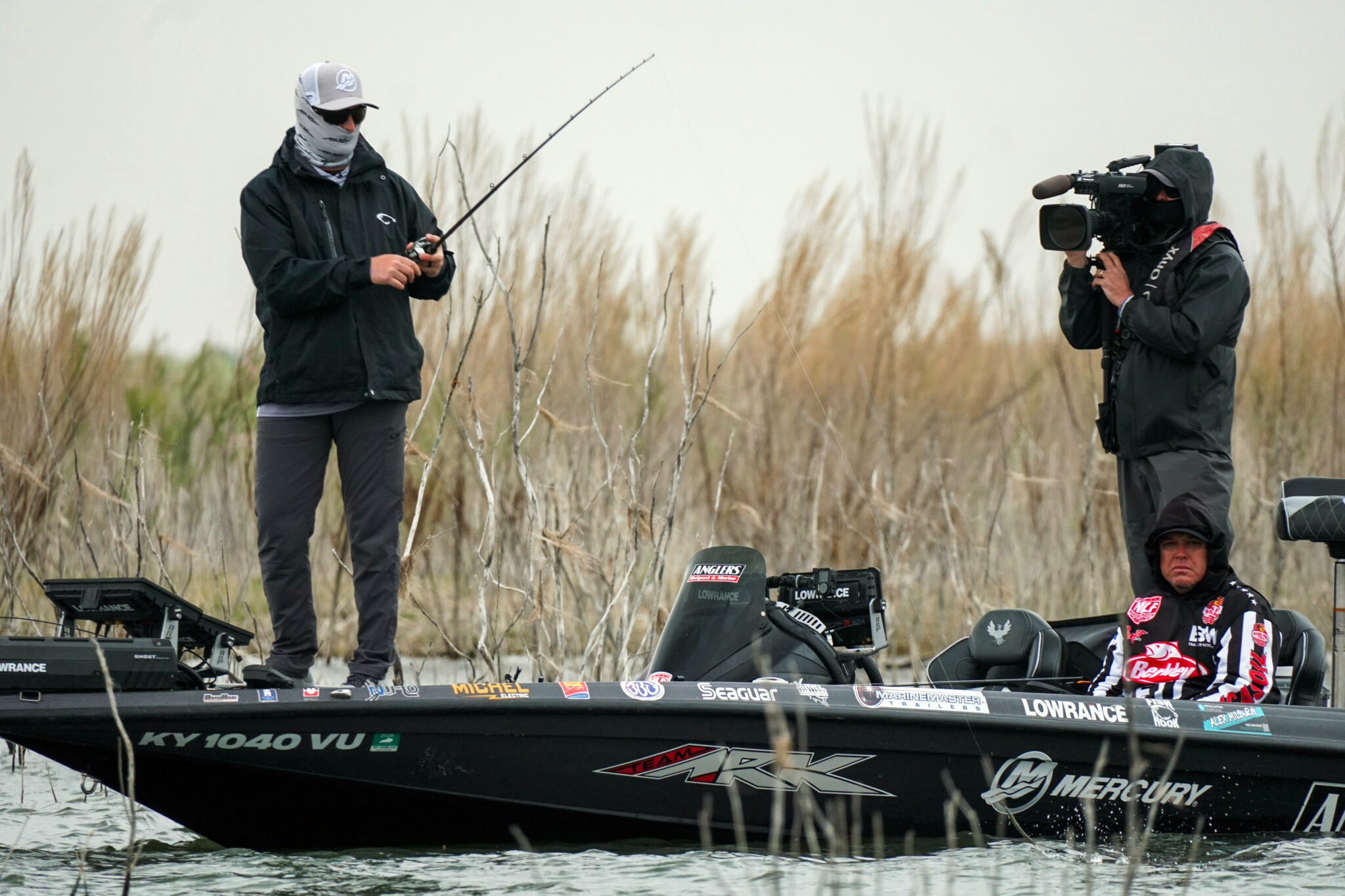
Anglers face many of the same challenges (and can employ many of Roy’s pointers) when it comes to fishing vast grass flats or seemingly endless stretches of riprap. But what makes flooded wood more challenging is the fact that it’s difficult to cover water quickly by making long casts with reaction baits.
Roy usually shies away from treble hooks when it comes to fishing heavy wood. He also sticks to power techniques with which he can use heavy line and a stout rod unless as a last resort.
“There’s just simply techniques that will not work, because if you hook them, you’re going to lose them,” Roy said. “There may be techniques that you can get bit on, but you’re not going to get them out.”
If the bass will eat topwater, Roy likes buzzbaits and frogs, because the fish typically come out of the cover to get the baits, and he can horse them to the boat. Same goes for swim jigs and single-hooked swimbaits. But he said flipping and pitching is “by far my No. 1” choice around wood.
He cautioned that “you’re going to lose some fish in heavy cover – it just happens.” But one trick Roy employs to increase his landing ratio when he’s flipping wood is downsizing his hook. That may sound counterintuitive when it comes to wrenching big bass from thick cover, but he believes it’s made a difference.
“I actually downsize my flipping hook,” he said. “Obviously, you have to have a big enough flipping hook to get it out of your bait – it depends on the soft-plastic you’re using. But I’ll use as small as I can. Whereas usually I’d use a 4/0, I might go to a 3/0 or a 2/0. And the reason for that is when you hook a fish, if you’ve got a big ol’ hook sticking out the side of his mouth, when you’re fighting him and he’s swimming around that cover, if that hook hooks into the tree, the fish is going to come off every time.”
Roy’s other tip: If you have two flipping sticks, spool one with braid and one with fluorocarbon. Roy always starts with braid, as its lack of stretch gives him a better hookset and more control over the fish. But he said braid tends to “bite into” wood, which can lead to more snags and hurt your chances of landing a bass if it wraps the line around a limb. So, Roy typically has flipping setups with both 65-pound braid and 20- to 25-pound fluorocarbon at the ready.
“If I feel like there’s an opportunity for me to catch some big ones, I’m going to throw braid,” he said. “But I do usually keep some fluorocarbon – some 20- or 25-pound Seaguar AbrazX – ready to go, because I don’t want it to always wrap into the wood and cinch into that wood.”