
If you’ve paid attention lately, you know that the hottest trend in American bass fishing (courtesy of Japan) is the increasing popularity of small, square or spherical soft plastics with protruding skirt material — or, in tackle nerd vernacular, “fuzzy dice” baits.
American anglers first caught wind of these unique soft plastics from Japanese pros such as Taku Ito and Kyoya Fujita, both of whom have scored top finishes on the Bassmaster Elite Series with this bait style. Initially, it was easy to write them off as a gimmick (and many still do). But with more and more American pros learning that these crazy-looking baits really work – and, as a result, more tackle companies producing their own versions of “dice-style” or fuzzy baits – the trend has become hard to ignore. At ICAST in July, more new fuzzy baits made their debut than just about any other category.
Over the past couple years, fuzzy plastics have started to make their presence felt on the Bass Pro Tour, the most notable example being Michael Neal’s win on the St. Lawrence River in 2024 using a homemade contraption that he stitched together at the kitchen table of his Airbnb. Other pros who have embraced fuzzy dice include Alton Jones Jr. and Nick Hatfield. Both were willing to share what they’ve learned from fishing the unique baits and why they believe the category is the next big thing in bass fishing.
The dice players

The “fuzzy dice” category got its name thanks to the most well-known bait in the family, the OSP Saikoro Dice Rubber — a small cube with imprinted numbers like an actual die. However, there are other baits that fit into the category, too.
Like OSP, most of the more established offerings come from Japanese manufacturers, like the Geecrack Imo Kemushi and Imo Kemushi Cue Bomb as well as the Hideup Coike Fullcast. However, over the past year or so, more and more American companies have devoted resources to producing their own fuzzy baits. Examples include the Strike King Tumbleweed, the Big Bite Baits Scentsation Fuzzy Stick (a mass-produced version of Neal’s homemade bait) and several offerings from Yamamoto and Z-Man.
While those baits are similar, they offer different sizes, shapes and rates of fall. Some, like the Saikoro Dice Rubber – a 1/2-inch cube – are simply bite-sized pieces of plastic with strands of silicon skirt protruding from the bait. Others, like Yamamoto’s Fuzzy Senko and Z-Man’s Fuzzy BugZ and Fuzzy TRD, added skirt material to already proven bass-catching soft-plastic shapes. The Imo Kemushi is available in several sizes and options, from the cylindrical Slim Worm or Stick Worm to the Cue Bomb, a 1 or 1.2-inch sphere. Most of the above are offered in different plastic materials for different sink rates.
The Hideup Coike Fullcast and Yamamoto Uni, meanwhile, are unique because, rather than having silicon skirt protruding from the bait, they have spikes emerging from their round bodies that are molded as part of the lure.
Unique drawing power

Fuzzy dice baits look quite different than traditional soft plastics — and not much like anything in nature, for that matter. Both Hatfield and Jones believe their unique appearance combined with their slow fall is what makes them so effective.
Jones first received some early fuzzy-dice intel in 2022 from his connection to Geecrack.
“My relationship with them opened my eyes to what’s going on (in Japan), and the Imo Kemushi Stick Worm was the first bait I was introduced to,” Jones said. “I used that bait at our last two Bass Pro Tour tournaments in 2022. I caught some big fish with it at both and immediately became a fan because the bait has incredible drawing power. That offseason, I ordered a bunch of different baits and started exploring them more.”
A student of the game and an avid follower of tackle trends, Hatfield pays close attention to new techniques coming from Japan, which first piqued his interest in these baits.
“I try to stay in the loop with JDM tackle and the techniques they use and love to watch the Japanese anglers because they do things a lot different than we do,” Hatfield said. “I’ve spent time in the boat with some anglers from Japan, and there’s so much to learn. That’s what got me interested in fishing these baits. I got some OSP Saikoro Dice Rubber and Geecrack Imo Kemushi and started tinkering with all of the different baits early (in 2024) and have caught a lot of fish with them since then.”
Like many anglers, Hatfield is still trying to understand exactly why these baits work. He believes the primary factor is they’re just something new the bass have yet to see.
“I think the biggest thing is that they’re new and that much different,” he said. “I don’t know if the fish think it’s a crawfish, a goby or a little bug, but it’s so much different than the plain old worms the fish are used to seeing. It doesn’t have a lot of action underwater, but I saw this year for bed fish that you would throw a bunch of different baits and then throw one of these in there and get bit on the first cast.”
How to fish them
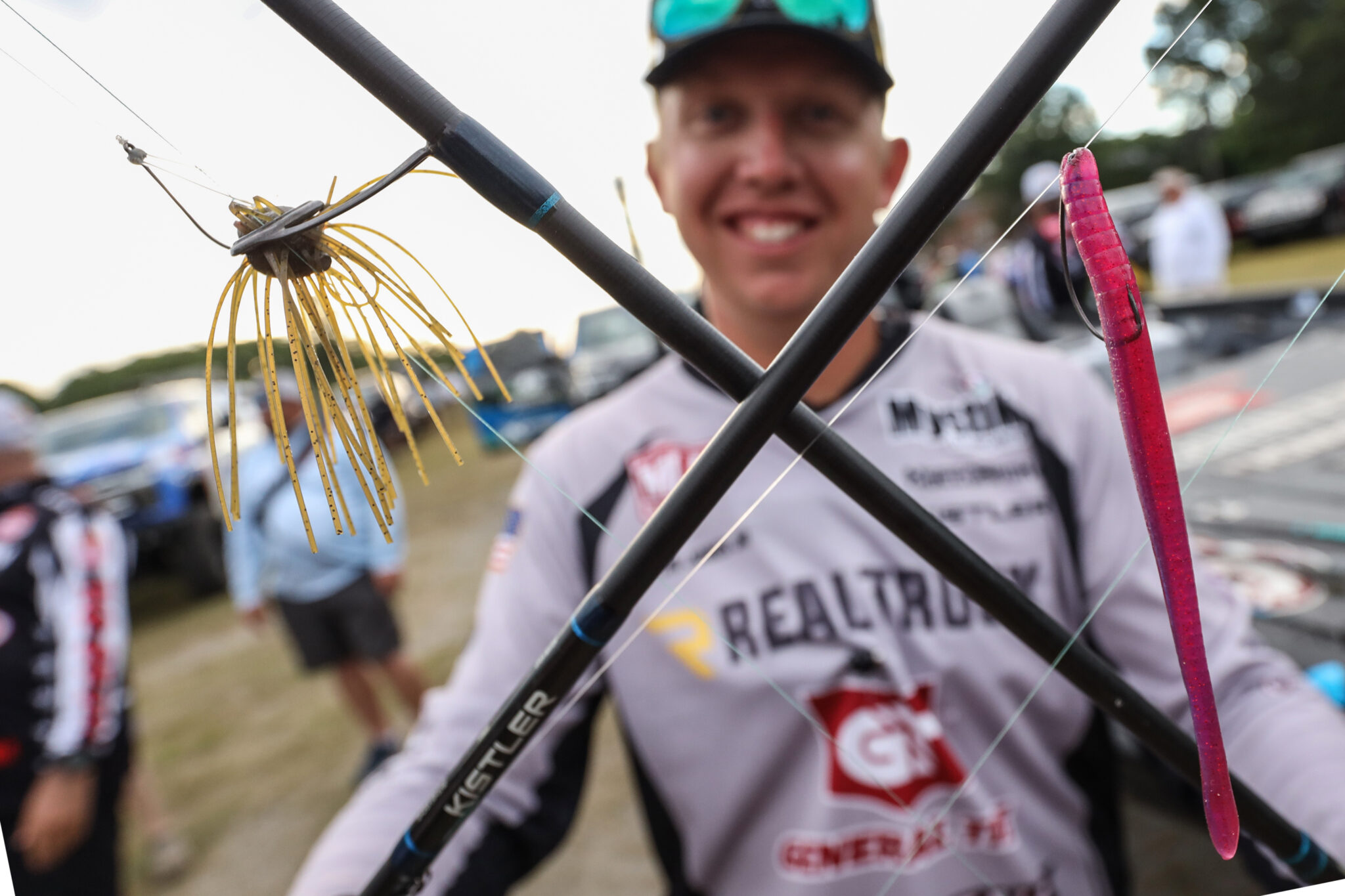
Fuzzy dice are almost always thrown on a spinning rod, but the baits can be rigged multiple ways. Both Jones and Hatfield have experimented with them on three popular finesse rigs: a drop-shot, a Ned rig and a wacky-rig hook.
“I fish it either weightless or on a No. 1 Hayabusa wacky rig hook with no more than a 1/32-ounce nail weight,” Hatfield said. “You want to keep it super light and finessey on the fall. I’ve also fished them on a drop-shot and have had success with the Stick Worm fished on a Ned rig head as well. They have a version with a buoyant soft plastic that helps to stand it up.”
Jones primarily fishes dice baits on a No. 1 VMC wacky/Neko hook or on a drop-shot rig.
“I prefer to fish them weightless, either the Cue Bomb or the ‘dice,’ but they have an incredibly slow fall rate — it’s maybe a foot every four seconds, so it hardly even sinks,” Jones said. “I’ll insert a small nail weight into it to be more efficient when using forward-facing sonar or when casting to docks and brush piles.”
Using both his eyes and electronics, Jones has observed how fish respond to these baits and used that understanding to dictate his presentations.
“I’ve noticed that the fish rarely go down to the bottom and get it, so the slower fall is critical,” he said. “Anything deeper than 12 feet, I’ll rig it on a drop-shot and use a longer leader of around 18 inches to separate the weight from the bait.”
Jones will often fish the drop-shot in the middle of the water column, imparting much more action than he does with other soft plastics. He’s also careful to hook the bait correctly to increase his hook-up percentage.
“I fish them with fairly violent shakes on a drop-shot to get those tentacles to move more, then let it free fall,” Jones said. “That is an efficient way to catch fish in the middle of the water column when they’re pressured and not responding well to minnow baits. I’ll also use a larger hook and hook right into the meat of that little ball on the Cue Bomb, so even if the bait spins around in a fish’s mouth, you can still hook them.”
Situations and scenarios
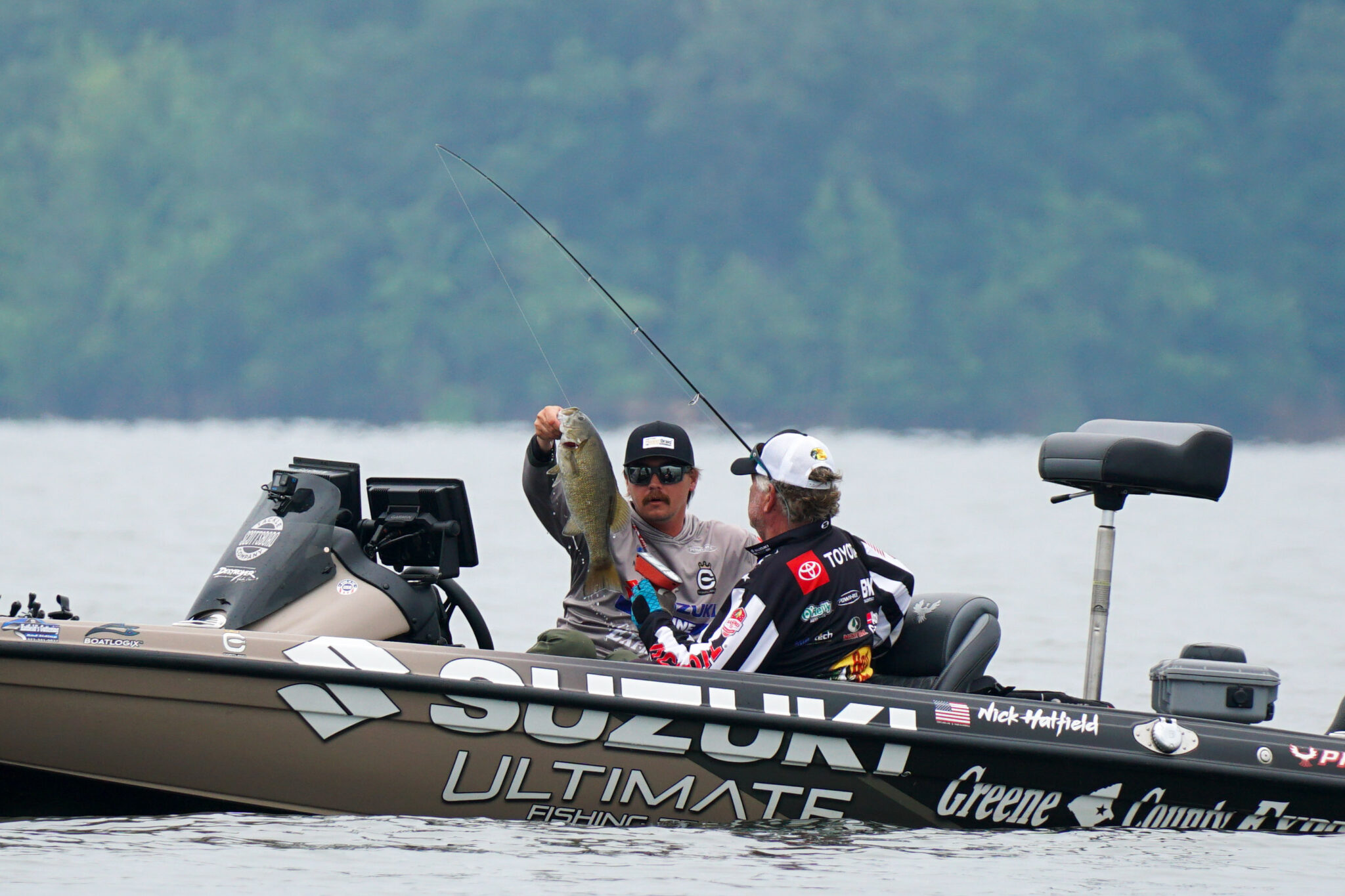
As much as Jones likes dice baits, they’re not always his first choice. He believes there are more efficient ways to catch fish in some instances.
“It does seem to be situational, and it’s not going to be the first thing that I’m going to try,” Jones admitted. “This is a visual thing, so you need some clear water, and it tends to do best on pressured fisheries. If I’m fishing in areas where I know there are fish from seeing them on my electronics, and they won’t bite other lures, I’ll throw the Cue Bomb to them. It’s also good for later-spawning fish, which can be trickier to catch, or when you see cruising fish that won’t react to other baits.”
Hatfield echoed those statements and said targeting pressured bass is one scenario in which these baits shine. He’s also found his best success using them to chase smallmouth. Between the Bass Pro Tour event in 2024 and the Tackle Warehouse Invitationals in 2025, he’s finished in the Top 10 on the St. Lawrence River two summers in a row thanks in part to dice-style baits.
“I’ve done better with them for smallmouth, like at the St. Lawrence River, where I was casting to fish I saw on my forward-facing sonar or fish that I visually saw cruising,” he said. “But they can still play a role in largemouth scenarios. They work where you would fish a jig — docks, laydowns, brushpiles and places like that. But you have a more finesse look and slower fall, which is so different than most lures, and that is why I think these could be the next big thing in bass fishing.”