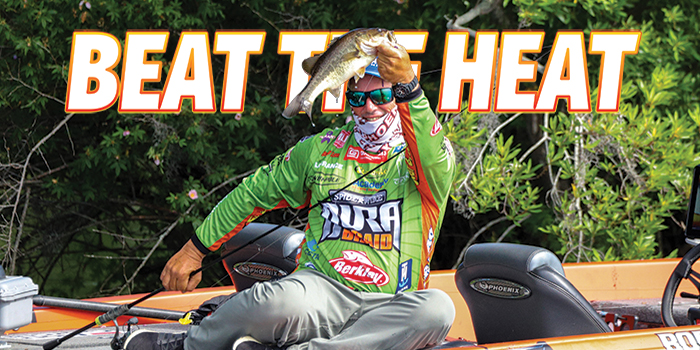
Most anglers dread the August/September doldrums of late summer. Hot temperatures can make them sluggish and moody – the anglers, that is – and they often project their misery onto their quarry. So, why endure the heat to chase fish reluctant to bite?
Bass are cold-blooded creatures whose body temperatures adjust to the water surrounding them. During the heat and sun of late summer, they gravitate toward locations that fulfill primary needs. Even in conditions outside the comfort zone of their species, they will do what they can do to survive or thrive, making them predictable to target.
“Bass are looking for comfort, cover and food at this time of year,” says Bass Fishing Hall of Famer Mark Davis, no stranger to Arkansas heat or summertime bass fishing. He fashions his warm-weather strategies accordingly.
Shallow, deep and in between, summer bass are there for your taking. Here’s how pros in the know play it cool during the summer heat.
Bobby Lane: The way I like to fish
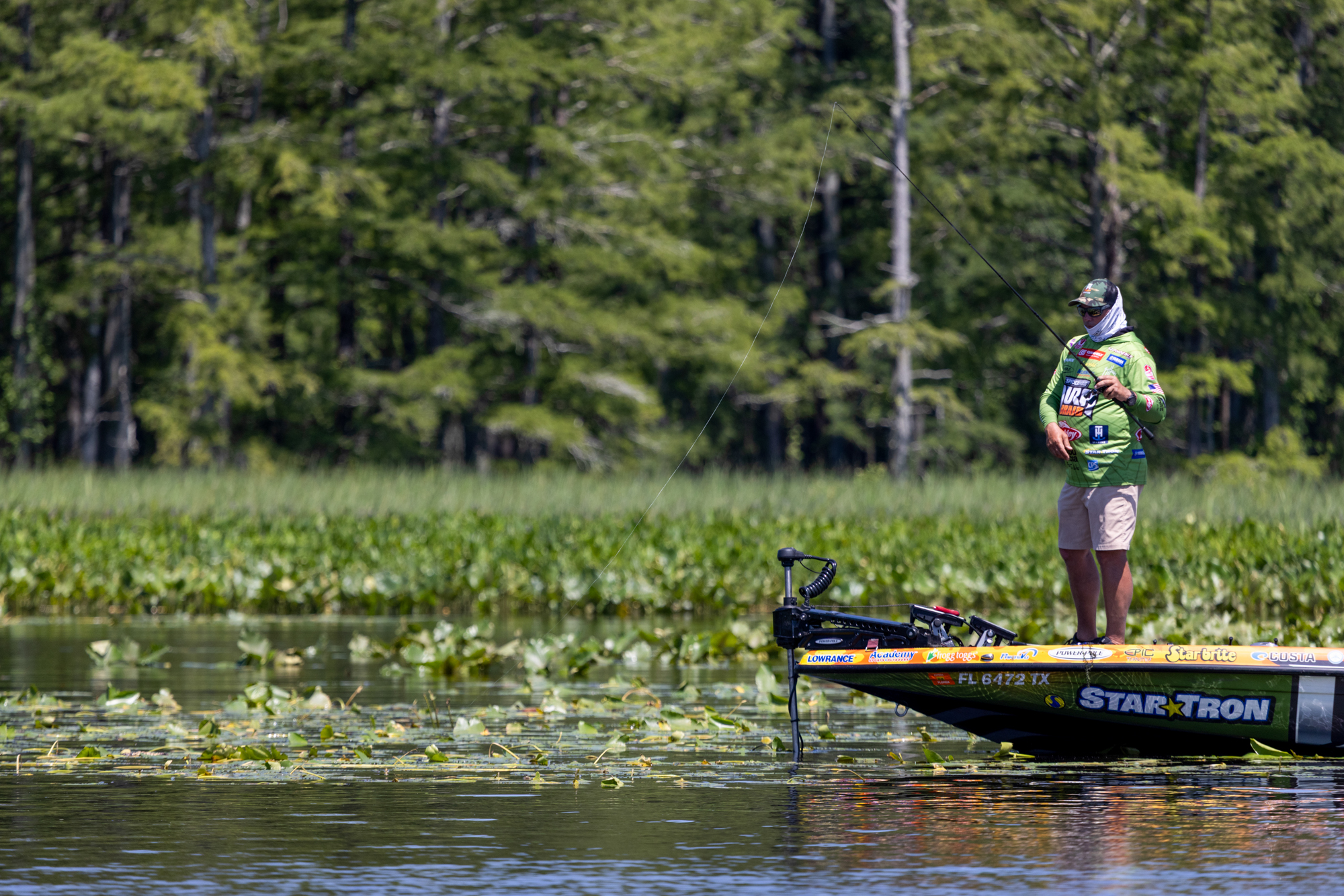
Florida native Bobby Lane has deep roots in the Southern power fishing tradition, so perhaps it shouldn’t come as a surprise that he likes to stay shallow all summer long.
“We all like the offshore bite, but my favorite thing to do to beat the heat of summer is to catch them dirt shallow,” says Lane.
North to south, he treats all lakes the same during the heart of the summer heat. As schools of offshore bass face mounting angling pressure, many of those fish join the segment of the bass population that has taken up residence around the banks. That migration plays to his strength and pretty much dictates his late summer motto: “I go shallow while others are going deep.”
“When bass start getting caught offshore, they move back to the bank because they are more comfortable there,” explains Lane.
His target areas are not necessarily the backs of creeks and other shallow reaches that teemed with bass in spring. He looks primarily to main-lake shallows – stretches rich with docks, rock, vegetation and wood.
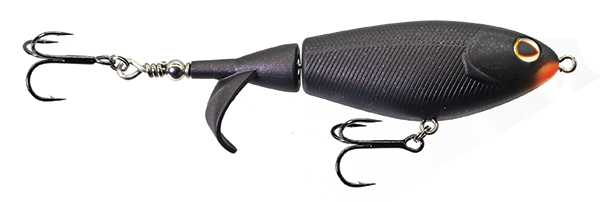
Lane concentrates on shaded areas, first covering water with a black, bone or MF bluegill-colored Berkley Choppo, a plopper-style bait. When the sun forces fish to stick more tightly to cover, he works the shade of docks, laydowns, matted vegetation and trees with the Berkley Swamp Lord – a hollow-body frog of Lane’s own design – in both conventional and popping varieties. His flipping stick also sees lots of action. Top bait choice is the Berkley PowerBait MaxScent Creature Hawg.
Hate the heat if you must, but Lane finds plenty to love about late summer.
“I am fishing the way I like to fish, looking for big bites in ways that produce some of the most exciting strikes,” says Lane. “I want to fish shallow, fish like a man, get those big explosive strikes!”
Tip: “Try to figure where the bass are positioning – near current, on the flat banks, on the steeper banks.”
Mark Davis: Find the thermocline
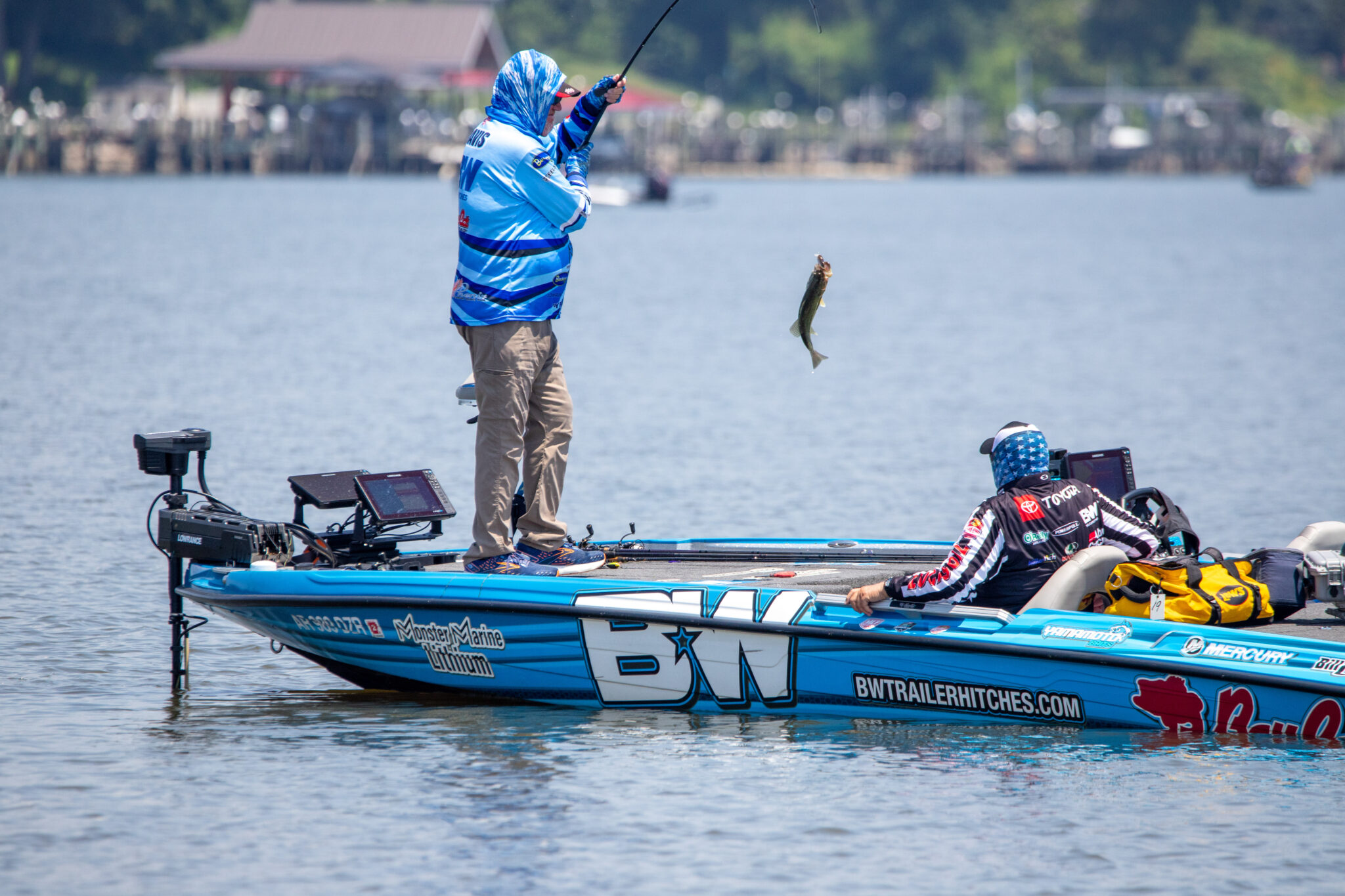
According to Davis, the biggest factor when it comes to late-summer bass fishing is the thermocline. That applies not only to highland reservoirs like his home waterway, Lake Ouachita, but countless waters across the country.
The term “thermocline” refers to the line of demarcation between a warmer, upper layer of water that is rich with dissolved oxygen and a dense, oxygen-depleted, cold layer at the lowest depth levels during summer stratification. Bass and the forage species they dine on spend little or no time below the thermocline. That narrows the target depth range considerably.
Thermocline patterns will differ on varying types of fisheries. Bass may take up ambush positions in the shallows, or they might suspend over deep water above the thermocline. Once a mystery, suspended fish have become easier targets for anglers well-schooled in forward-facing sonar technology.

Ichi Worm
“Today, we can see those fish and present baits to them,” says Davis. “But they can still get finicky.”
When fishing water with some stain to it, Davis reaches first for a reaction lure like a crankbait.
“Whether I am fishing 3- to 6-foot depths or in that 15- to 20-foot depth zone, I am fishing fast, deflecting off cover,” he says.
He calls jigging spoons and flutter spoons “good companions” to his crankbaits.
“I fish the spoon fast, too – jerking it, then letting it fall of its own free will,” he adds. “If you inhibit the fall, the spoon won’t do its job.”
Big, 10-inch worms fished behind light weights provide a slow-down option. The curly-tailed Yamamoto Ichi Worm coupled with a 1/4-ounce bullet weight is Davis’ favorite summer worm. He switches to a heavier weight if he senses the fish prefer a faster presentation.
Tip: Be alert to signs of current or water movement in the form of wind, runoff or dam discharge. Moving water is often cooler and more oxygenated, which attracts summer bass.
Alton Jones: A high-low approach to isolated cover
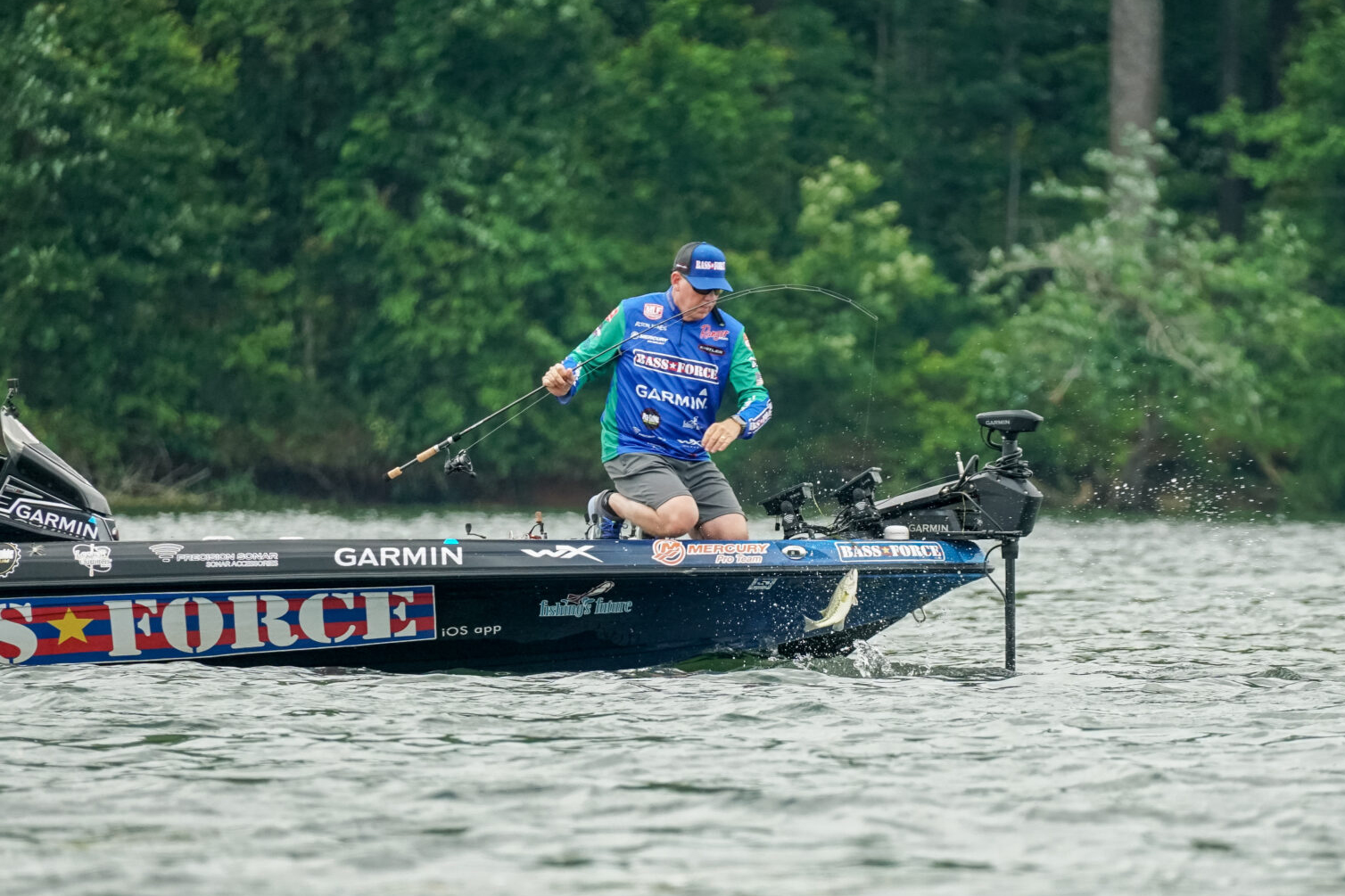
They know heat in Texas, homeland of venerable MLF pro Alton Jones.
They also know bass. As water temperatures rise and the thermocline builds, the Lone Star State’s legendary lunkers have to go somewhere. By late summer, that zone typically lies within 8 to 12 feet of the water’s surface.
“In late July through August, those mega-schools of bass in deep water break up, and the bass transition back shallow,” says Jones, who competes on the Bass Pro Tour alongside a successful son of the same name.
Moving “shallow” doesn’t necessarily mean moving shoreward, however. Some bass will occupy open water in the middle of a lake; others will move to shoreline cover.
“I almost always target that upper layer of water, whether it’s shallow or deep,” says Jones.
He takes a parallel approach to each group – a high-low strategy centered around isolated, fish-holding habitat. Brushpiles and similarly distinct cover located on flats, points and other prime bottom structure are typical offshore targets. Jones notes that they are easily detected with forward-facing sonar and sidescan.
Key late summer habitat has two defining characteristics: isolation and vertical elevation.
“I’m not looking for a lot of brushpiles in a pack,” stresses Jones. “I want to find isolated brushpiles, so if there are two bass on that point, I don’t have to fish 20 brushpiles to find them. And I want water above that brush – not 4 feet, but at least 5 or 6 or 7 feet. Vertical elevation is important. Isolation is important.”

He may catch multiple bass off an isolated brushpile at this time of year, but taking one or two at time is more typical during this doldrum period. He takes a “milk run” approach, making stops at a series of prime locations, often repeating that run three or four times in one day.
Lure selection is broad. First choice is a moving bait – typically a crankbait, though a jerkbait (the Megabass Vision ONETEN is a favorite) frequently gets the call when forward-facing sonar is in play. His presentation is erratic, punctuated with plenty of stop-and-go. Next up is a 5-inch Deps Sakamata Shad on a jighead, then a slower, bottom-related presentation like a Texas-rigged worm, jig or drop-shot. He may cycle through several or even all of those options at each stop.
As August advances, Jones’ attention turns to the shallows. Again, he looks for isolated cover, now in stained water less than 5 feet deep. By late August, he’s looking for docks in water no deeper than 3 feet.
“There’s no such thing as too shallow at this time,” says Jones. “I mean it. I have caught bass with their backs out of the water. Access to deep water is not important now. You have to think outside the box.”
“Isolated” is again his watchword when scouting for cover.
“I am looking for the right piece of cover – a laydown, an isolated clump of weed, an isolated rock pile or boulder or a dock,” says Jones.
Buzzbaits, jigs, Texas-rigged worms and frogs are favored tools.
“I have found a weird buzzbait pattern on one lake with Illinois pondweed (a cabbage-type plant from the potamogeton family),” says Jones. “I wake them up with a buzzbait. Then, I present them a worm. It works.”
Tip: “There’s no such thing as water temperature that’s too hot,” says Jones. “I have caught bass in 107-degree power plant discharge water. Oxygen level is more important. The hotter the water gets, the shallower bass have to go.”
Mark Daniels Jr.: ‘Current thinking’
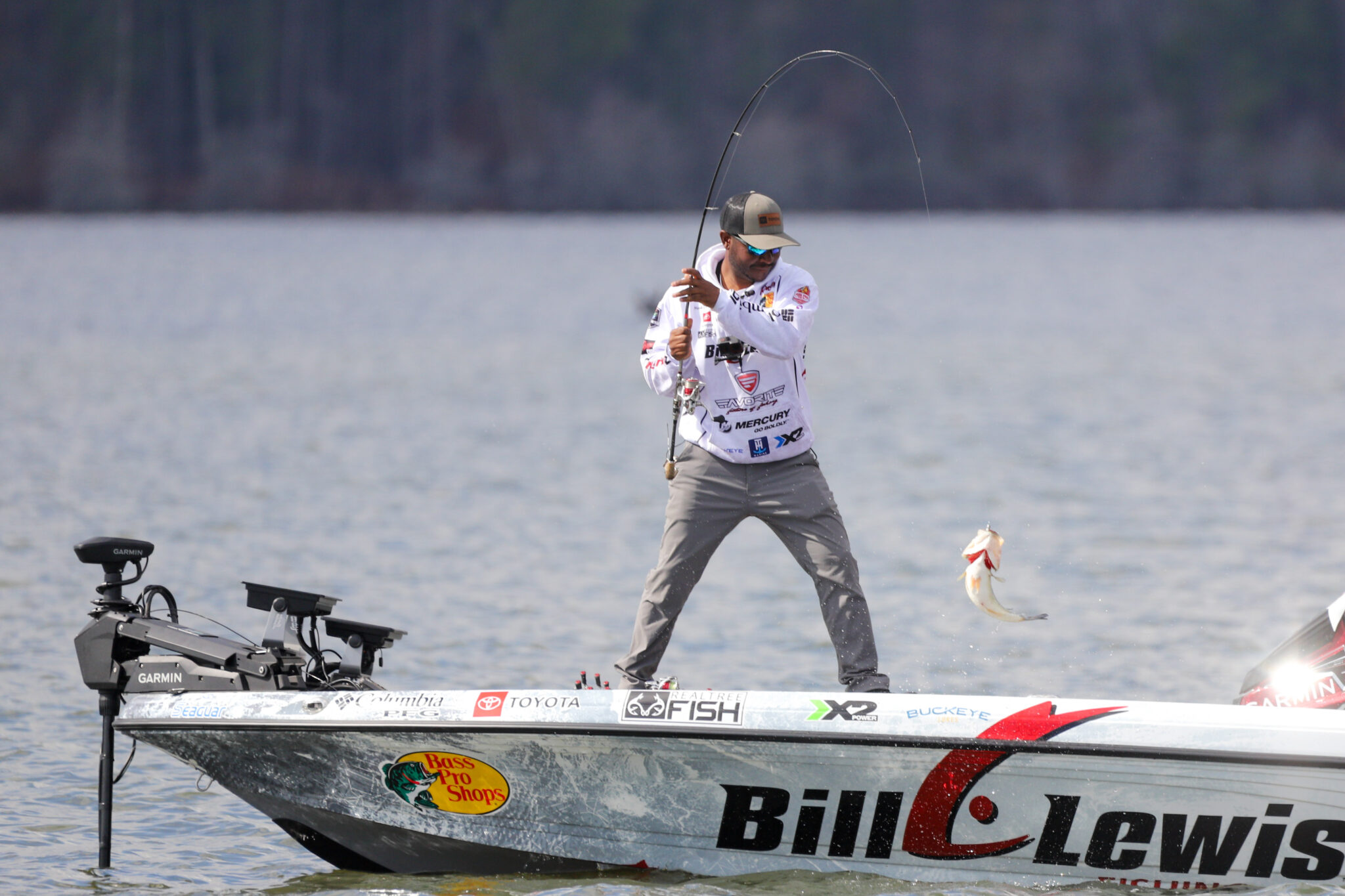
Moving water is often key to unlocking the late summer bass bite. Not only does current feature higher oxygen levels, it activates bass and baitfish alike. With the legendary Coosa River and its impounded waters near his Alabama home, Mark Daniels Jr. lets “current thinking” guide his hot weather strategy.
Moving water may measure a few degrees cooler than water in flat calm conditions, and Daniels is quick to take advantage of even slightly lower water temperatures.
“My first key in late summer is to get on the lake as early as I can to take maximum advantage of lower water temperatures,” he says. “Afternoon water temperatures in my area can top 90 degrees at times. I want to maximize my time fishing lower water temperatures, even if they are only in the 85- to 87-degree range. Temps of 83 to 85 degrees can be ideal.”
Once the sun gets up and temperatures climb, current is the next best thing. The Coosa River and its reservoirs, formed by seven Alabama Power dams, offer no shortage of it. Alabama Power and other power companies typically list their generating schedules online. Daniels advises anglers to tune in and adjust their schedules to these run times.
“The moment they pull current, you will want to be on the water,” he says. “Your best plan is to become familiar with the bite window on these lakes, to be on the best places when the current reaches the fish. These are the periods when bass are most aggressive and feeding best.”
Prime locations include bottom cover such as boulders, wood and rock piles. They provide ambush points for the predators as schools of baitfish activate.
“My presentations at this time are highly shad oriented,” says Daniels. “Bass will hit crawfish and bluegill imitations, but they can ambush shad easily, so all my presentations relate to shad.”
Daniels’ topwater arsenal includes walking-style baits like the Heddon Zara Spook family, the Reaction Innovations Vixen and the Paycheck Baits Repo Man. Subsurface offerings include weightless, fluke-style baits and compact swimbaits in the 2.5- to 4-inch range.
“The fish are ambushing, looking up,” says Daniels. “I will let the fluke drift around boulders and let the current sweep it by the bass. I let the swimbait crawl over the rock and drop on the fish on the backside.”
Tip: Play the bite window. Be on the best spot at the best times. And match the hatch.
Drew Gill: Tapping into the curiosity bite

Drew Gill wasted little time introducing himself to Bass Pro Tour fans. The 23-year-old has notched an eye-popping nine Top 10s across his first two seasons on tour, including two wins, most recently on Lake Murray in 2025.
No surprise, the cerebral young angler takes a fresh approach to late-summer angling.
“It’s extremely easy to pressure fish that have occupied an area for three or four months,“ says Gill. “Fish that get pressured get pretty intelligent. That’s why triggering the curiosity bite is so important this time of year.”
Fish grow wise and cautious under a continuous bombardment of familiar baits. Gill’s solution is to show them something different, something that whets their curiosity.
To take on heavily pressured, hot-water largemouth, he arms himself with big baits – specifically oversized topwaters and glide baits. Big baits attract bass’ attention through their size and prominence, but also in their relative uniqueness; they contrast with baits fish have seen all season.
He keys in on high-percentage targets – a point, a flat, a ledge, a brushpile or an area or feature that a big bass is likely to relate to for an extended period. Favorite baits for triggering the curiosity bite include walking baits like the Zara Spook, Strike King Sexy Dawg and Reaction Innovations Vixen as well as wake baits like the Bomber Long A and Wesley’s Old School Vee ‘W’ Wake Bait. The side-to-side sway and trailing V-wake of the latter mesmerizes bass. Gill adds a wrinkle to his presentation.
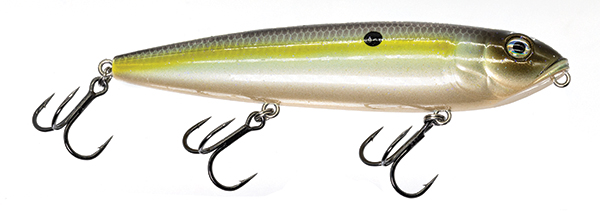
“I reel consistently until I have that bass’s attention, then I give it pulls so that it slithers and stops,” he says.
His favorite glide bait is the Biggs Custom B-1, which he presents with a slow but erratic retrieve.
“It’s methodical, but I’m not moving the bait at a consistent pace,” says Gill. “Chop, stop, chop, longer stop. … I am moving the bait erratically for short bursts, letting it glide. The movement is very hard, but I am trying to give the fish time to approach the bait in between.”
At the leading edge of today’s wave of young, tech-talented pros, Gill employs forward-facing sonar in just about all of his bass fishing, and his late-summer target excursions are no exception.
“When I am playing the curiosity bite,” he says, “I want the fish as tight as possible to my bait before I move it.”
Tip: Summer smallmouth are suckers for speed. Try a fast presentation to entice them to bite.
Ott DeFoe: Play it cool

“During the August heat, you can be competitive fishing shallow,” says Ott DeFoe, MLF star from Blaine, Tennessee. He proved that earlier this summer on the Potomac River, when temperatures soared into the high 90s and DeFoe went ultra-shallow to earn his fifth career BPT win.
Two “Cs” direct his late-summer strategies – current and cooler water.
“Typically, my fishing revolves around current, whether it is a creek or river system,” says DeFoe. “A spot with just a little current can make a difference. Multiple options are better. Any place with cooler water – and not necessarily cold – is likely to hold more oxygen and more active fish, too.”
DeFoe’s favorite locations are off the beaten track. He may follow a big bay back to where it necks down to a creek entrance, then to where it gets deeper again.
“Maybe it is silted in a bit, and as you follow it further, you find a defined channel with some wood,” says DeFoe, fleshing out his summer scenario. “You will see a water temperature change there, and it tends to hold baitfish and create a productive zone.”
Such areas are often rich with fish-holding cover – undercut banks, logs, patches of grass, stumps, assorted growth and deadfalls.
DeFoe keeps his late summer bait arsenal simple, generally keeping four styles of baits at the ready:
- Shallow crankbait – First choice for late summer comes from Ott’s Garage – the Rapala OG Tiny 4, a flat-sided crankbait with a 4-foot depth range. “The shad from the spring spawn are still small at this time,” explains DeFoe. “The OG Tiny is a smaller, more subtle imitator. With its tight wiggle, it can sneak up on a bass until it finds it in its face. It’s a natural bait, not like a big crankbait that it can sense from a long ways off. The bait deflects off cover well, too.”
- Small buzzbait – Topwater presentations often shine far back in creek arms where cover and shade are plentiful and the water is fairly clean. A downsized buzzbait of 1/4 or even 1/8 ounce is DeFoe’s choice in these narrowed confines. “I feel these fish have seen big baits all season long, and that bait with smaller blades and a smaller profile is more productive.”
- Frog – Largemouth lying in wait around thick cover and overhanging tree limbs can be suckers for a hollow-bodied frog. “If there’s grass, the area becomes that much better,” says DeFoe. He likes the Terminator Walking Frog.
- Plastic worm – A Texas-rigged or drop-shot worm is a summer standout almost anywhere. DeFoe’s workhorse is a Bass Pro Magnum Fin-Eke Worm. He opts for a drop-shot rig with a short, 8- to 10-inch leader and 1/8- to 3/16-ounce dropper weight when conditions call for finesse.
Tip: Look for any part of the system where the water is a little cooler and baitfish are present.