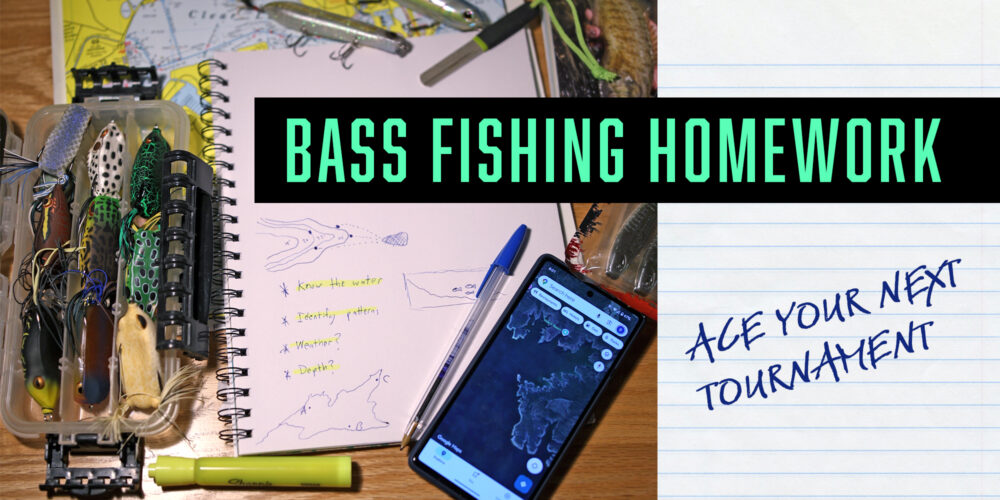
It’s been about two decades since Ott DeFoe sat in a classroom. But the Bass Pro Tour star has never stopped doing homework.
During the offseason and breaks in his tournament schedule, DeFoe can often be found poring over maps, satellite images, old articles — studying as if for a final exam that will make or break his GPA. By the time official practice starts for each event, the Mercury pro estimates he’s usually spent more than 20 hours researching the fishery from afar.
“I probably spend as much time off the water ‘practicing’ as I do on the water at these events,” DeFoe said.
He’s far from the only pro with a rigorous study regimen. At a time when secret baits and hidden honey holes are almost impossible to maintain, strategy and decision-making separate the top performers from the rest of the pack. And while the process looks a bit different for each angler, most sound game plans are built on a foundation of thorough research, especially with only two days of on-the-water practice permitted before most Bass Pro Tour events.
“It’s important to have a game plan for the tournament, but it’s important to have a game plan for practice before it ever starts,” said fellow BPT pro Alton Jones. “And if you can just do that, just learn to make a plan for every single day that you’re going to be on the water, whether it’s practice or a tournament, and have a well-thought-out strategy, you’re way ahead of most of the field.”
Studying holds value for the amateur angler, too — arguably more so. Someone who doesn’t have time to practice for tournaments or who’s simply seeking to catch as many fish as possible during an excursion to an unfamiliar body of water can get a head start by emulating the homework habits of some of the top strategists on tour.
Study materials

Just like in school, not every touring pro has to put in the same amount of studying. While DeFoe and Jones both outlined extensive homework routines, Dakota Ebare and John Cox said they do enough at-home research to get a feel for each fishery but prefer to develop their strategies on the fly (no surprise given the busy schedules typically maintained by both pros).
Regardless of how deep you want to dive into a given body of water, the good news for modern anglers is that information isn’t hard to find. Often, the bigger challenge is knowing what’s noteworthy and what to ignore, plus how to put it all into practice (we’ll get there).
The most ubiquitous study tool is a contour map. These days, paper maps have mostly given way to digital mapping systems such as Lowrance’s C-Map or LakeMaster by Humminbird. These interfaces offer detailed relief maps and allow for custom depth shading or water level adjustments, plus they can be accessed from a boat console or personal device. Free options like Garmin’s Navionics charts might not have as many features but can be accessed online.
Google Earth has become another staple. The satellite imaging software not only offers aerial views of fisheries but features a “historical imagery” function that allows users to travel back in time and view past snapshots. Both DeFoe and Jones said they utilize that tool to look for low-water images, which can reveal things like brush piles, hard spots or offshore humps that are submerged at full pool. Even for natural lakes or ponds that don’t see much fluctuation, images from different times of year can reveal grass lines and deeper holes.
“I’m backing the timeline back and trying to find a time when the lake level was low and features are exposed, where you can really see them in the light of day, and then take waypoints from that,” Jones explained. “And I still do that quite a bit; it’s just not quite as valuable as it used to be before everybody else figured it out.”
“If you can just do that, just learn to make a plan for every single day that you’re going to be on the water, whether it’s practice or a tournament, and have a well-thought-out strategy, you’re way ahead of most of the field.”
– Alton Jones
Weather, too, is an obvious source to be studied — just about every angler has a trusted weather app. But Jones uses his a bit different than most. While he pays plenty of attention to the forecast in the days leading up to and during competition, the Mercury pro is equally concerned with long-range weather trends. He’ll start monitoring conditions on a fishery six months or more before a tournament, paying attention to whether it’s experienced an unseasonably warm or cold stretch (which could impact the timing of the spawn) and whether it’s been especially rainy or dry.
“If it’s been a really flooded year, that tells me there’s going to be a lot of flow going through that lake,” Jones said. “Even if the flood subsides and the waters go down to normal, there’s still just going to be a lot of natural runoff producing current, and it’s going to predictably position those fish. Low-water years, you’re going to have a lot of fish get out and suspend in the middle of nowhere. Automatically, it’s going to be a ‘Scoping tournament if it’s a low-water year. But I want to know that before I get there.”
Multiple pros also noted that they examine past tournaments. That could be as simple as looking up past winning weights, but DeFoe likes to dig deeper. He’ll read tournament coverage and watch videos from events — whether it’s archived television coverage or simply an angler’s GoPro footage — to get a sense of things like whether a specific area of the lake dominated and how easy it was to get bites.
“It’s still good to read that stuff and to read if a guy is like, ‘I had a limit at 8 o’clock and caught 20 or 25 keepers,’ or if it’s a deal where most of the high finishers say, ‘I caught six or seven fish all day,’” DeFoe explained. “So, the weights aren’t quite as important sometimes as what that information is that you can get of them saying they were catching a lot of fish or not.”
How not to study

It wasn’t too long ago that Ebare would spend days scrutinizing maps and whatever else he could get his hands on prior to each event. But after racking up hundreds of competition days during his decade-plus fishing tournaments, he’s done a 180. Now, he admitted, he prefers to “wing the heck out of it.”
The Mercury pro has learned from experience that, while thorough homework can pay dividends (especially for an angler who doesn’t have quite so much experience), it far from guarantees success on the water. In fact, if you don’t go about it the right way, pre-tournament prep can prove detrimental.
For every good study habit, there exists a damaging downside. Zero in on a few juicy-looking spots you found on a map or Google Earth, and you might be in trouble if they don’t produce. Try to hit too many waypoints and you could miss an important nuance. Commit to what you believe the dominant pattern is going to be — whether due to seasonal trends, past tournament results or word of mouth — and you may not find the actual winning formula.
As a result, it’s important to view each piece of information gleaned during the research process as a puzzle piece — many of which won’t fit into the final design. For instance, while DeFoe uses LakeMaster to break down a fishery, he’s not trying to map out all of his practice stops. He just wants to get a general feel for the underwater topography and have options at the ready should he discover a secondary point pattern or decide to check out a few bluff ends.
Past tournament results, too, should be taken with a grain of salt. Jones totally disregards events held at a different time of year. Ebare said it can be good to know the handful of baits that typically excel in, say, Florida during the early spring or the Ozarks during fall, but not to get infatuated with a lure because it once accounted for a win. Cox no longer watches old tournament coverage because he found himself avoiding areas once he knew they’d produced big bags.
“I tried to go back and watch some of the past tournaments and stuff, and it always made me feel guilty,” Cox said. “You see someone fishing this area and you’re like, ‘Oh, I kind of have an idea where that is.’ And then you’re running around in the tournament, and you’re like, ‘Oh, there’s what’s-his-face over there, I’m going to stay away from him.’ So, for me, I feel like it’s almost better when I don’t really know any of that.”
More than any other, the biggest preparation mistake Ebare has observed among inexperienced anglers is relying on a list of individual spots, especially those provided by someone else. While cycling through waypoints that have been productive in the past can pay off from time to time, he doesn’t believe that’s a recipe for long-term success.
“If it’s a tournament where you can get information, somebody tells you, ‘Hey, this is where I caught some, this is where you need to go’ — I don’t believe in doing that,” he said. “That kind of preparation is what’s popular, because everyone wants a quick path to success. And that kind of stuff does lead to tournament wins at times, 1,000%, but that doesn’t make you a better fisherman. I guess it’s all a matter of perspective, but for a guy that’s trying to move his way up to become a better fisherman overall and potentially fish for a living one day, I encourage him to do as much as you can on your own.”
Study buddies
That’s not to say anglers shouldn’t seek help with their homework. In fact, several pros said talking with their peers about a fishery during pre-practice helps them make sense of all the information — sifting through what’s important and what isn’t, making sure they didn’t miss anything.
DeFoe frequently bounces ideas off traveling partners Edwin Evers and Andy Montgomery. If one of the three has more experience on a given body of water, they share their knowledge with the rest of the group. Jones talks strategy with his son, fellow BPT pro Alton Jones Jr.
“He’ll have thoughts that I don’t have; I’ll have thoughts that he won’t have,” the elder Jones said. “A lot of times it can be very helpful just to ping it off of another pro.”
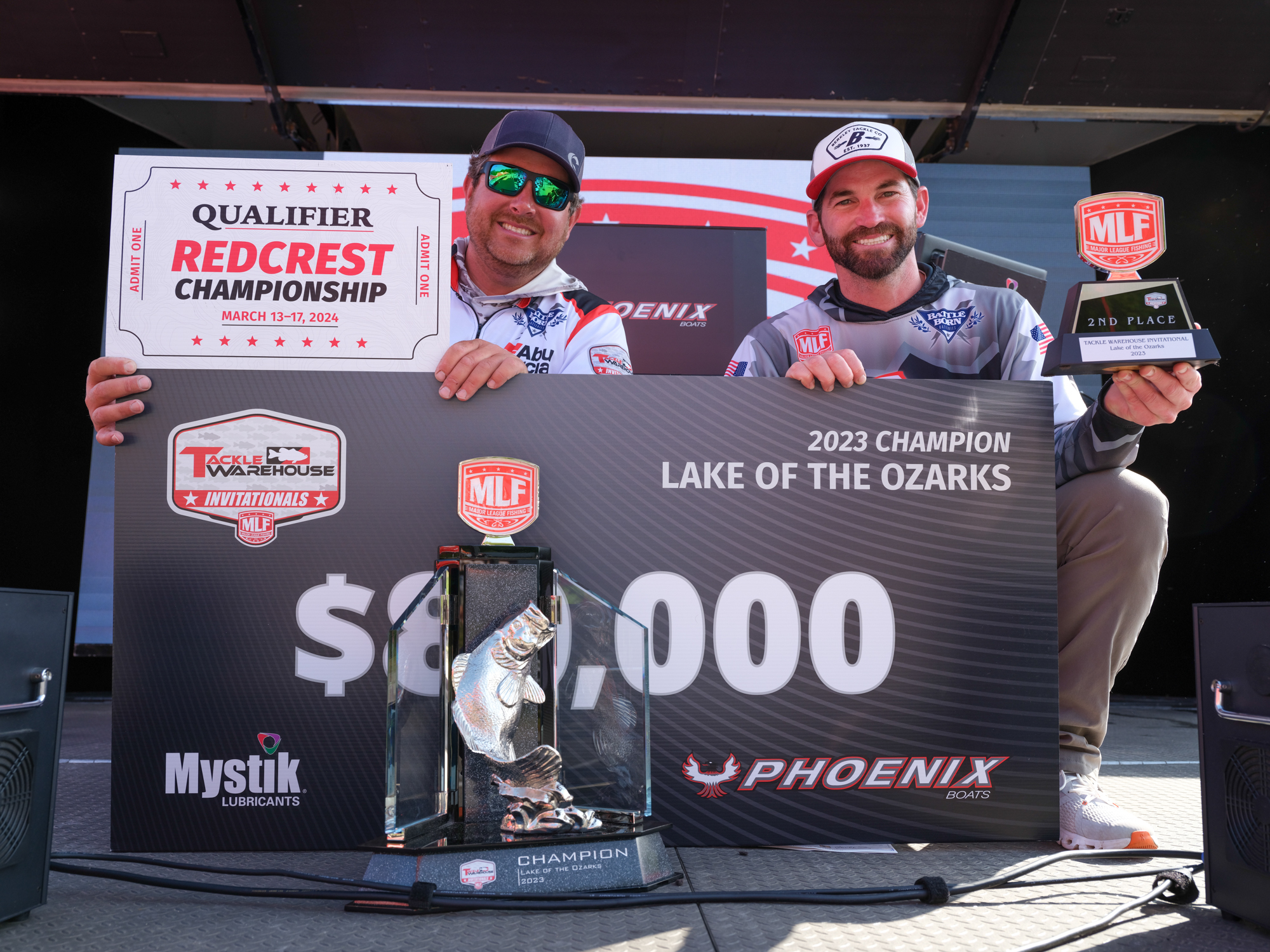
When they find themselves in the same field, Cox confers with longtime fishing buddy and former team tournament partner Keith Carson. Prior to the 2023 Tackle Warehouse Invitationals event on Lake of the Ozarks, when Cox won and Carson took second, it was Carson who clued Cox in on the sight-fishing bite that developed on the lower end of the reservoir.
But once again, the pros urge caution when consulting other anglers.
It’s important to know tournament rules, for one. If information sharing isn’t allowed, anglers can’t give or receive waypoints. Plus, Cox stressed the importance of doing homework with someone who understands his unique style of fishing and approaches things the same way. Getting a tip from someone who excels at using forward-facing sonar or skipping docks won’t do you much good if you can’t get those fish to bite.
“We’ve both fished together in the same boat since high school, so we’ve learned everything together,” he said of Carson. “We’re on the same page like making calls and moving and adjusting and stuff, compared to if it’s someone who I might be best buddies with but we fish completely different – that’s really hard.”
Turning study into success
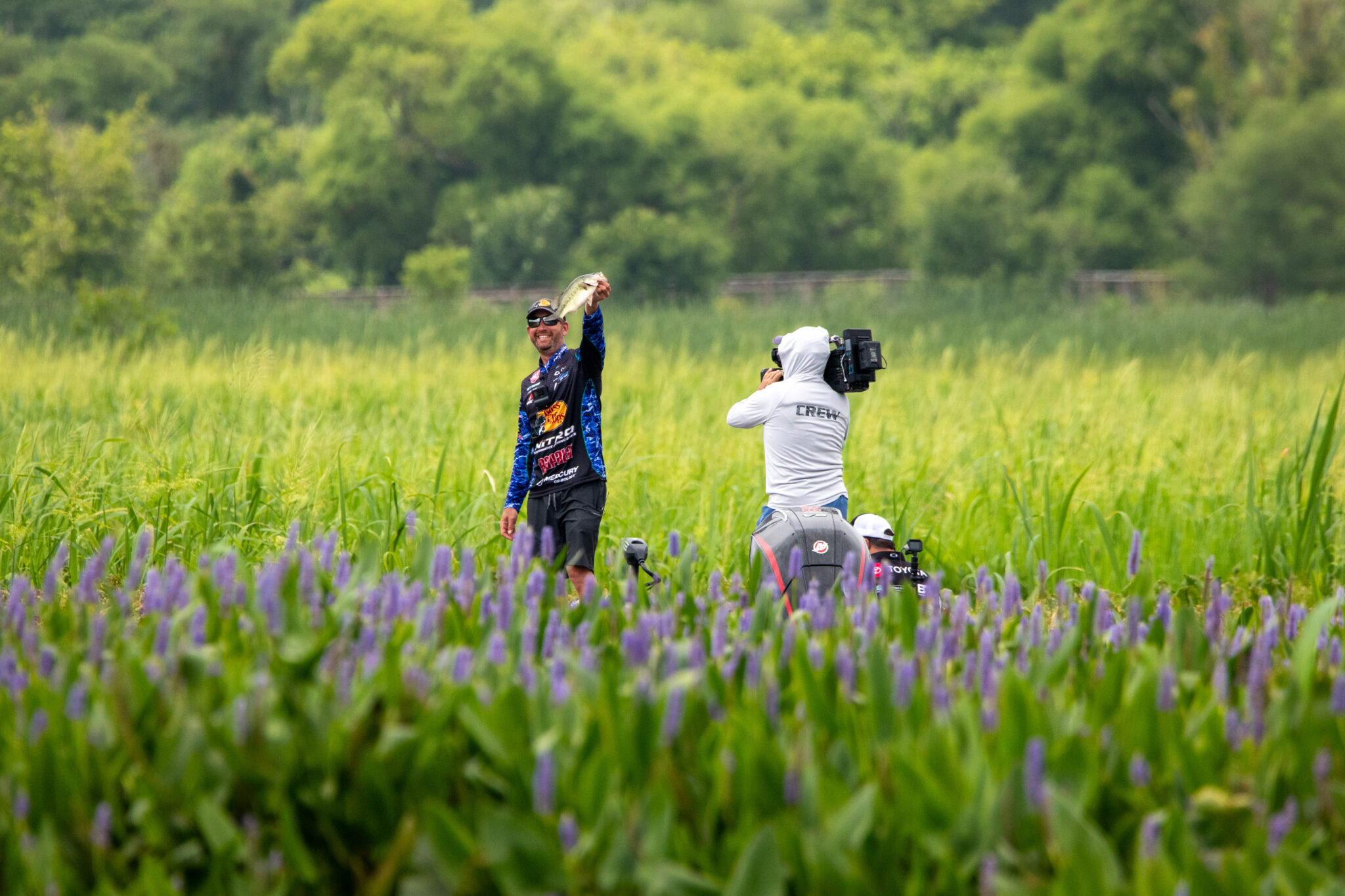
There’s one critical difference between studying for a test and a bass tournament. Unlike in academia, the goal of researching a fishery isn’t to enter an event already knowing all the answers. It’s to inform and streamline the decision-making process once you’re on the water.
“What separates guys that catch ‘em between takeoff and check-in and guys that catch the heck out of ‘em with their buddies? It all comes down to being able to make the right decisions at the right time in the right moment,” Ebare said. “That is the most difficult thing in all of bass fishing. All my preparation is to prepare myself to be able to make those decisions.”
Jones provided perhaps the best illustration of what it looks like to put his homework into practice on the water. As he researches each fishery and scrutinizes weather trends leading up to each event, he uses the Notes app on his phone to outline a plan for practice — but not just one plan.
“I don’t want to have to sit out there on the lake and think, ‘Boy, that didn’t work. I wonder what I ought to try next?’” Jones said. “I want to have a Plan A, B, C, D — a rotation that I’m going to go through.”
Once he’s on the water, Jones allows for flexibility within his strategy. If something new occurs to him, he’ll check it out, and he doesn’t pressure himself to explore every option he jotted down prior to arriving at the fishery, especially if he finds a thread that feels promising.
The end goal is for his homework to lead him to the winning pattern early enough that he can fine-tune it — adding more spots to his rotation or finding the perfect presentation for a key area. Once he believes he’s on the right track, he can commit to that strategy knowing that, if for some reason it fizzles, he has backup options a click away.
“If I look back at tournaments that I’ve won, almost without exception, it’s when I’ve dialed into the main deal on the first day of practice so that I was able to expand upon that for three days,” Jones said. “That’s why I’m doing the homework, so if I do figure it out, I’ll have as much time as possible to duplicate what’s working in as many different places as I can.”