
For anglers in the northern half of the United States, the bass fishing season is likely drawing to a close. Time to spend the next four or so months restocking, organizing and planning for next year (or traveling somewhere warmer).
But for those in the South, there’s no better time to get on the water, especially if you’re trying to target the biggest bass of your life.
According to Bass Pro Tour angler Marshall Hughes, as water temperatures bottom out over the next few months, bigger bass seem to become easier to catch. That’s especially true in Hughes’ home state of Texas, where the Mercury pro spent years competing locally before taking his career national in 2024. He’s caught more Lone Star State lunkers from December through March than any other time of year, including his personal best (a 12-and-a-half pounder). One year, he caught eight or nine double-digits from Sam Rayburn Reservoir alone during the course of a single winter.
Hughes shared a few tips Southern anglers can use to capitalize on the big-bass bite in the coming months.
The colder, the better
Most anglers might believe warmer water would make for a better winter bite – after all, that’s why places like Texas and Florida tend to fish better than the rest of the country during the winter months.
While that’s true to an extent, Hughes said colder winters seem to bring better fishing in the South. If his area experiences a prolonged stretch of cold weather that drops water temperatures around the 50-degree mark, the following few weeks seem to be prime time for targeting giants.
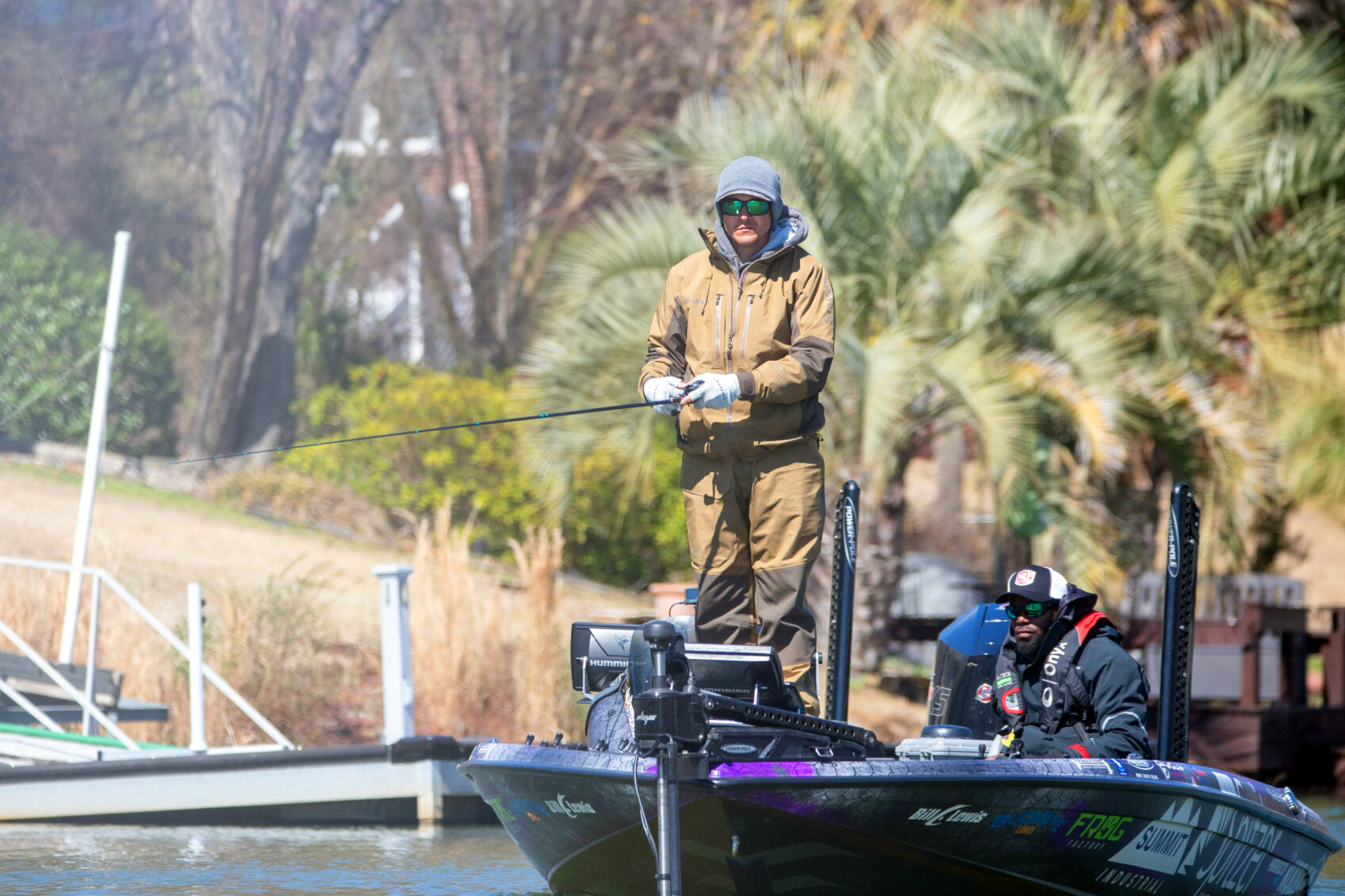
Theories abound as to why that is, and Hughes admitted he doesn’t know the science behind it. He just knows what he’s observed through the years.
“The colder it gets, the better,” he said. “So, if our water temps get below 50, once they hit the 40s – which doesn’t happen but every couple years, it might drop into the 40s for a couple of days – but the closer it gets down to that 50-degree mark, the better it gets.”
Don’t be afraid to fish fast
Another misconception about wintertime fishing is that presentations need to be deep and slow. Once again, that’s rooted in truth – Hughes said bass don’t eat as often when the water is cold, and when they’re not actively feeding, it can take very precise, subtle offerings to coax them into biting.
However, even in the coldest water, reaction baits like umbrella rigs and crankbaits tend to produce the bulk of Hughes’ big bites. He urged anglers not to be afraid to burn a big plug as fast as they can turn the handle.
Hughes also said not to overlook shallow water. He’ll often crank areas that aren’t as deep as the bait’s diving depth, deflecting it off the bottom to trigger strikes. And if you can find submerged vegetation that stays green and healthy all winter, fishing a lipless crankbait over a grass flat is about as tried-and-true as it gets in Texas.
“The shallow bite is also really good,” Hughes said. “Especially if you have grass or some sort of shallower cover, you can always catch a big one doing that.”
Of course, there are times when the fish simply aren’t willing to chase. It goes without saying these days that anglers should always have a jighead minnow on deck to target suspended fish. For those relating to the bottom, Hughes likes a big, dragging presentation like a Buckeye Mop Jig.
Take advantage when the bite window opens
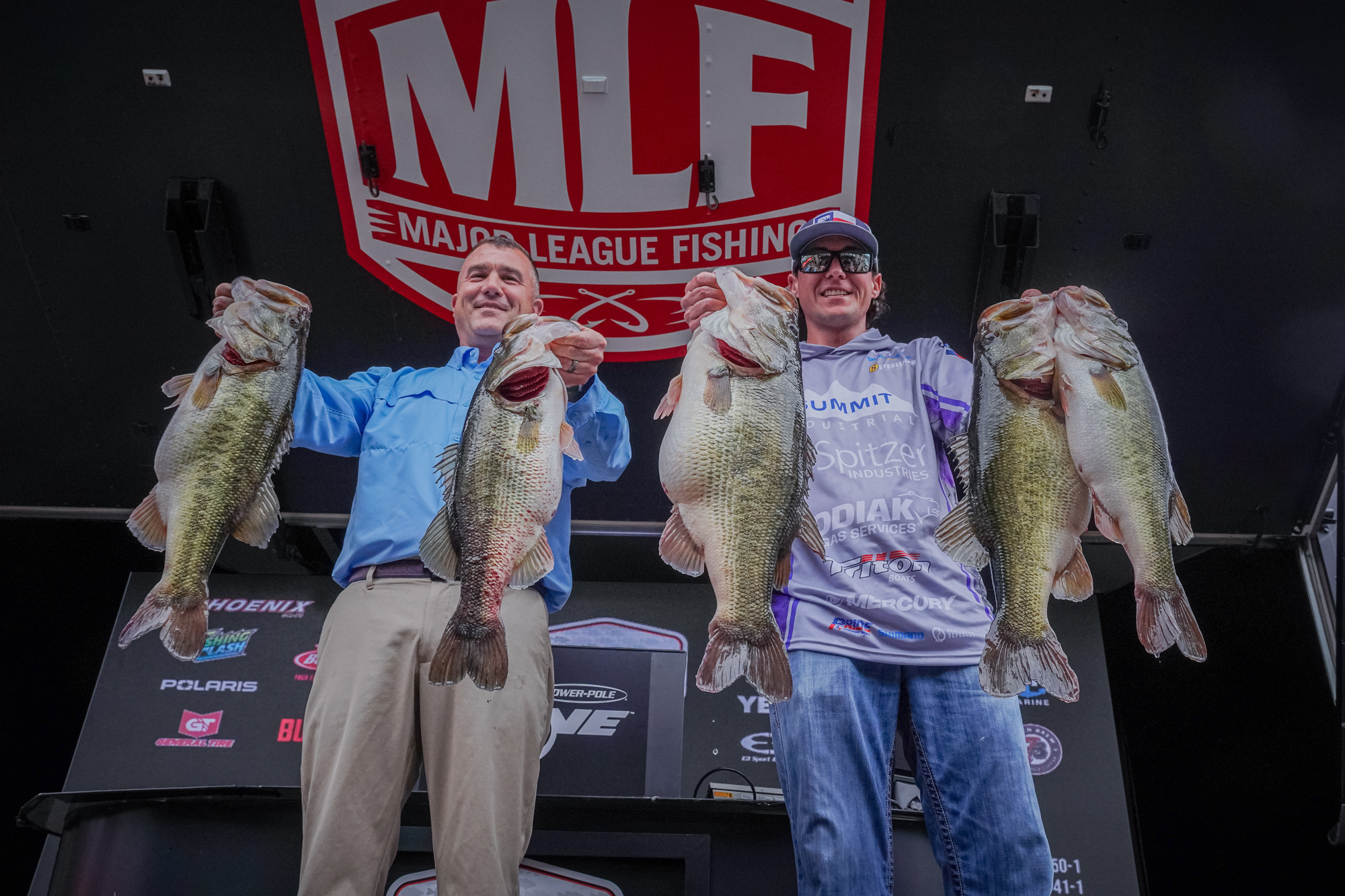
If you do land that trophy bass, most anglers’ instinct would probably be to take some time to snap photos and admire the fish. But if you have the ability to put it in a livewell for a few minutes, Hughes advises getting another bait in the water as quickly as possible.
One of the things that makes winter special is that the biggest bass tend to group up and feed together. Hughes experienced that firsthand during the Tackle Warehouse Invitationals event on Sam Rayburn in February 2024, when he landed a 38-pound, 7-ounce megabag on Day 2 – all from the same spot.
“It’s the only time of year that bigger fish will group up together,” Hughes said. “Especially on Toledo (Bend) and Rayburn, those big bags that they catch, the majority of the time, they’re all caught together. It happens in a 10- to 30-minute spell.”
Hughes believes those fish roam in the same general area between feedings, then converge on a high-percentage location like an offshore hard spot when a feeding opportunity presents itself. As a result, it can pay off to revisit key spots several times throughout the day – just because the fish aren’t there early doesn’t mean they won’t show up in the afternoon, or vice versa.
“It seems like they have these little areas that they like to get when they’re hungry and they’re feeding,” he explained. “And then when they’re not, they’re just kind of roaming around – still in that general area, but not in the feeding spot or zone.”
If your water isn’t iced over, don’t be afraid to brave the cold this winter and put Hughes’ pointers into practice. More important than all those tips, though, is safety. He stressed the importance of wearing layers and packing an extra set of warm clothes, as hypothermia can set in fast if you get wet this time of year.
“Dress warm and pack an extra pair of your clothes in case you fall in,” Hughes said. “And don’t be afraid to burn a crankbait.”