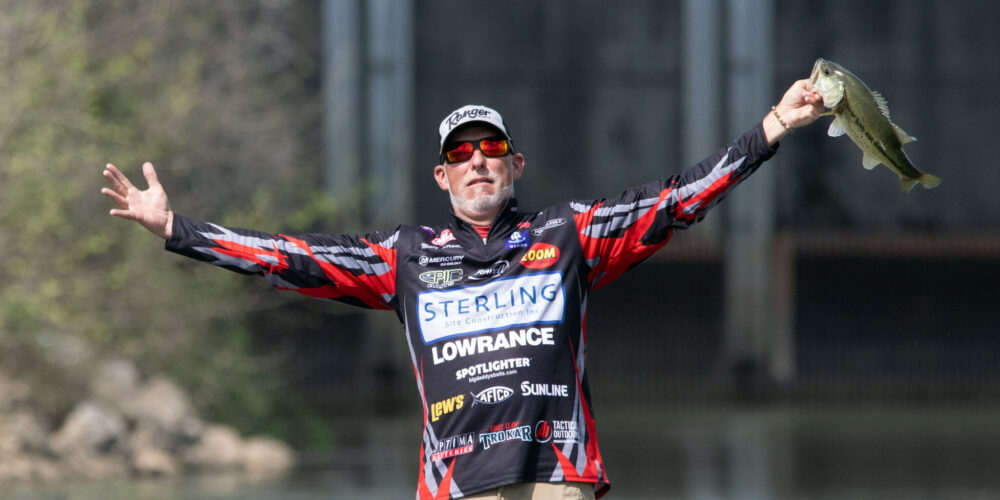
The last time viewers saw Bass Pro Tour anglers in action, Dustin Connell was celebrating his third REDCREST title on the upper reaches of Lake Guntersville, just below the Nickajack Dam. Next week, the BPT regular season will resume a few miles up the Tennessee River.
O’Reilly Auto Parts Stage 4 Presented by OPTIMA Batteries will take the 66-angler field to Lakes Chickamauga and Nickajack in southeastern Tennessee. Chickamauga should need no introduction to fishing fans – one of the most famous tournament venues in the country, it served as the playing field for BPT events in 2019 and 2021.
This time, though, Chickamauga is only hosting the two-day Qualifying Round. The Knockout and Championship Rounds will relocate the field to Nickajack, which is between Chickamauga and Guntersville on the Tennessee River chain. A smaller, more riverine reservoir with little major tournament history, that should provide a fun twist, impacting strategy throughout the event and making for a truly wide-open weekend.
Figuring out the dominant phase
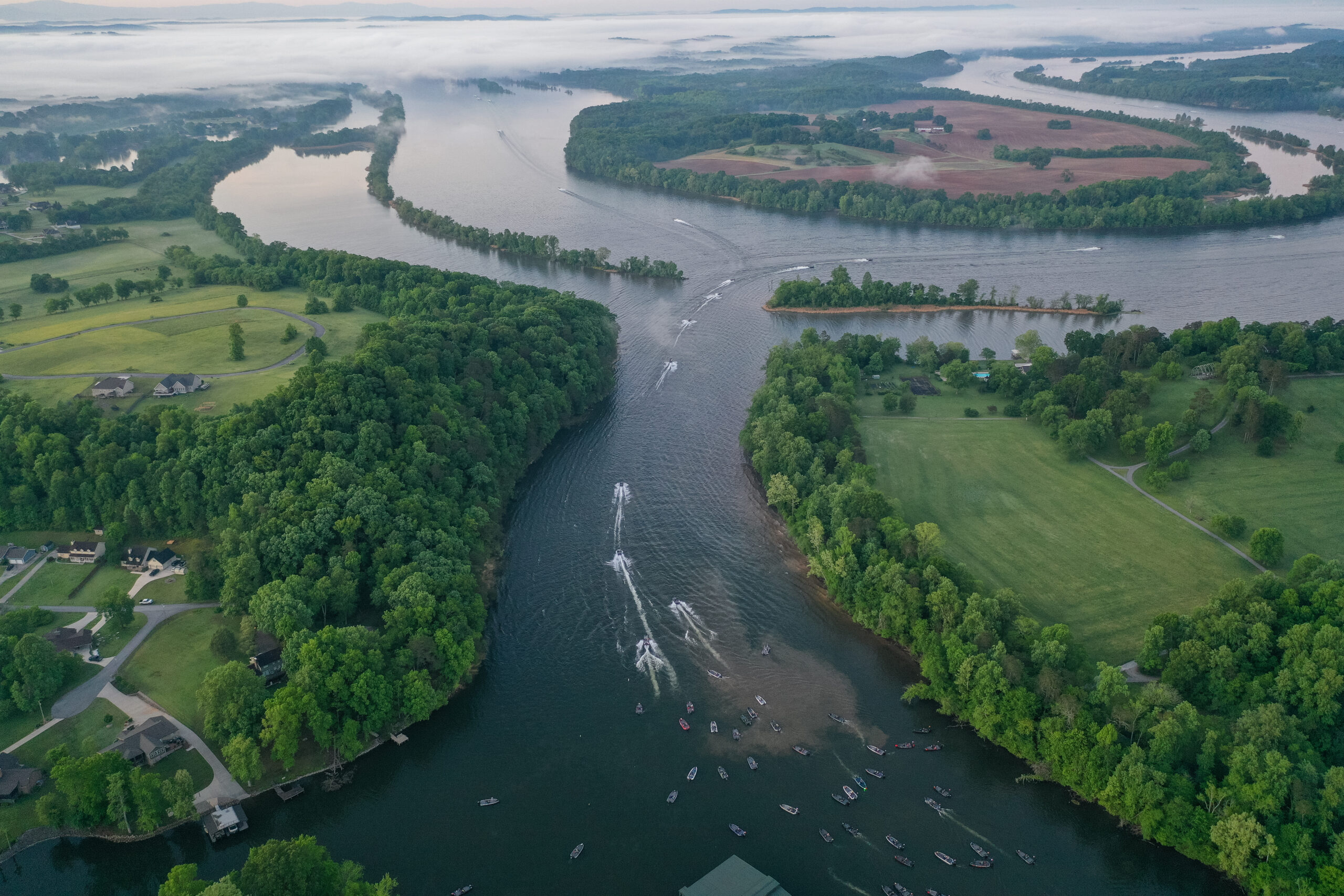
Chickamauga stretches nearly 60 miles and covers more than 35,000 acres, and just about all of it can be productive at times. The biggest question competitors will have to answer in order to break it down is what stage the bass are in.
Both Michael Neal and Wesley Strader, who live near Chickamauga, expect to find bass in all three phases of the spawn – prespawn, on spawning beds, and postspawn. However, they differ a bit in their expectation of where the majority will be found.
Neal thinks most of the fish will still be shallow, either on spawning beds or nearby. A few might already be making the journey to offshore postspawn habitat, like the famed Tennessee River ledges, but he believes this event will be a bit too early for big schools of bass to show up offshore. He thinks shallow tactics will dominate, whether that’s targeting bedding bass or those ambushing spawning baitfish like bluegill and shad.
“I really think it’s going to be way better for the guys that are fishing shallow, because even when (the bass) start getting out deeper, there’s not many,” Neal explained. “There’s big ones, but there’s not very many of them. So, I really think it’s going to be a guy that’s fishing either bream beds or shad spawn, something like that.”
Last year’s Toyota Series event on Chickamauga, which occurred on nearly identical dates, seems to support Neal’s assessment. Banks Shaw blew the rest of the field away in record fashion, totaling 82 pounds, 12 ounces across three five-fish limits and winning by more than 24 pounds. He did so by targeting offshore postspawners – but no one else could get on that bite, and Shaw noted that he wasn’t getting many bites each day. For the most part, the rest of the Top 10 fished shallow, which would seem to better suit the Bass Pro Tour’s every-fish-counts format.
However, there’s a chance the fish are a bit farther along in their annual spawning process than this time a year ago. Strader noted that it’s been an unusually warm spring. Combined with water levels that have been higher than usual since late March, he thinks more bass have spawned than normally would this time of year, so there’s a chance for a sustainable ledge bite.
“Normally our water, they keep it down until like April 15, and then they bring it up real slow,” Strader said. “It’s supposed to be full pool May 1. So, what happened was we had all that rain, and they brought it about halfway up, and they kept it there. That’s why I’m saying the ledge bite might be better than we anticipated, because I think a lot of those fish came in, spawned, and they’re done. That’s going to be the determining factor, how many came in and spawned. There’s been a wave already spawned, for sure.”
Most likely, MLFNOW! viewers will see a mixture of anglers bed fishing, targeting bass feeding on spawning bluegill in the shallows and pursuing postspawners offshore, whether on true ledges or transition areas on the way.
“We’ll have to mix it up a little bit,” Strader said. “There will be guys who just strictly (fish offshore) that who do really well. I wouldn’t be surprised if the guy leading after two days on Chickamauga probably will catch them all offshore in some form or fashion.”
The Nickajack wild card
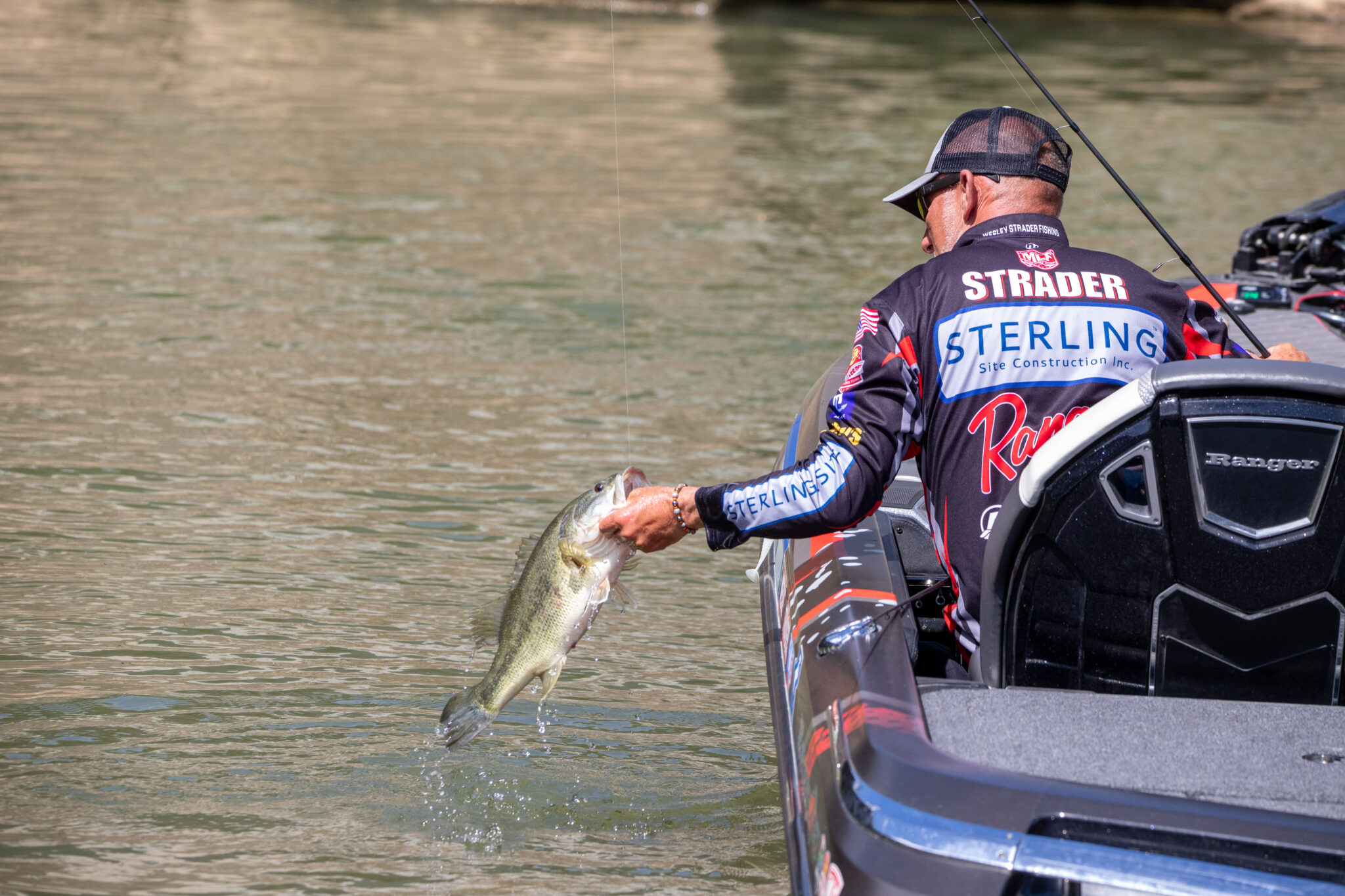
Those who successfully solve the puzzle on Chickamauga will then have to figure out a new body of water if they want to take home the Stage 4 trophy. For the first time since 2023 on Lakes Douglas and Cherokee, the BPT field will switch fisheries mid-event.
That should provide competitors with a couple strategic dilemmas. One will be how hard to chase the Qualifying Round win, which comes with an automatic berth to the Championship Round. Normally, anglers covet the day off and ability to skip the Knockout Round, but with so few of them having experience on Nickajack, fishing on Saturday might be the best way to identify the winning pattern.
Then there’s the question of how to practice for two different fisheries in just two days. Even though Neal has substantially more experience on Chickamauga than Nickajack, he’ll likely spend his entire practice on the former fishery, as he and the rest of the field have to make it to Nickajack before worrying about how to unlock it.
“I’ve spent very little time on Nickajack – like less than five days ever,” Neal said. “So, it’s like a new lake to me. But I just don’t feel like you can justify spending practice time down there unless you have a great practice on Chickamauga. Because if you go down there and practice and you don’t even make it, well, you just wasted your time totally, and you’re going to feel like you made bad decisions.”
Strader has more experience on Nickajack. He said the 10,000-acre fishery feels more like a river than a typical lowland reservoir, with steeper banks, less shoreline cover and fewer shallow flats. Unlike Chickamauga, where largemouth should comprise the bulk of the catch, all three of largemouth, smallmouth and spotted bass will likely be represented on SCORETRACKER®. Nickajack also offers more aquatic vegetation than Chickamauga, which has seen a lot of its grass disappear in recent years. Neal expects targeting grass flats to be a popular approach there.
“When you go to Nickajack, it’s just like Guntersville; everything like 12 foot deep or shallower is full of grass,” he said. “So, it’s going from one extreme to another as far as grass to no grass.”
Lots of options
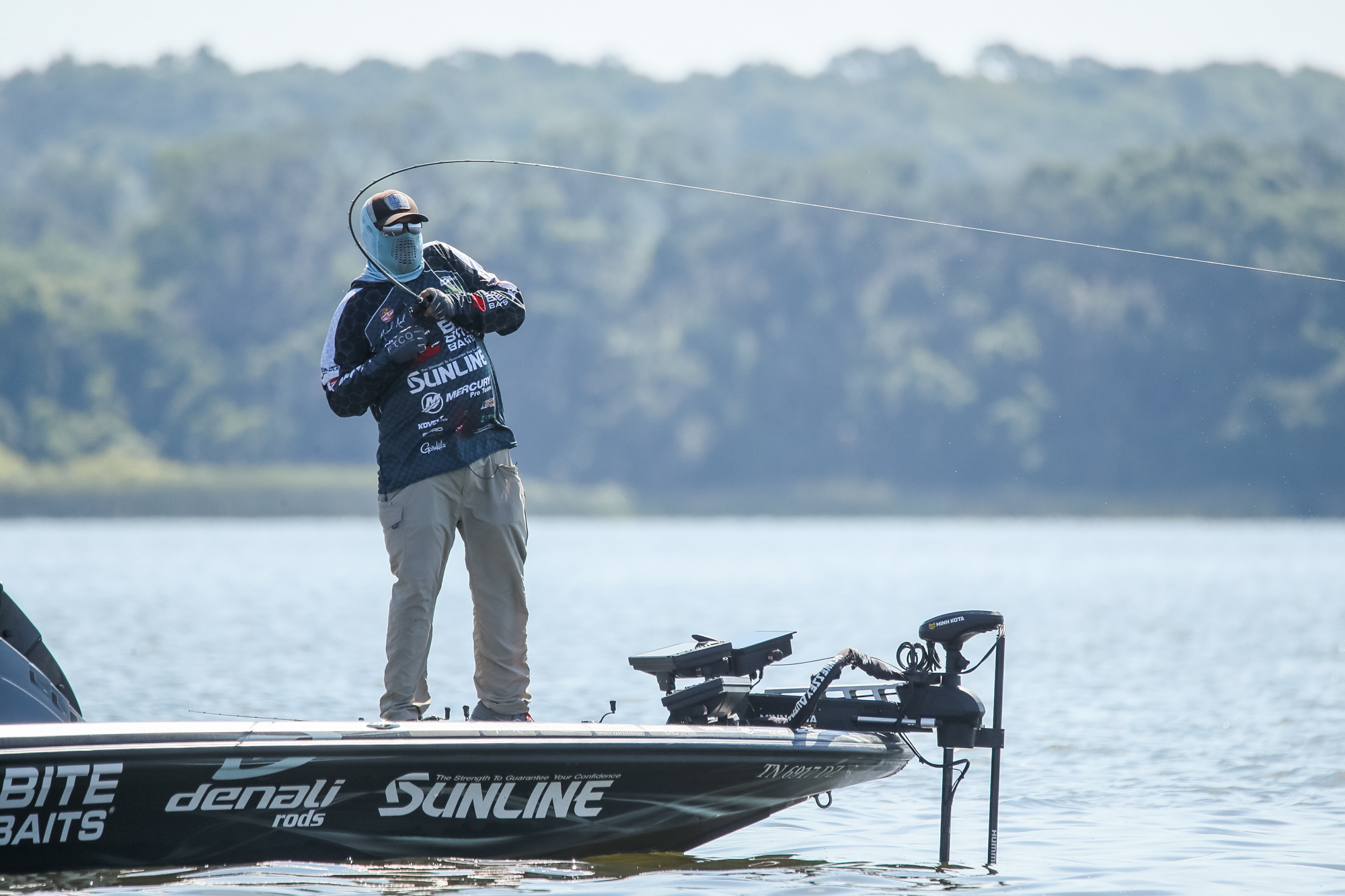
Given that the event will occur across two reservoirs and the bass could be spread between all three phases of the spawn, it shouldn’t come as a surprise that both Neal and Strader think a wide range of techniques will play at Stage 4.
Neal expects anglers fishing the shallows to cover water with bladed jigs and various topwaters, then slow down with wacky worms. If there’s a ledge bite, look for anglers to rotate between staples like deep-diving crankbaits, big worms, flutter spoons and hair jigs.
The jighead minnow has replaced a lot of those traditional ledge baits in recent years, and it’ll surely catch some bass when anglers are using forward-facing sonar. But the fact that the Bass Pro Tour field is limited to just one period per day in which they can utilize the technology ensures that anglers either have to go shallow during the other two periods or employ old-school offshore tactics.
“There’s probably going to be a (Zoom) Ol’ Monster worm bite offshore, some kind of crankbait bite offshore,” Strader said. “Just the standards this time of year. There might be a good spinnerbait bite or a ChatterBait bite. It’s that time of year where whatever you like to do, you’re probably going to be able to do that and do well if you find the right areas.”
Strader also noted that Chickamauga gets pounded with fishing pressure, which could force anglers to get finessey. Still, he expects some big largemouth to hit the scales. Chickamauga has earned the nickname “Land of Giants” for a reason – this year’s Toyota Series event on the fishery, held in mid-March, saw multiple bass over 10 pounds weighed in.
Both Neal and Strader hypothesized that it will take about 30 pounds per day to make the Top 20 and advance from the two-day Qualifying Round to the Knockout Round. Neal expects the winner of the Qualifying Round to amass 110-120 pounds.
As for Nickajack, no one seems to know yet what to expect. Strader echoed Neal’s sentiment that it will fish differently than Chickamauga. Given its lack of national tournament history, Strader is hopeful that his Nickajack knowledge could be an advantage – if he can get there.
“I’ve spent a ton of time down there over the years,” Strader said. “If I go fishing, I know where I’m going to go – put it that way.”