In his classic essay, “Why We Fish” (Outside Magazine, May 1993), Randy Wayne White may have pointed out the single most important thing about fishing: “The habits of fish may be mysterious, but fishing is not; effective fishing is little more than attention to detail, one bit of knowledge linked to another.”
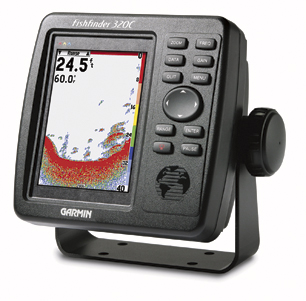
Surely for open-water walleye fishermen, the most fundamental source of knowledge needing to be linked into a greater whole is what you are seeing on your sonar screen.
The sonar doctor is in
Before he turned pro and became the all-time walleye-tournament earnings winner (if you combine all the money he has won on the Wal-Mart FLW Walleye Tour, the PWT and the National Masters), Minnesota native Bruce Samson was a physician. And it is with a physician’s analytical training that he has become one of the leading experts on fishing sonar.
 “What I do with my electronics is different from all the other pros,” Samson said. “I take it a step higher. My heart’s really into it. If you know and understand what you’re seeing, it’s absolutely amazing.”
Samson points out that the first step in elevating the effectiveness of sonar is to view it in the proper spatial context. “I use my electronics to view the lake in 3-D,” he said. “I take all the data from the 2-D screen and visualize it all in 3-D.”
In this greater context, Samson uses his sonar to build a picture of where he thinks walleyes are located.
Sensitivity is the key
Samson believes the single most important control on your sonar is the sensitivity button. “Turning up the sensitivity, that’s simple and basic and everyone knows how to do that,” he said. “But sensitivity is still the most important control. It’s the only way to decide what you’re seeing. You have to understand the percentage of setting that gives the right reading, and sensitivity changes according to depth. The deeper it is, the higher you should be setting it; the shallower, the less. Most units come with auto sensitivity settings, but you should do it manually because it’s so important.”
Another thing Samson recommends is spending some time feeling the bottom (use a sinker and no-stretch braided line) while you are watching your screen. This exercise will quickly teach you how to more realistically interpret bottom readings. Here again, the sensitivity knob is critical. “If you’re adjusting the sensitivity too high, the bottom will look harder than it really is, and vice versa if the sensitivity is too low.”
Samson usually fishes with a split screen sonar and GPS and only occasionally runs his manual zoom (“I find I can interpret the bottom without the zoom,” he said). He sets his depth range to auto, chart speed on high (“The highest it will go,” he said) and ping speed on high.
“Don’t use the Fish ID function,” he said. “That makes your sonar show a fish no matter what it is.”
Samson also uses his sonar and GPS to make his own contour maps. “Open-water walleye fishing is a matter of finding humps, points, drop-offs and ledges,” he said. “If I fish a place the first time, I won’t know it as well as if I were fishing it the 10th time. But with the right contour map, fishing it the first time I’ll know as much as I might by the 10th trip.”