Larry Fowler of Titusville, Fla. – a Wal-Mart FLW Redfish Series angler – will never forget the day he and a partner were fishing the redfish-rich waters of Lafitte, La., and found the reds annihilating baitfish along several grassy points in a shallow pond. The fish, schooling in water just a few feet deep, were feeding so voraciously that it was next to impossible to make a cast without catching one of the aggressive critters.
“At times it was so good you could see the fish and determine what size you wanted to catch,” Fowler said. “You would see a fish, and say, `No, I don’t want to catch him. I’ll throw to this other one over here.'”
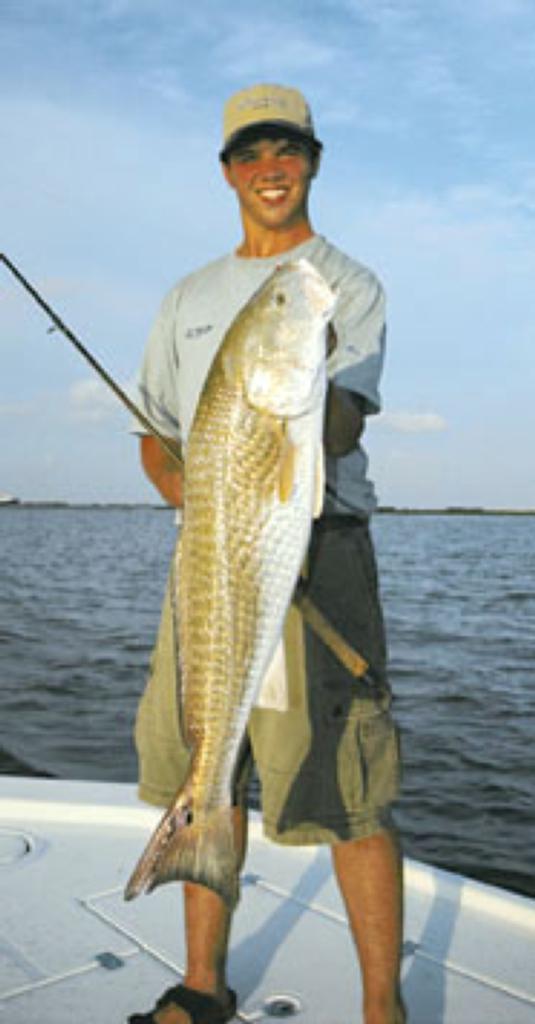
The anglers enjoyed this activity for more than an hour, going from grassy point to grassy point in the lagoon, picking off fish weighing from 7 to 10 pounds.
Catching reds – be they bulls or younger, less hefty fish – is a treat anywhere and anytime anglers can find them.
But find the fish in shallow water, specifically when they feed along the edges of grass, and the action is, simply put, like nothing else on earth. The fish are thrashing about, tails and backs out of the water in many cases, as baitfish scatter. The water boils everywhere as the fish crash the unlucky prey, and a well-placed cast is usually met with drag-screaming resistance. A pair of anglers can catch 40 or 50 of these grass-oriented fish with little effort at all.
 “They are just attacking everything,” Fowler added. “You get right in there with them and wear them out.”
Broken marsh
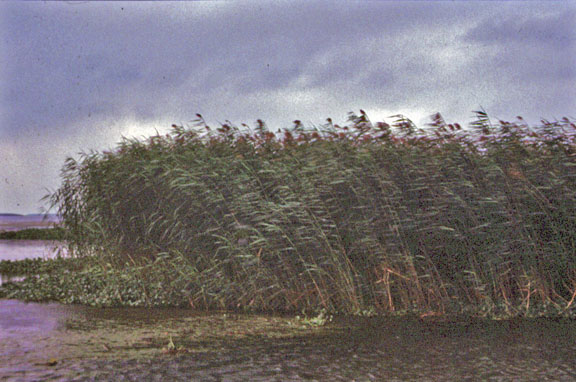
Anglers not used to fishing the marshy areas along the Gulf of Mexico, especially in areas such as Lafitte, Grand Isle or Venice, may not be acclimated to fishing for reds along areas of grass. In contrast to other parts or the country, where vegetation might not be as pronounced, this region is loaded with shoreline vegetation. But unlike traditional grass points, these areas are actually formed by erosion stripping the soil away from the plant life, leaving behind vegetation such as Rousseau cane and other marsh grass along the edge of points. This broken marsh, as it is often called, forms the ideal location for reds, large and small, to herd bait, a frequent occurrence during the summer and fall months.
“If you’ve got bait in the grass, there’ll be reds in there,” said Susan Gros, an outfitter for anglers of trophy reds in Harvey, La. “They’ll always be following the bait, including mullet, crabs and storm minnows.”
Following the bait might be an understatement in this case. What these reds are doing is pulverizing baitfish with reckless abandon. Frequently a school of 50 to 100 reds in the neighborhood of 10 pounds apiece will blanket a grass point and force the shad right into the Rousseau cane along the shore. The reds thrust themselves as far as possible into the grass, often leaving their backs and tails out of the water as they feed. Or, those fish that don’t crash the grass make V-shaped swirls in the shallow areas surrounding the point as they chase baitfish that attempt to scurry away.
And these aggressively feeding fish are anything but shy.
“We’ve literally caught them by lowering a bait right in front of them and watching them eat it,” Fowler said. His favorite baits for catching reds during this period are Mann’s Bait Company soft plastics and topwaters, such as the Tail Dragger.
But while this activity can take place over several months, savvy anglers should keep a close eye on the weather, for the periods before and after storms or during high and low tides are optimal.
Optimal conditions
As the tide comes in, the water surrounding these grassy islands slowly rises, covering some of the Rousseau cane along the edge of the points. The same thing happens to the outlying points when the tide goes out. When the water rises in these areas, anglers often find the fish on the prowl, having moved with the current. But as good as the tides are, they pale in comparison to the activity promoted by the strong winds produced by summer storms.
The area along the Gulf of Mexico is frequently battered by the surge from tropical storms, a fact that often leads to strong winds all along the gulf. When those winds blow out of the east, as they so frequently do in the summer, it causes an increase in the tide, meaning that even more water comes in than normal, Gros said. This increased flow washes forage, mainly storm minnows, out of the Rousseau cane when the tide recedes, provoking a feeding frenzy for the reds.
“The redfish go crazy,” Gros said. “They treat the storm minnows like candy.” Her lures of choice in these situations are Old Bayside Mud Minnows, Yum Samurai Shad fished on a Booyah Samurai Blade inline spinner and Berkley Gulp! Peeler Crabs.
According to Gros, so good is this activity that many clients book trips to specifically fish these areas as a storm passes and tides start moving out.
 High-percentage locations
Just about any grassy point will yield good reds under ideal conditions. But the best locations are those with at least 18 inches of water surrounding them and having depressions or shallow pools nearby. Though depth is relative in this case, the need for slightly deeper water can be crucial, specifically since it allows the bigger fish to move into these areas.
Louisiana angler Keith Bird also looks for other subtle features of grassy points. Instead of a location just having Rousseau cane along the shoreline, he also looks for the vegetation out a little deeper, a difference he feels could mean more fish at a particular spot. He probes the areas with a jig to determine whether or not grass is indeed present beneath the surface.
Another even more important difference Bird looks for is the presence of an oyster bed nearby. These beds, which are prominent all along the Gulf of Mexico, attract a plethora of both baitfish – which use the beds as cover – and predators. The presence of an oyster bed near a point provides all the more reason for reds to be in the area, Bird said.
“The cover is a catalyst for bait,” said Bird, who uses everything from the Booyah Samurai Blade to the Yum Samurai Shad and Creek Chub Knuckleheads to catch the reds. “And reds are eating machines.”