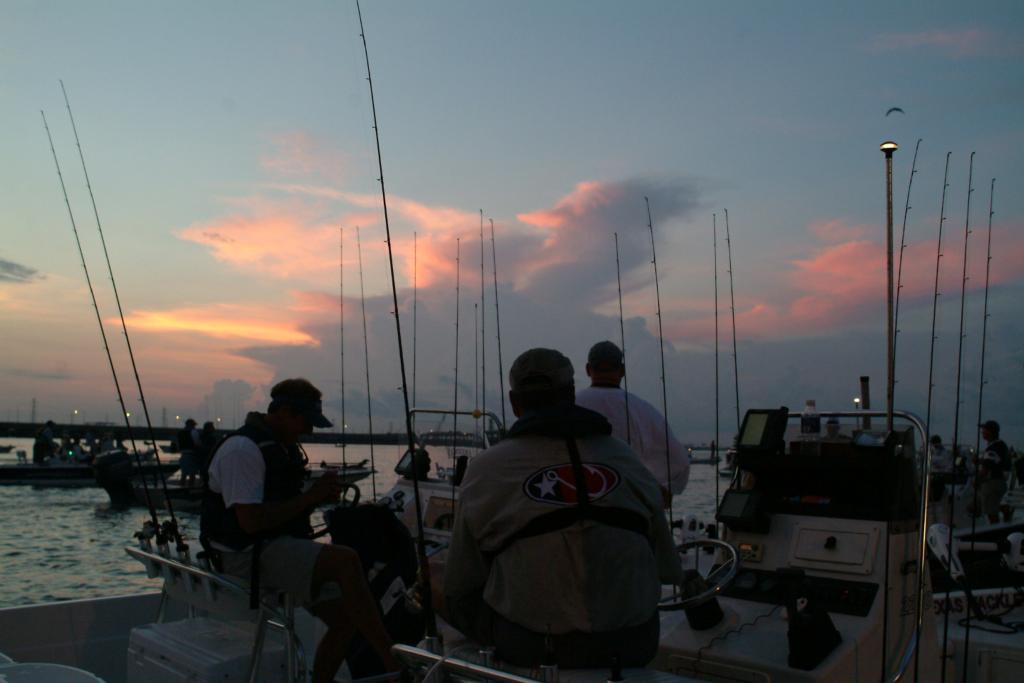
GALVESTON, Texas – As boats passed through checkout at the FLW Redfish Series Western Division event out of Galveston Bay this morning, the talk was about fishing time, or the lack thereof.
Not that these redfish teams are being shorted on their fishing day. With the launch starting at 6:30 a.m. and the first flight due back at 3 p.m., every team is given at least an eight-hour fishing day. However, since some teams are planning monstrous runs to the north or south, actual fishing time may dwindle down to just a couple of hours.
Kevin Shaw of Corpus Christi, Texas, who co-piloted a Redfish Series win out of Port Aransas, Texas, earlier this year, is one of those contemplating a big run to the north toward Sabine today.
“The real issue is gas,” Shaw explained. “If we go up there, we’ll have to make three fuel stops – one on the way up, one once we get to Sabine and one on the way back – and that eats up almost an hour of the day alone. Tops, we are looking at three hours of fishing time – and that’s if all goes well.”
Galveston Bay waters harbor plenty of reds, but the problem is fish are difficult to find, especially for those teams who prefer to scout clear, shallow waters with their eyes. The waters around Galveston are darker, and the bottom composition is mostly mud and silt.
“Down around Corpus, there are miles and miles of expansive clear-water flats composed of sand and grass,” Shaw said. “You can see everything down there, which makes reading the bottom features much easier.
“That’s not the case here. The bottom is much less visible. The reds relate to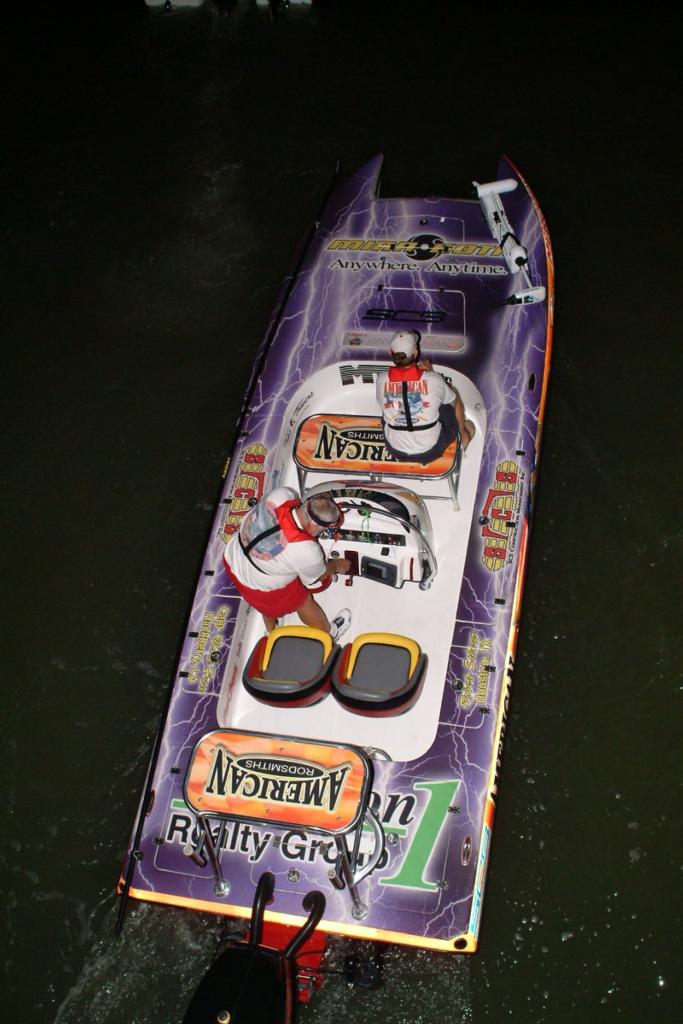 underwater reefs – sand and shell bars that are essentially invisible. There are a few small, shallow water flats, but they’ve been hammered by tournament traffic this week. If you want to sight-fish on your own piece of water, you have to make a run.”
Because of the lack of shallow flats, redfish in the Galveston Bay complex tend to live deeper, which makes fishing for them unique.
“The last time we were here for a Redfish Cup event, we caught suspended reds on crankbaits,” noted Greg Watts of Florida. “We were fishing a 30-foot hole and running crankbaits down through baitfish that were suspended in 6 to 8 feet of water. The guys that won the tournament were fishing jetty rocks with crankbaits. This is a much different kind of redfishing than what people are used to.”
Shaw says that knowing the location of deeper fish will play into locals’ hands.
“Guys that know where the underwater reefs are will have an advantage here, no doubt,” Shaw said. “They can stay close and fish stuff that nobody else knows about.”
Watts pointed out that local anglers also know how to spot “slicks” created by large schools of reds feeding on hordes of baitfish underneath the murky waters.
“When a school of reds is feeding heavily on baitfish, they emit an oily substance that floats to the surface and is visible,” Watts said. “There is an art to fishing slicks, and it’s something we’re still learning about with these Galveston-area reds.”
The day-one weigh-in of the Redfish Series Western in Galveston begins at 3 p.m. at Teakwood Marina, 400 Tiki Drive in Galveston, Texas.
Friday’s conditions
Air temperature at takeoff: 80 degrees
Forecasted high: 91 degrees
Forecasted winds: NE 5 to 10 mph
Tides: high: 9 a.m.; low: 4:41 p.m.
Day’s outlook: sunny in the morning, 30 percent chance of thundershowers this afternoon