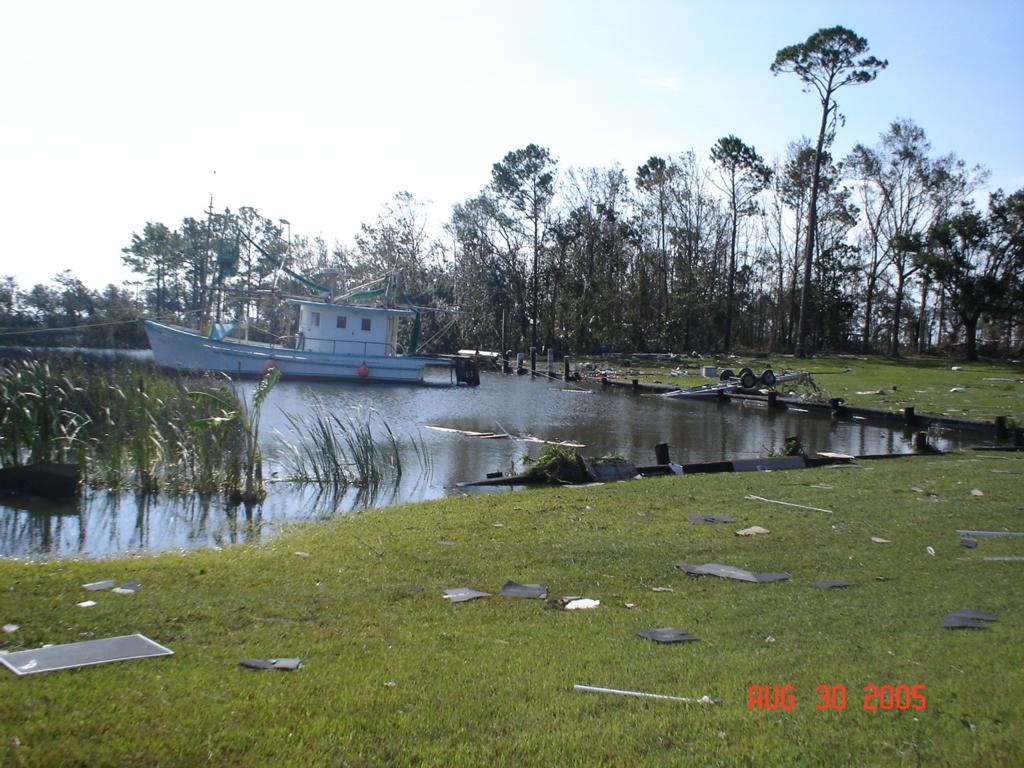
In late August 2005, the unthinkable occurred – a powerful hurricane raged through southern Louisiana, Alabama and Mississippi, nearly destroying the bowl-shaped city of New Orleans and completely devastating a sizable chunk of the surrounding area. Images reminiscent of those normally seen in third-world countries were etched into the memories of people around the world as they helplessly watched the drama unfold. The destruction was so horrific that viewers wanted to look away but found themselves glued to the television around the clock.
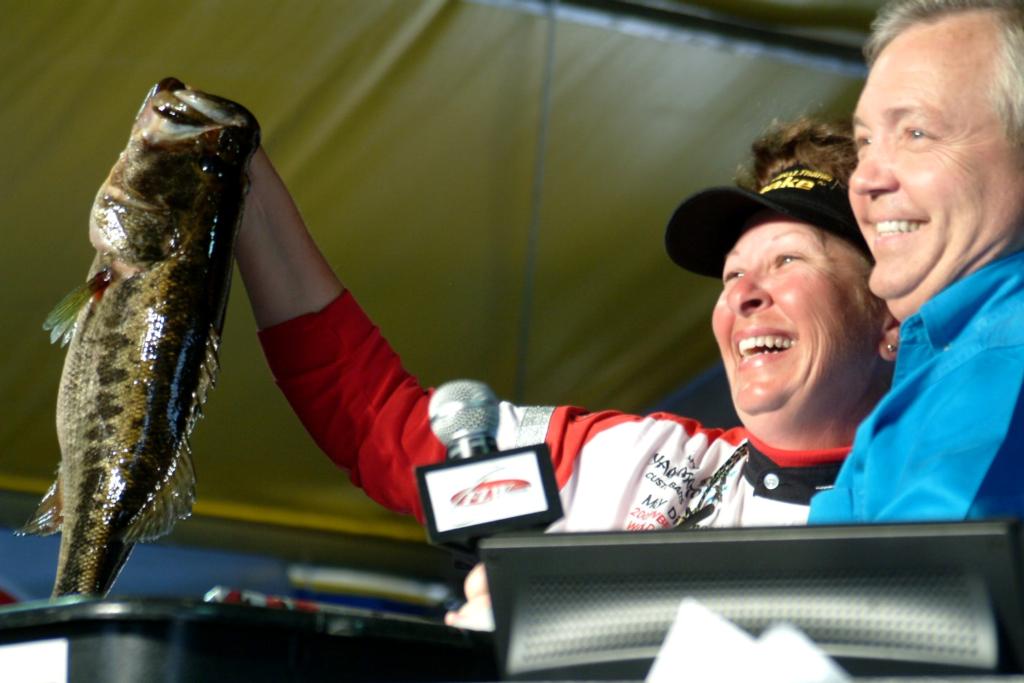
Words simply cannot describe the impact felt by those who call the area home. Included in that group is Wal-Mart FLW Tour pro Mary Divincenti, a lifelong Louisiana native whose Clinton home sits not far from the north shore of Lake Pontchartrain, the waters of which filled the streets of New Orleans when the levees failed.
In the days following Hurricane Katrina’s landfall, Divincenti’s whereabouts could not be easily confirmed, as telephone lines were down and cell phone service remained spotty at best. Fortunately, she counted herself among the lucky ones – not lucky enough to escape property damage, but lucky enough to be alive.
Though the state of Florida typically springs to mind first when hurricanes are considered, the coastal state of Louisiana is not immune to strong tropical storms. However, when Katrina first began to churn in the Atlantic Ocean, Divincenti and her fellow Louisianans weren’t terribly concerned.
“I believe they were saying it was going to cross the southern tip of Florida, so nobody (in Louisiana) got too excited about it at that time,” Divincenti recalls. “She didn’t actually hit Florida until Thursday, Aug. 25, and it was a doozy, with about 80-mph winds. It gave us a sigh of relief, thinking, `That’ll be it; she’ll die out.'”
She didn’t. As Katrina crossed over Florida and hit the warm waters of the Gulf of Mexico, she strengthened, eventually gaining enough ferocity to be classified as a Category 5 hurricane, the highest rating given to measure storm strength.
“She became a tropical storm after she crossed over Florida and got in that warm water in the gulf,” Divincenti said. “They named her Katrina. That’s kind of when we started taking notice.”
Katrina gathers strength
On Friday, Aug. 26, Louisiana Gov. Kathleen Blanco declared a state of emergency in Louisiana. It was on this day that Divincenti remembers taking note of Katrina’s projected path, a cone headed straight for her hometown.
“Friday evening I had to run to the Home Depot to get some stuff,” she said. “It was in Home Depot that it really dawned on me, `Hey, people are getting serious about this.'”
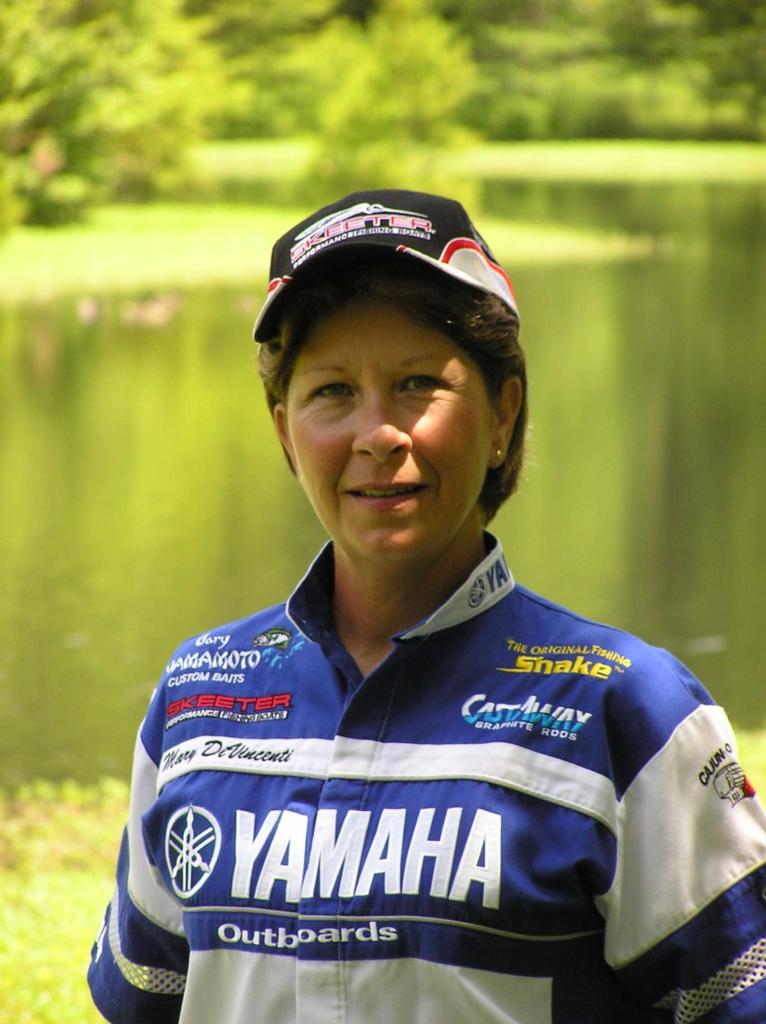 As a Louisiana native, Divincenti knew what the Gulf of Mexico’s 80- to 90-degree water temperatures meant for the incoming hurricane. It acted, she said, like high-octane fuel. The warm water, along with other factors such as high cross winds, added up to a recipe for destruction.
“With all those conditions coming together, she had a buffet,” Divincenti said. “That’s about what it amounted to. She just sat there and pigged out.”
By Sunday morning, Divincenti’s self-described lax attitude had transformed into fear and worry. It was early that morning that Katrina reached Category 5 status, and she knew the New Orleans levees were only made to withstand up to a Category 3.
“What do you do with 2 million people when something like this is coming?” she wonders. “That’s when people really got scared. It was like, `Here comes the big one that we’d always heard about.’ We’d been told for years that one day, it’s going to come. We’d had some pretty bad ones, but no one expected or was halfway prepared for what Katrina brought.
“We knew what was coming but had no idea how bad it was going to be.”
Staring down the storm
In the wee hours of Monday morning, Aug. 29, Katrina, which had by then weakened to a Category 4, made landfall. Though she was not as strong as she had been, she still carried 145-mph winds and wreaked havoc of enormous proportions.
As most people know by now, Katrina plowed through New Orleans, breaking levees and flooding streets, leaving helpless victims to wait on their roofs for someone to come and rescue them. Many waited to their death. Though a mandatory evacuation order had gone out, scores of New Orleans residents either could not leave or would not leave.
Divincenti chose to stay at home. Though she was certainly not out of danger, she did not live in New Orleans and was therefore not at risk for that particular degree of catastrophe.
“About 90 percent of the area did evacuate,” she said. “Obviously, we know we can’t control Mother Nature, and you can’t stop her, but there’s just a feeling of, `I have to stay here with my stuff.'”
Such a feeling, Divincenti said, is part of what it means to be a Louisianan at heart.
“The majority of people in south Louisiana are not materialistic, but it’s more of a pride thing,” she explains. “There’s just this feeling of what little bit you do have, you can’t desert it. It’s really hard for someone on the outside to understand the mentality down here.”
Though Divincenti’s decision to stay put may seem foolish to some, it was not a conclusion she came to lightly. She did mull it over, weighing the pros and cons, until eventually there was a point of no turning back. It was simply too late to leave.
“You have to leave far enough in advance so you don’t get stuck in the hurricane sitting on the interstate,” she said. “At least in your home, you have some kind of protection.”
Once the decision was made not to leave, Divincenti decided to wait for Katrina and look her in the eye.
“I stayed outside for quite a while,” she said. “I stayed outside because you do. There’s no answer to the question, `Why on earth would you do that?’ I don’t consider myself a daredevil; I knew what was coming, and I wanted to see her. Not in a defiant manner, because everybody knows you don’t play with Mother Nature. She is the queen, without a doubt.”
If she’s a queen, then she’s a manipulative one, as anyone who’s lived through a hurricane knows not to be fooled by the calm before the second storm.
“A hurricane has an eye, and the outer bands will hit land before the eye actually does,” Divincenti explains. “The upper band will come through and cause great destruction and flooding, and then you have a calm period where you mistakenly think it’s over. But then the lower band starts coming in, and it’s almost like a one-two punch. This thing, Katrina, was so massive, and that little calm spell fooled a lot of people.”
Divincenti, though, was not fooled. It was actually the wildlife that kept her clued in to the atmospheric conditions.
“I knew it wasn’t over even though the wind had calmed down and the rain had quit,” she said. “I actually had deer out in my feeder in the backyard. I watch the animals, and if they could talk, they’d be able to tell you exactly what happened and the time frame of it. Their behavior tells me.”
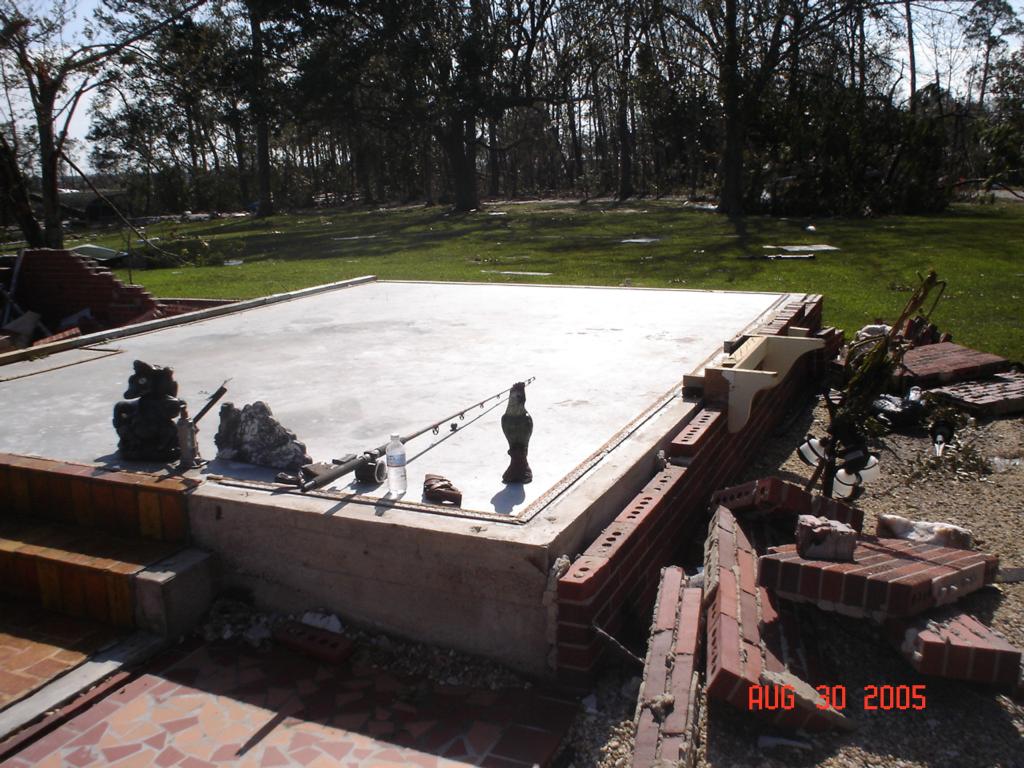 Though Divincenti stayed outside with Katrina as long as she could, there inevitably came a time when Katrina’s strength far exceeded her own, and she moved indoors. Her three-bedroom, three-bathroom house has one interior bathroom with no windows, and she drained the water out of the bathtub before taking shelter there.
“I had already filled the bathtubs up with water,” she said. “It’s not drinkable or cookable, but you have water to flush the toilets. Once the main pumps go down and electricity goes out, they’re not able to pump water to your house. Instead of wasting drinkable water, which we buy, we fill the bathtubs up so we can flush the commodes.”
The nightmare begins
When the storm at last passed through and the nighmare seemed to be over, Divincenti emerged from her bathroom to discover the nightmare had only just begun.
“I didn’t get scared or afraid until late, late Monday night, when the worst of it seemed to be over and we started to hear about that water rising in New Orleans,” she said. “That’s when I truly got scared, more so for the people in that area than my own personal safety.”
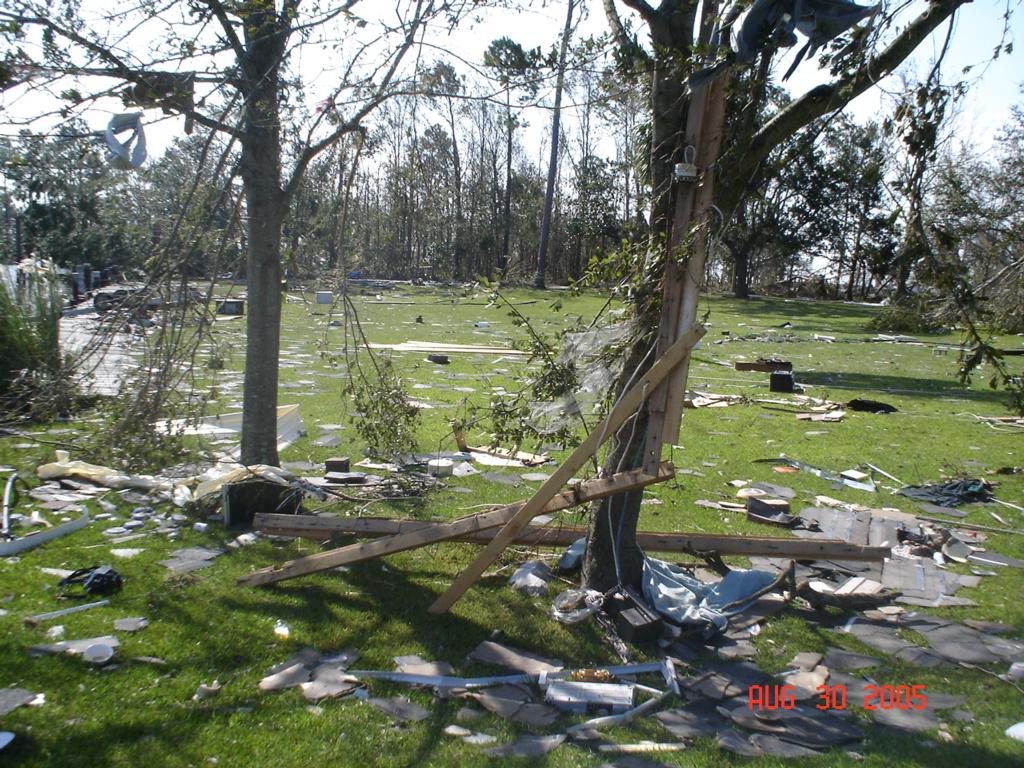
As for Divincenti, a tree fell through the roof of her house into her bedroom, making it impossible for her to stay in her home. She relocated to a camper that she mercifully had not been able to sell.
“I knew we’d have bad winds, and worst-case scenario, the roof may go,” Divincenti said of her own personal neck of the woods. “I knew my roof being blown off wasn’t going to kill me. I live in a really rural area on 15 acres of land that is just chock full of pine and oak trees, and that is the fear – the wind and the trees. Luckily the tree that got my house went through the bedroom.
“I didn’t live in the house because of the rain after the tree fell on the roof. I couldn’t get up there in 120-mph winds and put a blue tarp up.”
With a borrowed generator, Divincenti was able to cool the camper, but only at night. Temperatures in south Louisiana in late August registered a sweltering 90-plus degrees with high humidity. She had a battery-powered television as well as a radio that kept her up to date on the goings-on in New Orleans. What she heard and saw was not only devastating but also humiliating.
“I think they estimated about 100,000 people had stayed behind, and those were the people you saw on TV in the nursing homes and hospitals and on their roofs,” she said. “We’re so embarrassed and humiliated and angry over not only our local but also the federal government’s response. You can look at it two ways: You knew it was coming, and you could have gotten out. Or you can look at it the other way – there are a number of people who were right there in her path that do not have the means to just close up, get in a vehicle and get out of the way.”
Indeed, the government’s response at all levels has drawn harsh criticism from locals, American citizens and the national media. Divincenti for one resents the manner in which the locals were portrayed by some. Poor, she says, does not mean discontented.
 “A lot of those people down there don’t own vehicles,” she said. “I don’t want to say poor people, because Lord knows they’re not poor. They’re very rich in pride and culture and heritage, and they’re happy people. To me, you cannot put a price on true happiness. So many people live in mansions and drive awesome vehicles and live in a high-dollar world, and they’re as miserable as they can be. You don’t find a lot of that down here. They’re basically genuinely happy people, content with what they have.”
After Katrina, the haves and have-nots were all united in destruction, as Katrina was blind to economic status as she wreaked her havoc. Homes and possessions of the rich and poor were gone in an instant.
“People that had nothing – their home was just totally leveled – it was their last concern,” Divincenti remembers. “It didn’t matter. They were frantic in finding family members and friends. We lost electricity and telephones. That made it even worse, the not knowing. Knowing no one could call you if they needed help or if they were hurt. It’s hard to find words to describe it.”
Divincenti herself lost two good friends in New Orleans. One, a fishing buddy, drowned after making it all the way up to her attic.
“I spoke with her until we lost phone connection,” she said. “That was Sunday evening, and I got ahold of her on the cell phone. She told me it really wasn’t quite that bad, but that levee hadn’t broken yet.”
Helping others to help herself
With the heartbreaking loss of personal friends and the never-ending stream of bad news on the television, Divincenti felt herself breaking down. She knew that if she allowed herself to sit there in that camper and absorb even more of the bad news, she’d reach a depth so low she may never recover. So she got up and went to help. But first, she sold her bass boat.
“I sold my Skeeter,” she said. “It must have been the Thursday or Friday (after Katrina), this guy from Warner Robins, Ga., got through to me on the cell phone. He told me he wanted that boat if it was still in one piece.”
That Saturday, Divincenti left for Birmingham, Ala., to deliver the boat to the buyer. She says she cried the whole way there.
 “I cried from the moment I got on the interstate all the way to Birmingham, just seeing all the convoys of utility trucks, Red Cross caravans and private citizens pulling trailers just loaded down with food, baby diapers, bottled water and what have you – all headed south,” she recalls. “I knew where they were going. I have to say, for the first time in my life, I actually said out loud, `God, how blessed I am to be an American.'”
Seeing charity firsthand not only made her proud to be an American, but it made her even more proud to be a Louisianan, as she sees the outpouring of support as a welcome message of acceptance from the rest of the country.
“Believe me, here in south Louisiana, we know what the rest of the country’s idea of us is,” she said. “We’re aware of that. We laugh and make jokes about it. Most of the country thinks we’re a bunch of dumb coonasses who drink and eat crawfish all the time. Maybe now they think we’re not so bad after all, because (help) came from everywhere.”
On the way back from Birmingham, Divincenti found herself at the receiving end of some aid, though she doesn’t believe she actually needed it. She stopped at a gas station to fill up, and when she went to pay for her fuel, she discovered someone had already taken care of the bill when they saw her Louisiana license plate.
“They had Florida plates on their car,” she said. “I said, `Oh my God, I can’t believe it!’ Then there’s that part of you that feels guilty – I’m not an evacuee; I’m delivering a boat. The lady in the store starts telling me about a big festival that night in Birmingham, and all the money raised was going to the hurricane victims, so I ate my way through that Greek food festival with a new perspective. I had a chance to step out of the situation and experience firsthand the love and generosity of other people.”
Divincenti’s pay-it-forward mission didn’t stop there. When she got back to Louisiana, she began volunteering at a local shelter, helping to secure special needs for Katrina victims.
“I’d go in each morning and get the list, and I wanted special requests from women,” she said. “It’s been an experience, but it’s the best thing I could have done. Nothing will get you out of self faster than helping someone else. That’s the only way I survived. I made myself get up and get involved, or I would have sat right there and sunk into a depression I may never have come out of.”
Starting over
As for her own property loss, Divincenti wasted no time in lining up insurance money and getting things repaired. She recalls the line at the State Farm office being so backed up that you couldn’t even get in, and of course contacting anyone by phone, fax or e-mail was not an option for quite some time.
“There were traffic jams like nothing you’ve ever seen,” she said of the rush to collect not only insurance money but also federal aid. “Insurance companies got bombarded like you wouldn’t believe.”
Fortunately for Divincenti, her close circle of friends includes an electrician and a residential contractor that were able to put a rush job of sorts on fixing her property.
“The lumber was the hardest thing to come by,” she remembers. “They made two trips over to Houston when they were redoing my roof, and Houston is six hours west of here. That says volumes for the kinds of friends I have.”
The gasoline shortage that affected motorists nationwide also added to the intense stress of the situation, as Divincenti knew she needed to get out of the house but she wasn’t sure how far she could go without readily available gasoline.
 “I needed a project – something to drag me away from that TV,” she said. “You get sucked into that, and you can’t turn it off. It’s by no means gloating in someone else’s misery; it’s like a magnet. After about the third day, when the initial shock wore off, I made myself get up and get out of the house, but then I was scared to drive because we couldn’t get gas. You can’t sit here and get so sucked into it that you can’t even function because you’re so depressed, but then you’re scared to drive because you can’t get gas.”
She recalls hour-long waits at gas stations with open pumps while people filled up 55-gallon drums to run their generators. Divincenti herself went 11 long days without utilities, but she knew that was nothing compared to the people in New Orleans who still did without even after the two-month mark had passed.
“It basically turned into a political war,” she said. “We had the left hand waiting on the right hand to tell both hands what to do. I hate to say this because I love our Gov. Blanco, but I think this was way over her head. I’d go so far as to say it was over Bush’s head. Our governor was asking for help, our mayor was asking for help, but it just never came.”
The degree of destruction coupled with the level of frustration with the government has led many evacuees to say they’re never coming back to New Orleans. Like many people along the coast, Divincenti hopes that the Big Easy will return to form some day, chock full of the diversified people that made it so distinguished in the first place.
“I wish they would come back,” she said of the evacuees. “New Orleans is such a beautiful mixture of culture and ethnic backgrounds and ideas and faiths and beliefs. It’s got to be the most beautiful melting pot in the world. Good, bad or indifferent, regardless of what you think of its people, it needs to be rebuilt.”
`We’ll forever be grateful’
Reconstruction is indeed under way in New Orleans, although problems far too encompassing to mention continue to plague the coastal area and hinder the rebuilding efforts. Nevertheless, Divincenti doesn’t want people to give up on Louisiana, and she is grateful for all the nation has done to help put the pieces back together.
“There’s still a lot of devastation,” she said. “But I’d like to send out a huge, heartfelt thank-you from everybody here in south Louisiana to each and every person who contributed some kind of help. Whether you drove an 18-wheeler down here from Connecticut full of bottled water, or whether you were one of the little girls that set up a lemonade stand and brought $11 into the shelter, or whether you’re someone who couldn’t have done anything more than say prayers for us, thank you. We’ll forever be grateful for that.”
Divincenti realizes that her fellow Louisianans are now scattered across the nation, and she also speaks for her fellow citizens in saying thanks to the cities and towns across the United States that opened their doors to the hurricane evacuees.
“It’s put a burden on every city in this country,” she said. “Your lines are going to be longer, and your shelves are going to be empty sometimes. But we are so grateful. Just don’t fall in love with the people and keep them. We want them back.”