
No matter which part of the country you fish, one bass species reigns as a sovereign favorite. Smallmouths are typically the king in the northern latitudes, while spotted bass retain a notable following all through the South-Atlantic region. Largemouths carry prominent status throughout the country and remain the most widely distributed of the bass species.
Each species faces geographic restrictions, but many waters offer a mixed bag of bass rather than a solitary stock. Even in single species waters, illegal stockings and incidental introductions of non-native fish may initiate a new species mixture at any time.
The question then becomes, what allows one species to gain an advantage over another? Habitat, food utilization and the physical nature of the water body all play a role, but perhaps the most important aspect rests with reproductive success.
Unless a lake has varied conditions, reproduction becomes the key to one species maintaining a dominant advantage over others. Here’s a look at ideal spawning conditions for each of the country’s three primary bass species.
Largemouth bass prefer to spawn on a soft bottom near some type of aquatic vegetation such as reed beds. Consisting of a shallow depression, the nest will usually lay adjacent to submerged wood or tree roots in 1 to 5 feet of water. Largemouths typically spawn in water temperatures between 60 and 68  degrees. A note for anglers – larger bass seem to nest earlier in the spawning period and in deeper water than their smaller friends.
Smallmouth bass love rocky environments and small gravel makes perfect spawning substrate, especially when located near boulders or aquatic vegetation. Smallmouths will spawn in open, coverless areas when cover is unavailable. Bronzeback beds have been documented as deep as 20 feet, although most nest in 3 to 12 feet of water. Spawning depth is affected by water clarity with deepest spawning corresponding to the clearest waters. Smallmouths are the latest of the spawners with peak nesting taking place between 62 and 68 degrees.
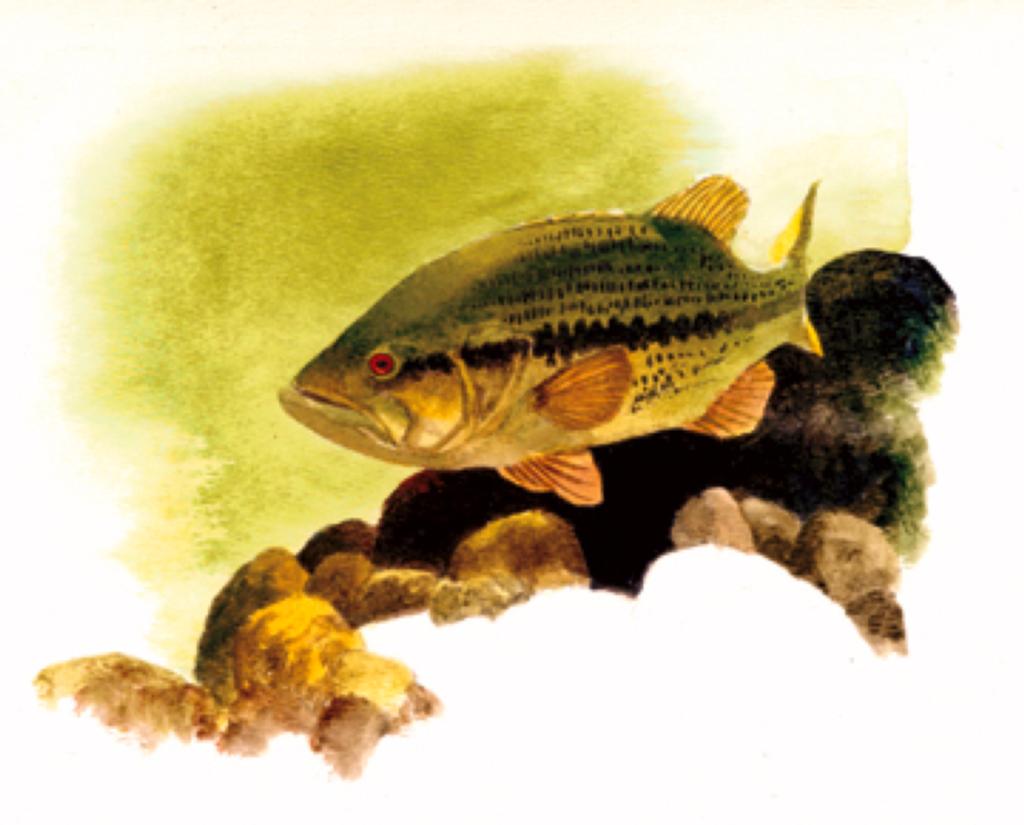 Spotted bass can spawn in a variety of substrates, although they seem to prefer rock outcroppings. Ledges and long sloping points with depths between 2 and 8 feet offer good spawning sites. Spawning can take place from 60 to 70 degrees, but many biologists seem to think spotted bass spawn slightly earlier than largemouths.
From a management perspective, largemouth bass stand as the most popular game fish in America. Smallmouths are also very popular, while spotted bass rank as the least popular of the black bass.
Smallmouths and largemouths are somewhat partitioned by habitat, but spots and largemouths can acquire an adversarial relationship. When competing for the same resources, spotted bass are more aggressive and may spawn earlier. However, since spots don’t grow to trophy size like largemouths, it’s easy to see why largemouths are held in higher regard.
Each species has their place as illustrated by the prized smallmouth fishery in Lake Erie or the fabulous 4-pound spotted bass that come from Table Rock in Missouri. Species proliferation hinges on successful spawning, and the species that maintains the most reproductive success will likely dominate that water body.
Here’s a look at ideal spawning conditions for each of the country’s three primary bass species:
Smallmouth bass
• Gravel bottom near boulders or vegitation, 3-12 feet deep, 62-68 degrees
Spotted bass
• Ledges or long sloping points, 2-8 feet deep, 60-70 degrees
Largemouth bass
• Soft bottom near vegetation or wood, 1-5 feet deep, 60-68 degrees