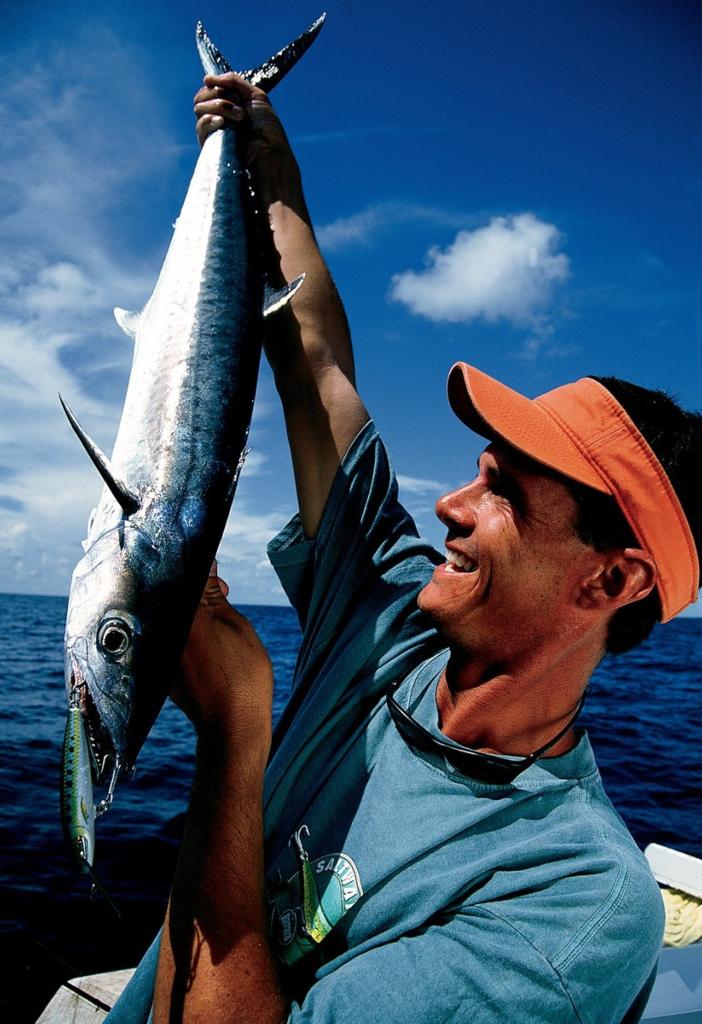
It’s one of the sport’s inherent assumptions. Big, live baits are the way to go for smoker kings. Little fish sometimes eat big baits and big fish sometimes eat little baits. If you’re on a hog hunt for one big, tournament-winning fish, however, you’ll want to pack your spread with the plumpest, hardiest mackerel morsels you can find.
Now, buckle up – we’re about to slam on the brakes.
Live bait isn’t the only way to land a kingfish. Hardware, as in artificial lures, will boat plenty of fish.
Those words have no doubt already shoved a burr into somebody’s saddle. But in the “big picture” of king mackerel fishing, hardware has its place. Sure, you’re not likely to see this in actual tournament competition, but consider these scenarios:
Probing: Whether you’re looking in new areas or returning to the site of past successes at the start of a new kingfish season, you’re wise to do a little recon before it really counts. Tournament anglers often employ artificials for pre-fishing because it eliminates the need to spend time baiting up in the morning, and it prevents burning through a bunch of wire rigs.
The old adage “fish have tails” particularly applies to highly mobile pelagic species like kingfish. So, assuming last season’s hotspot will fire off tournament morning is a rookie mistake. Dragging hardware in a run-and-gun style allows you to test a lot of spots in a short amount of time while practicing.
And, because gaffing kings while practicing is a low priority – if not downright taboo for some – shaking off a few fish that didn’t get wrapped up in a stinger rig won’t kill your day.
 Fun fishing: It’s hard for tournament types to break out of the high-pressure competitive mode, but from time to time, it’s nice to ease back on the throttle when fishing with family members and friends who aren’t so hardcore.
Hosting VIPs: You may get lucky and nail a hog when you have spectators along, such as sponsors, celebrities and media, but big kings have a way of spoiling such plans. Truth be told, schoolies are much easier to handle and (I’m not supposed to tell you this part), if you know how to hold them, they can be made to look much bigger in pictures.
In any scenario, mobility is the underlying benefit of artificials. You can quickly drop a spread of lures and sling them into the boat whenever you need to move. There’s no worrying about de-hooking and maintaining live baits. And in the morning, you can go straight from the dock to the fishing spot with no time wasted catching bait.
Moreover, artificials offer a reliable backup system. On those frustrating days when you try unsuccessfully to secure live bait, if you run out during the day, or worse yet, your livewell fails, hardware can keep you in the game.
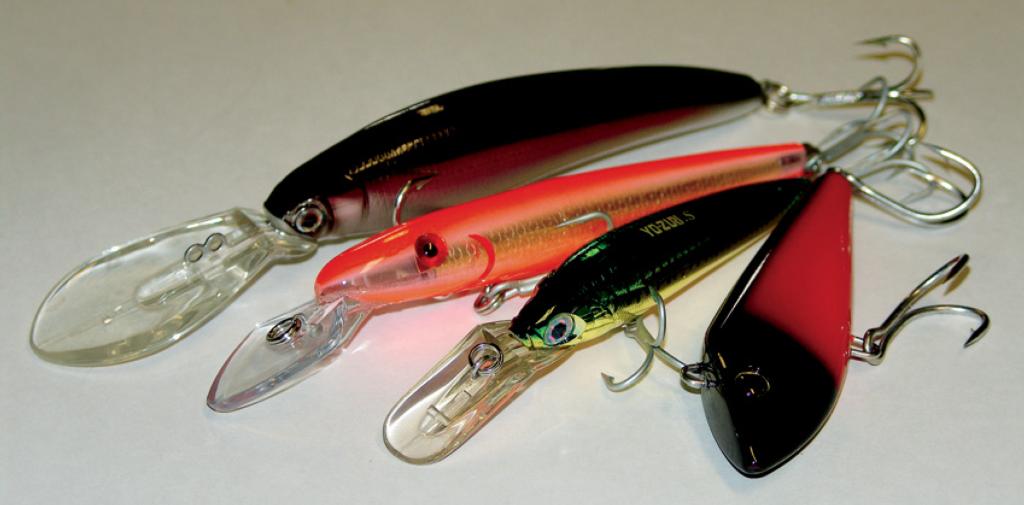 Popular kingfish lures include large diving plugs and crankbaits, like the Yo-Zuri Hydro Magnum and Bonita. Large spoons, such as Drones and Clarks, also work well as does the Russelure (aka “King Getter”) – a banana-shaped aluminum body with a pair of treble hooks and an enticing wobble.
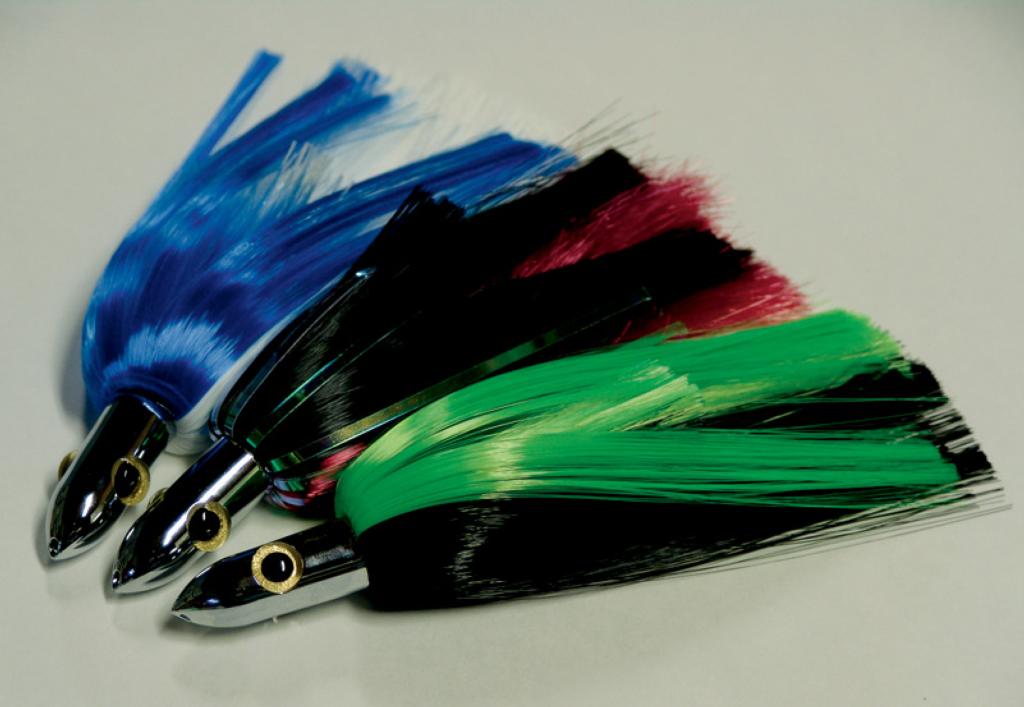
Also included in this style of fishing is an artificial lure and dead-bait combo. Try a trolling jig with a cigar minnow on the hook, or a bullet-head lure with a nylon skirt in front of a dead ballyhoo.
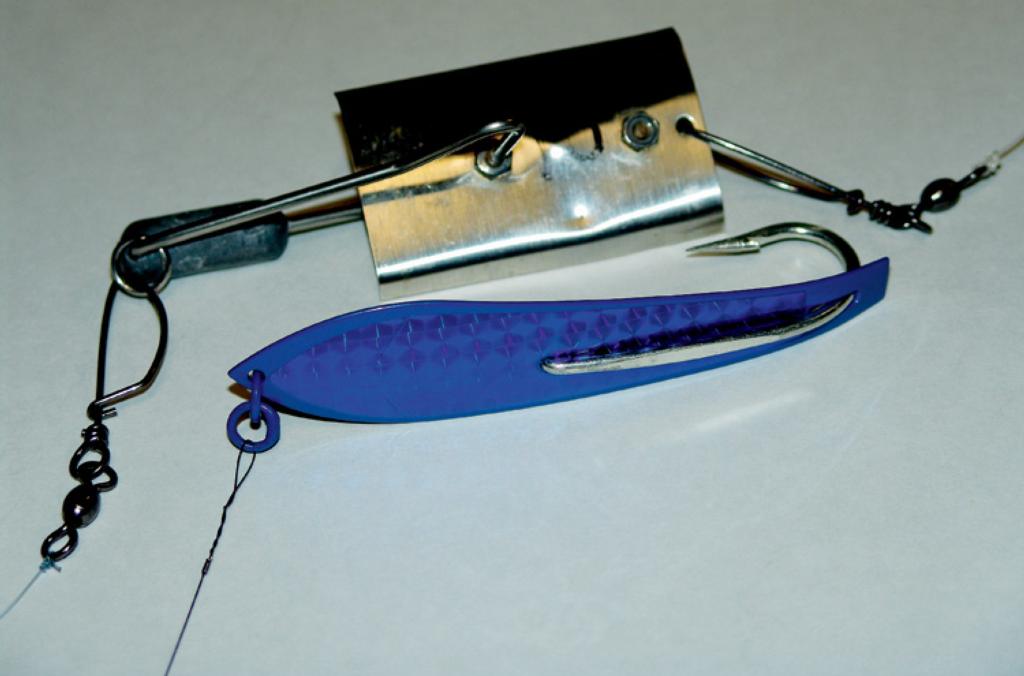
At trolling speeds of 3 to 4 knots, diving plugs dig on their own, but spoons and bullet heads need an escort to lower depths. Downriggers are the most precise, but planers offer another option. With a weighted arm on the front end, planers are designed to run at about a 45-degree angle when “set.” No. 2 or 3 planers are good for kingfishing – the larger the planer blade, the deeper it dives.
In the standard kingfish arrangement, a heavy-duty snap swivel on your main line clips to an attachment ring that slips along the planer arm. The artificial lure runs behind a leader attached to the planer’s back end – usually about 20 feet of 80-pound fluorocarbon tipped with about two feet of No. 3 or 4 wire.
When a fish strikes, the pressure pulls the planer backward, thereby forcing the arm to slide through the attachment ring. At this point, the boat’s forward motion causes the planer to rise. Similar to a downrigger rod tipping up when a fish knocks the line out of the clip, you’ll usually see the planer rod bounce as a strike sends the rig to the top.
The real challenge of fighting kings on these rigs is that once you reel the planer near the rod tip, you still have a long leader in the water. Handlining small kings is no big deal, but if you fool a big one, expect a workout.
 Because water drag is greater with artificials – especially when planers enter the picture – you’ll need stouter tackle than live-bait kingfish gear. Beefy 7-foot rods and 4/0-class reels loaded with either stainless-steel wire or 40- to 60-pound braided line will get the job done.
Some plugs, like the Yo-Zuri Hydro Magnum DD, have an eyelet under their heads to which you can attach a weight. This makes a floating or suspending lure dive and stay down until bitten or retrieved. You can alter other lures to accomplish the same effect by screwing an eyelet into the bottom.
When you first start seeking kings on artificials, experimenting with various lures and colors is a necessary exercise. During this testing period, keep several lures handy by hanging them inside a bucket with notches cut around the neck for hook holders. Generally, gold, silver, orange or pink plugs work well on bright days, whereas overcast conditions call for greens, blacks, reds or blues. For spoons, go with silver, green or blue.
In addition to trolling presentations, you can also nab kingfish by casting and retrieving lures into a chum slick. Set up on promising structure, such as nearshore reefs and rocks, channel markers or radio towers; establish a scent trail with chum blocks, menhaden oil and tiny bits of freshly chopped baitfish and start working shallow-diving plugs such as the Yo-Zuri Crystal Minnow through the hot zone. One- to 2-ounce bucktail jigs will also do the trick.
Connect line to leader with an Albright knot, as swivels create bubble trails that often attract unwanted attention from kingfish and Spanish mackerel. One nip at the swivel area and your lures disappear into the abyss.
Blending the trolling and casting notions, it’s wise to keep a plug or jig rigged on a medium-heavy spinning rod for targets of opportunity. Sight-fishing is hardly a common kingfish tactic, but should a fish strike and miss a short bait, he might stick around long enough to spot your plug zipping past his head. Nothing ventured, nothing gained.