Aug. 29, 2005. It’s a day that will forever be remembered. At 6:10 a.m. CDT, one of the most powerful tropical systems ever recorded in the Atlantic Basin made landfall near Empire, La. The hurricane, named Katrina, proceeded to administer death and destruction on a scale never before seen in modern U.S. history.
Parts of the Mississippi River Delta region, Mississippi coast and Alabama coast were totally devastated. The storm surge reached an amazing 34 feet in Bay St. Louis, Miss., with similar surge measurements seen near Venice, La., and even a 13-foot surge as far east as Mobile, Ala. Sustained winds were 125 mph at initial landfall and the minimum central pressure hit 920 mb – the third lowest pressure ever recorded in an Atlantic hurricane at landfall. As a comparison, the storm surge from Hurricane Andrew, well known as one of the worst tropical systems to hit the United States was 17 feet when the hurricane made landfall in Homestead, Fla.
 When Katrina made landfall, total destruction occurred for miles and miles inland. The storm was so powerful, tropical storm warnings were issued as far inland as Kentucky – about 500 miles from where the storm made its initial landfall.
Concerning the storm, the National Weather Service said: “Katrina was one of the most destructive hurricanes to ever hit the United States coast. Severe damage was seen … up to 76 miles east of the center of Katrina. Storm surge values approach Hurricane Camille’s extreme values with high storm-surge values over a much more extensive area than with Hurricane Camille. Almost total destruction was observed …”
The impact on human life has been documented by newspapers, magazines and television shows. The impacts continue to be felt in Louisiana and Mississippi. The facilities and businesses in the towns along Highway 23 from Belle Chase, La., down to Venice are virtually nonexistent.
Actually, for most of that stretch of highway, nearly everything is gone. There is no way to describe it. The destruction was simply so extreme that subdivisions vanished and dirt lots remain. A few businesses have reopened and construction crews are working around the clock to clean up piles of debris, patch levees, set up power lines, pave roads and rebuild the infrastructure. But as of February, rebuilding homes was something not yet seen, and officials estimate the area won’t be back to normal for years.
The effect on the marsh
There is, however, more to Hurricane Katrina than the destruction of buildings and direct impact to 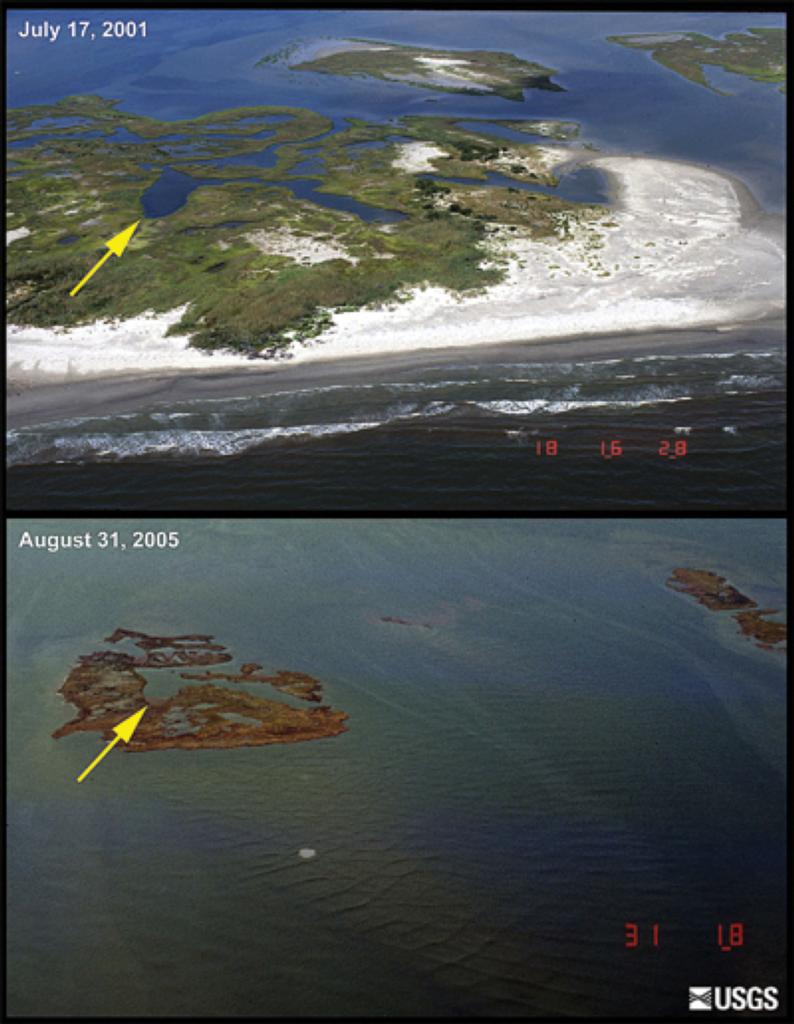 human life, and since more than eight months have passed since the event, it is now appropriate to discuss the effects of Katrina on Louisiana’s famous red drum fishery.
After Katrina made landfall, some Louisiana anglers immediately predicted the incredible redfish fishery, from west of Port Fourchon, La., to Venice (and even farther east to Mississippi) was gone – completely wiped out. In the shock following landfall, this prediction seemed reasonable. After all, a storm of the overall magnitude of Katrina had never hit the area – or anywhere in the United States for  that matter. Redfish anglers, and concerned anglers in general, feared a great American resource had been eliminated in 24 hours by a monster freak of nature.
For weeks following Katrina’s landfall, no one fished in the area, and for good reason. There were obviously more important things to worry about, such as locating family members and tending to their welfare. Then, about a month after the event, a few anglers, the few in the area that had a boat that  wasn’t washed up on the nearest levee, ventured out into the marshes surrounding Barataria Bay. What they discovered was a pleasant surprise – the redfishing was excellent.
So what exactly happened in the marshes of southern Louisiana?
The immense storm surge rearranged the ecosystem of the region. Saltwater was pushed far inland creating temporary new brackish backwaters, new mud flats were created, some mud flats were erased, banks were eroded back by 50 yards, bayou channels were filled in with 10 feet of mud, marshes were swallowed up by the Gulf, the Mississippi River nearly cut a new channel across Highway 23 and levees everywhere were breached.
All of this seems to be terrible news for the fishery found in the Louisiana marshes. But last autumn’s fishing was outstanding.
“The short-term redfish productivity for those areas (from Grand Isle to Venice) is good,” said Harry Blanchet, finfish program manager for the Marine Fisheries Division of the Louisiana Department of Wildlife and Fisheries. “The current stock levels are high. There are a lot of fish. If you take a look at the recreational harvest for Louisiana last fall, we landed a lot of redfish because we’ve still got a lot of excellent habitat.
“Looking at records from past hurricanes, we have not seen a signal, for positive or negative, of any kind of effects on the redfish population. The past hurricanes didn’t make a difference on the fishery. Then again, we’ve never had a hurricane quite like this.
“When Andrew hit us, it was a category 3 or 4, and it wiped out a lot of freshwater fisheries in the Atchafalaya Basin, but in saltwater areas, we saw some small, isolated fish kills, but none had population-level implications. We sometimes see displacement of fish because you have high-salinity water pushed inshore. But many of those areas will eventually revert back to freshwater and saltwater fish will move back out.”
Along with redfish, sea trout are also extremely popular game fish in the saltwater and brackish 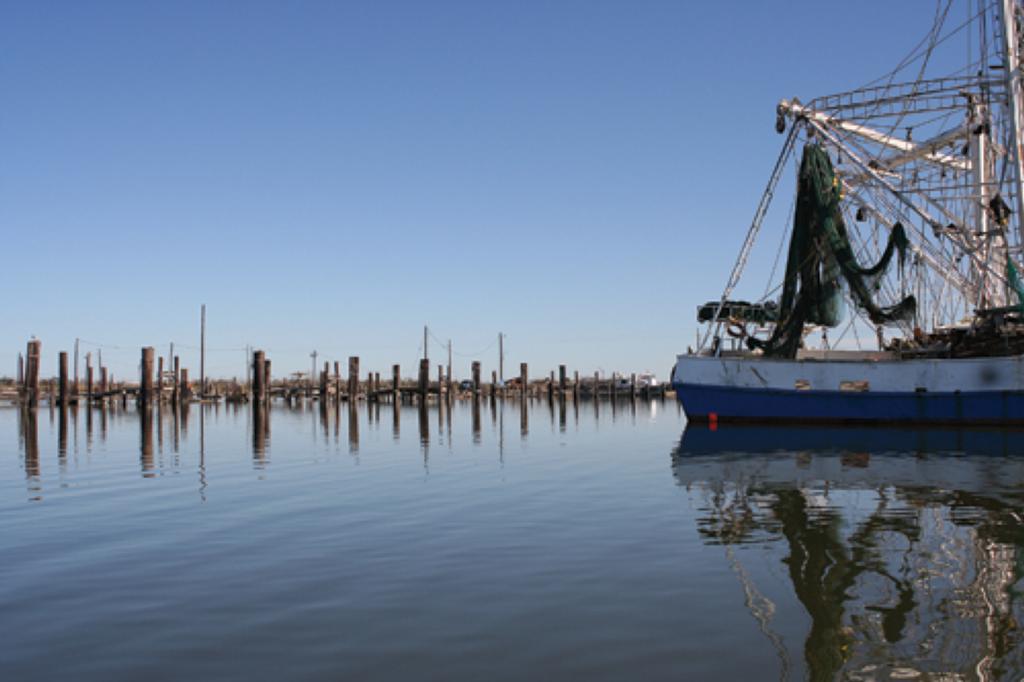 marshes of Louisiana. One great aspect about redfish and trout is their versatility.
“Trout and redfish are not only predators, but very flexible and adaptable predators,” Blanchet said, “and what we have here are some very productive marshes. I’ve never seen a starving trout or redfish. They will find something to eat. The only time you’ll see a trout in poor condition is at the end of the spawning season, and for inshore anglers, you don’t see that with redfish because those inshore reds are juveniles. So if the marshes are still productive, the trout and redfish populations will be good.”
According to Blanchet, the short term looks good for redfish and other marsh fishes. The long term outlook is foggy, however.
“No one is ready to give a long-term prognosis until we wait and see how things look after the spring green-up,” he said. “You don’t know how much marsh is going to re-grow because we’ve never seen a storm like this. We need to wait and see what mud levels are to see if vegetation will be able to return. We need to see what the nutria population will be so we can estimate vegetation consumption.
“There are whole bayous that changed course. You see mud flats that weren’t there before. There are areas where the marsh was picked up, flipped upside down and set down in other areas. The marsh looks like it has been plowed in some areas. And plants take a long time to respond to salinity changes.”
As Blanchet said, and many others have observed, many areas of the Louisiana marsh were wiped out and turned into open bays. This could certainly affect the productivity of the fishery. Sheltered ponds obviously hold more forage for “slot” reds, in terms of grass shrimp and mud crabs, and the overall habitat is better.
The future of the Louisiana red drum fishery, however, may not be bleak. Once again, the fishery has never experienced a storm quite like Katrina, so we don’t know what the long-term effects will be, and past hurricanes that hit the region, which were somewhat comparable to Katrina, did not significantly 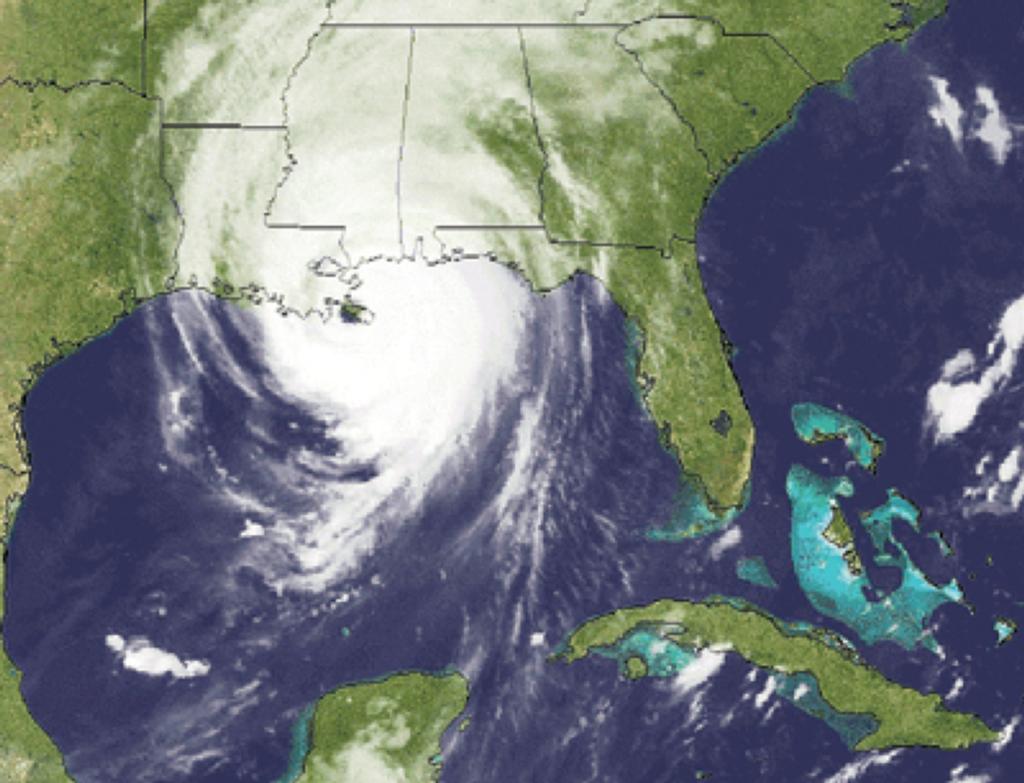 affect the fishery for good or for bad. Right now, the marshes are producing good catch rates, and recreational and commercial fishing pressure is very low. Yes, the marsh has gone through a major remodeling session, but the effect may not be bad, at least regarding the hardy redfish. For now, the marsh is still producing.
A personal perspective
For anglers familiar with the famous redfish marshes off Highway 23 that have not been to the region since Katrina made landfall, the scene cannot be described. In early February, I was able to join Wal-Mart FLW Redfish Series angler Ray Reiser of Gretna, La. – a suburb of New Orleans – for a trip to the 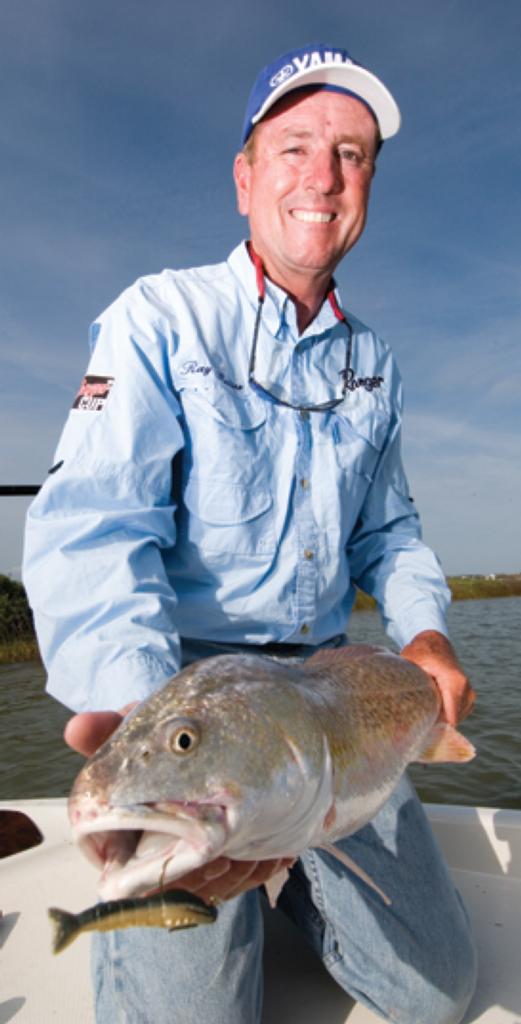 Venice area for a look at the destruction and a tour of the marsh. Reiser also owns a construction company and has surveyed more damage than most. In fact, he had already been down to Venice once to assess the devastation left behind by Katrina.
As we drove south down Highway 23 out of Belle Chase, Reiser told me of some of the effects the hurricane had on each community we passed through. The scene, however, did most of the talking. The destruction was catastrophic. Other than what has already been mentioned, I won’t even try to explain what I saw in terms of destruction to houses and other structures.
There were, however, a few interesting observations worth noting. A few houses remained intact, with the only visible damage from the outside being lost shingles. “See that house?” Reiser asked while pointing to one such house that sat right at the base of the Mississippi River levee. “That house is standing because the surge beat the strongest winds to this point and the house was covered with water by the time the most destructive winds got here. The surge didn’t wash the house away and then preserved it from the wind, but it’s obviously all gutted and will be torn down.”
While I had never heard of something like that happening, the damage to wood lots along the highway more or less proved Reiser’s description of the scene. Nearly every tree was broken off about 15 feet above the ground. That 15-foot mark was where the water line was when the strongest winds hit.
As we approached Empire, the four-lane highway got rougher and rougher. “The highway buckled because of the weight of the water on top of it,” Reiser explained. “Fifteen feet of water is heavy.”
While we continued south, both of us just looking at the damage, Reiser suddenly said, “The surge reached 20 feet right here.”
All along the road, construction crews drove up and down the Mississippi River levee, piling dirt in areas where the levee was blown out.
Near Empire, Highway 23 was repaved in a short section. “The river levee was blown out here,” Reiser  said, “and a new channel was cut across the highway and into the marsh on the east side of the road. The Mississippi River, as a result of the surge, almost cut a new channel.”
Shortly thereafter, a police barricade checked every vehicle. They inquired on everyone’s business for traveling through the destroyed area. They are currently letting anglers pass through. But make sure you have your boat registration with you, or they won’t let you bring boat your back out. To prevent people from simply going down to Venice and loading a boat found washed up on land and taking it home, proof of boat ownership must be shown.
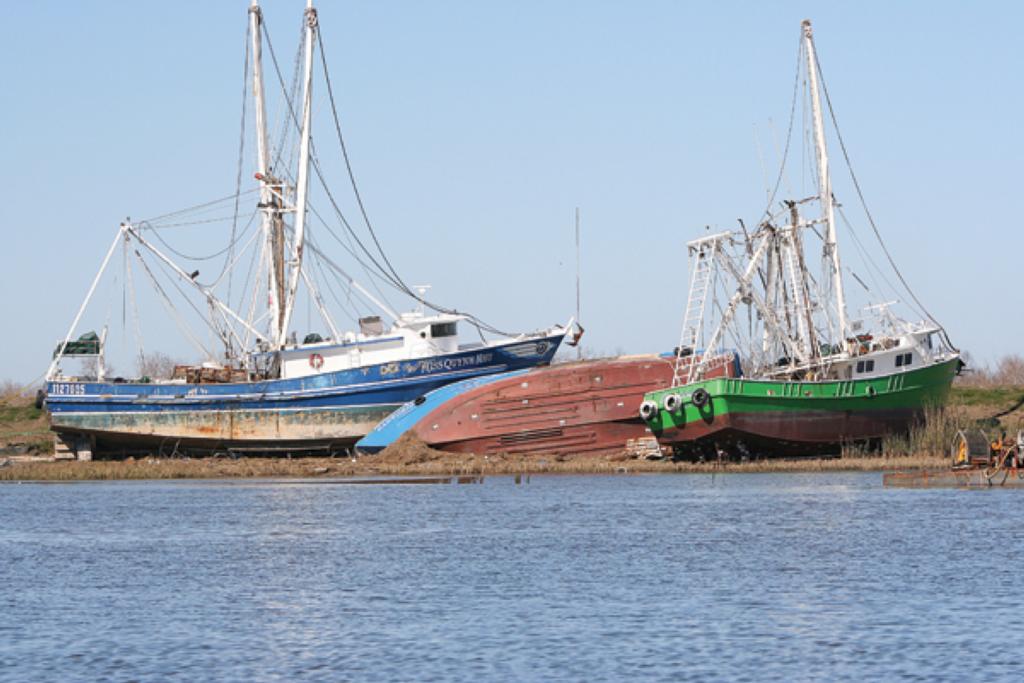
We launched at Joshua’s Marina in Buras, La. The marina, once a hot destination for saltwater anglers of all types, held a store and hotel. Also, prior to the hurricane, boat owners docked their vessels at Joshua’s, thinking the marina offered protection from the storm. Virtually nothing survived. Following the storm, boats, even big boats and barges, were scattered for miles and miles in the marsh, on levees or on the highway. While launching the boat, Reiser had to be careful not to hit a sunken boat.
We ran south about 10 to 15 miles down the Buras Dredge, fishing a few spots on the way. The water was chilly, frigid to a redfish, and the fishing was slow, but we were primarily checking out the marsh.
Immediately, Reiser noted, “the dredge channel is shallower. It used to be almost 20 feet deep right here, and now it’s only 12.” We found areas where Reiser estimated 10 feet of sediment had filled in the channel.
We saw reds busting baitfish along a bank and stopped to check it out. “This bank used to extend out there,” Reiser said while pointing 40 yards back toward the channel. “This place looks completely different.” While we eased down the bank, we passed an upside-down bunk bed, probably belonging to a child that used to live in a house five miles away.
A few fish hit that day, and we saw quite a few big reds tailing in creeks. It was clear that, although the marsh was significantly rearranged, the redfish were still there and there in good numbers. The region’s outstanding redfish population survived major hurricanes in the past. Let’s hope the effects on the marsh from this storm don’t adversely affect the long-term health of the most productive marsh region in the nation.