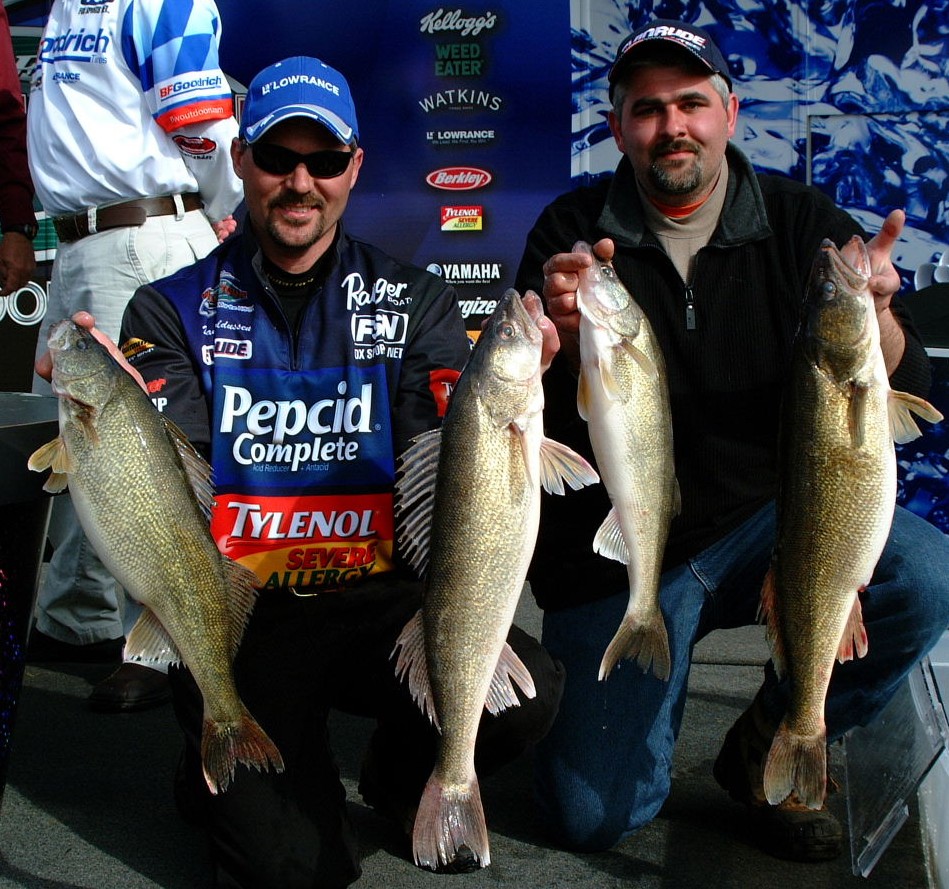
Q: Do you think you sacrifice a lot of smaller checks with your swing-for-the-fence strategy? If so, why? Would you ever consider changing your approach?
-WalleyeBob, Wadena, Minn.
A: I always have had this strategy during my entire fishing career, but never found myself scrambling to earn enough points to make the championship. I plan on being a little more cautious in the Devils Lake tournament this year. My strategy is going to depend on how many fish we can have in possession. If we can have eight fish like last year, I’m going to put a limit of 18- to 20-inchers in the livewell and then look for bigger fish. In order to make the championship, I need to have a good finish at this event, so a little change in strategy might be a good thing.
Q: Are you worried about what the VHS disease will do to Lake Winnebago? I’ve read that it could cut the walleye population down by as much as 25 percent. What can be done to manage this disease? How long will this be a problem? Are we looking at a five-year problem or a permanent problem?
-James D., Oshkosh, Wis.
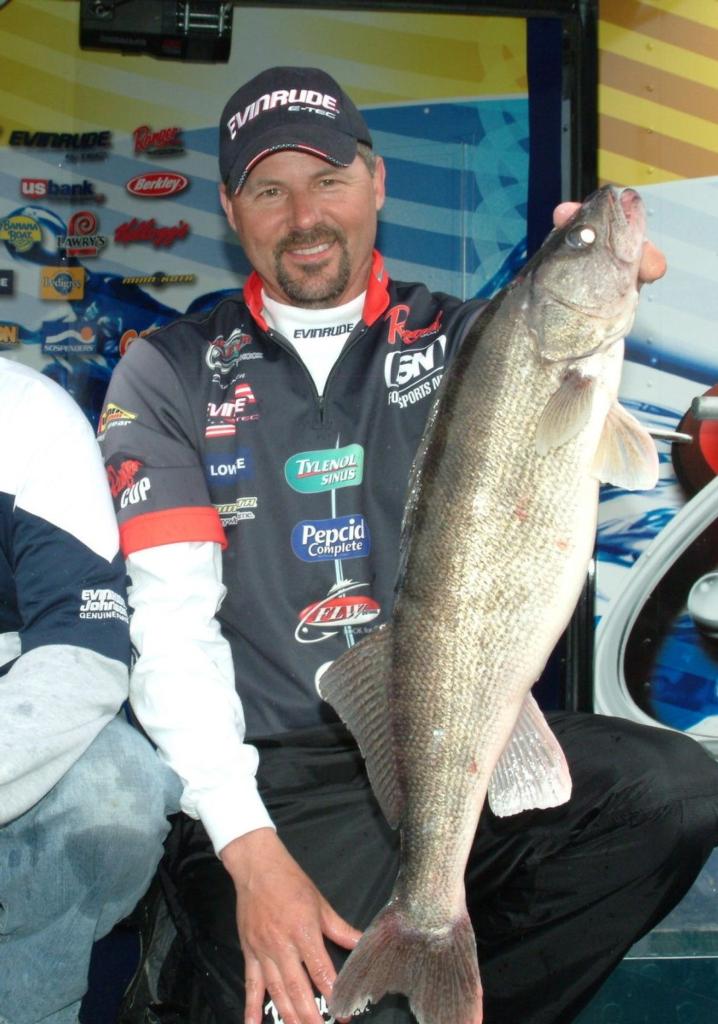 A: I’m very concerned with the VHS disease in the Winnebago system. I think until the DNR and fish biologists have time to do testing, it’s too early to tell how long term it could be. I hope this is like the CWD virus in deer where they can control it.
Q: Has the new rule banning on-the-water communication hurt your team’s overall success? It’s early, but it hasn’t been a great year for you guys thus far.
-2007 Co-angler of the Year
A: The new rule that bans on-the-water communication doesn’t hurt our success at all. The rule is enforced for all contestants in the tournaments. So long as everyone obeys the rule we have a level playing field. If teams are not following the rules then we are at a definite disadvantage, since we follow the rules as strictly as possible.
Q: Why do you excel so much with open-water trolling? Will Bays de Noc be one of those trollfests?
-Nathan Larson, Brighton, Mich.
A: I’ve been brought up on the Great Lakes mostly doing open-water trolling. Fishing in lakes where you’re consistently catching large walleyes helps build your confidence to get the fish in the boat. I can’t say that I never loose big fish, but I feel very confident that if I get the bites I will get them in the boat. I also think since Minn Kota redesigned the EM (engine mounted) trolling motors it has allowed me to become very precise on my trolling speeds. This new technology has also allowed me to be very quiet and not spook the fish.
 Q: Have you ever fished the Chippewa Flowage near Hayward for walleyes? I think I’m going to try it next weekend. Any suggestions?
-Josh Zwart, Shakopee, Minn.
A: Unfortunately, I have never fished the Chip. If I was to try it for the first time I would start by jigging and using slip bobbers in the wood. I would use leeches on the slip bobbers and jig with a crawler or piece of plastic.
Dean Arnoldussen is the all-time money winner on the FLW Walleye Tour. To date, the Appleton, Wis., native has earned over $575,000 in FLW Outdoors competition alone. His largest payday came at the 2001 Walleye Tour Championship on his home waters of Green Bay. There Arnoldussen earned his first victory and captured the largest purse in the history of professional walleye fishing. An open-water expert, Arnoldussen also claimed victory at the 2005 qualifier on Lake Erie. With two victories and five top-10 finishes in his Walleye Tour career, Arnoldussen is one of the best in the sport. His sponsors include Ranger Boats, Evinrude, Lowrance, Minn Kota and Pamp’s Outboard.