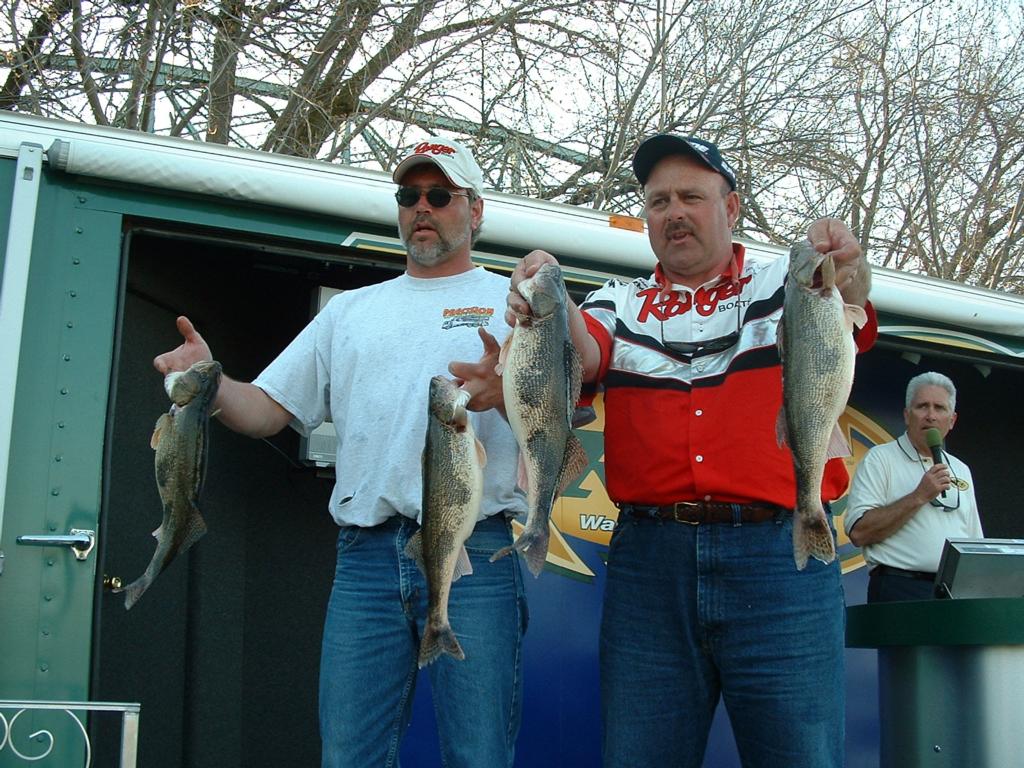
Q: How do you know which boat to choose? Lund? Lowe? Ranger? I am an avid weekend walleye fisherman. Which boat will give me the most bang for the buck?
-Bud Wehrly, Columbus Grove, Ohio
A: Bud, as you may or may not know, I am sponsored by Ranger Boats. But as I have told numerous people over the years, I will always run a Ranger, even if I am not sponsored by them, because I always buy products that offer the best value. I currently own two Ranger products: a 2007 Evinrude E-Tec powered 621 Fisherman that I fish tournaments out of and a 2007 E-Tec powered Ranger 1860 Angler that I bought for my wife and two boys to fish from when I am on the road.
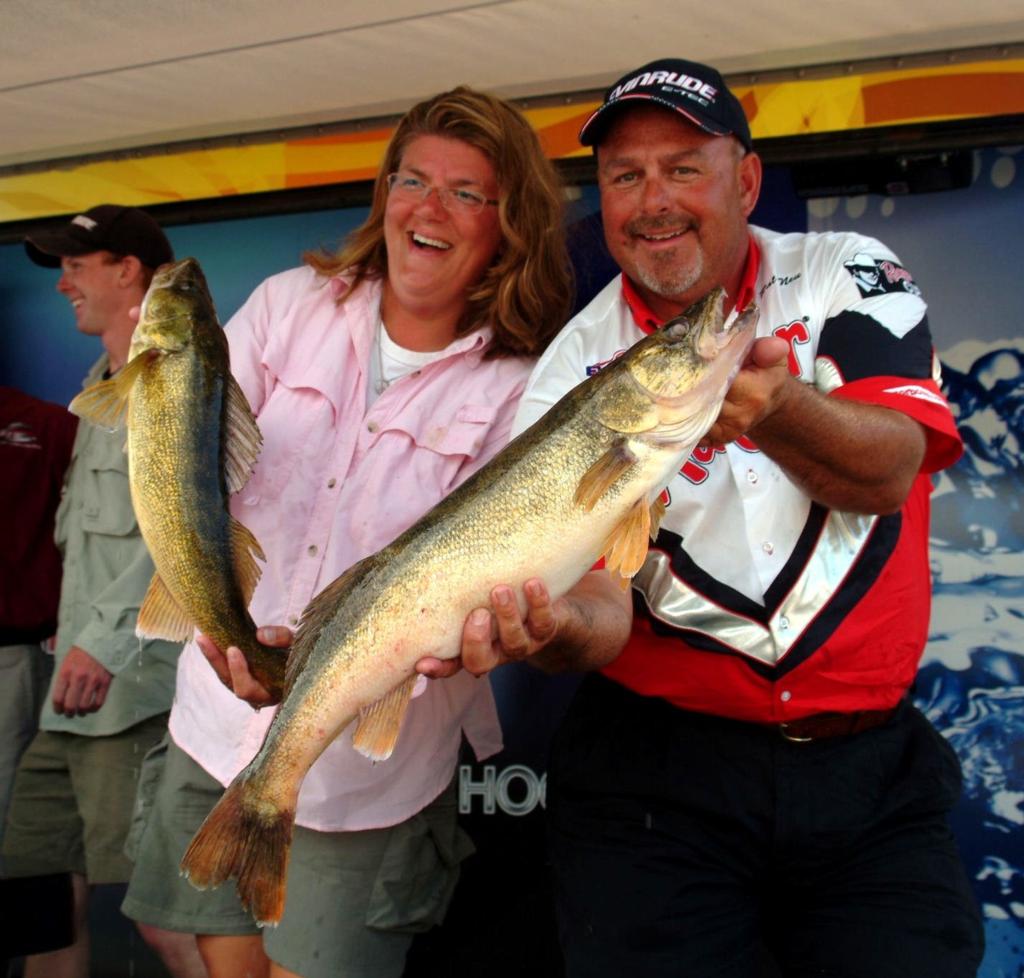 I purchased that 1860 this spring from a local Ranger dealer, Pamp’s Outboards in Green Bay, Wis., and I have been extremely impressed with the boat. The Angler Series will be offered in a 20-foot model in 2008, and that may be the perfect fit for you, because you can use it on inland waters and it will be well suited for use on big waters like Lake Erie. The Angler Series offers the performance and cosmetics of a glass boat at a price comparable to that of the competitor’s aluminum hull models.
Q: I recently tried three-way rigs for the first time. My question is this: How long of a leader do you use when tying up floaters? Also, I was getting snagged a lot using the bell weights. I’ve read articles that say to use bottom bouncers, but is that still considered a three-way?
-Sonny Loepke, Chicago, Ill.
A: Sonny, three-way rigs are an extremely effective way to target fish that are hanging near the bottom in rivers. They are effective when used to pull live bait upstream with both a plain hook and a floating jig. The leader behind the three-way can vary, but typically I run the floating jig or hook 24-36 inches back from the three-way, and I usually run a dropper to the bell sinker at about 6-12 inches. Water clarity and weather conditions can affect the combination I end up using on a particular day, but a 9-inch dropper with a 30-inch leader would be a good place to start.
If you are in a situation where the bottom is rocky or full of snags, you can try going to a Lindy Snag Proof sinker as a weight for your dropper, or as you mentioned, you could try a bottom bouncer. I use the latter quite frequently with good results. I will tell you that in heavy current it is hard to beat a bell sinker. The shape of that sinker allows you to keep your presentation closer to vertical, which will help you keep from becoming snagged as frequently. I can also suggest that you use a lighter line on the dropper than you use on the line from your rod, so that when you do become snagged, the line will break at the dropper.
There are times when I use three-way rigs to troll floating crankbaits in a river system. Again, depending upon the conditions, I run stickbaits and/or small crankbaits behind a three-way. With this presentation I use a 36- to 48-inch lead to the crankbait and a dropper lead of 12-18 inches. I vary the weight size on the dropper and the length of the dropper to match the current and the depth I am fishing. Next time you head down to Spring Valley to try for some of those big saugers, try running a jointed crankbait off a three-way rig with a 12-inch dropper and a 36-inch lead to the crankbait.
 Q: Any particular reason why you’ve done so well recently on the PWT but have struggled on the Walleye Tour?
-Phil T., Shawano, Wis.
A: Phil, that’s a great question, and trust me, with my competitive nature, this has been a tough year for me. I think there are a couple of factors that have contributed to my finishes this year on the FLW Walleye Tour. The first is that the first three Walleye Tour events came on the backside of a PWT event. Those back-to-back events are tough on any of us who fish both circuits, both physically and mentally. By the time we get to the last day of the second event, we will have been on the water for at least 15 straight days without a break. I think 10 years ago, at age 39, I could have handled it better than I can today at age 49. I know those three back-to-backs have affected my finishes.
The second reason I think I have struggled on the Walleye Tour this year is that the first three events were all on water we had fished in past years. The result is there are very few new spots that you can find that others haven’t already found. The Walleye Tour contestants, for the most part, are great anglers, and on any given day, there are 50 to 70 anglers competing that have the ability to win. So to fish against those anglers without an edge makes it difficult to win. I am confident that, on new water, we won’t miss many bites, and as such I will be more competitive. The 2007 season is behind me, and I am already looking forward to 2008.
Q: What do you think of next year’s proposed FLW Walleye Tour schedule? I’ve heard some guys want the “over” fish on Mille Lacs completely taken out. If that happens, it basically becomes a small-fish tournament. Why would anyone want that?
-Scott, Forest Lake, Minn.
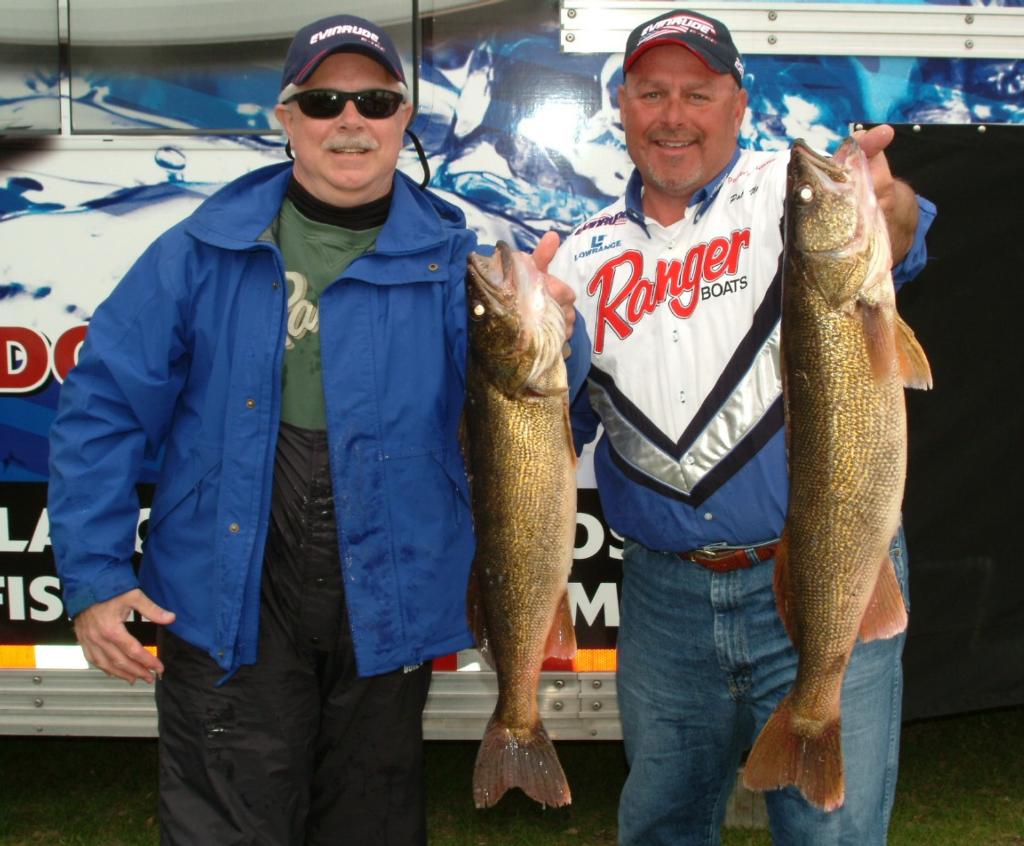 A: Scott, the tenative 2008 Walleye Tour schedule looks great to me. As I mentioned above, I love new water, and 2008 will bring us to two new venues: Lake Sharpe and Lake Mille Lacs. The bite on Lake Erie at Port Clinton in April will be on fire, and the Bays de Noc tournament in late July will be a better bite than it was in early July this year. Lake Sharpe in the spring will be a real shootout, with the angler who has the ability to take the chances needed to win a no-cull slot tournament probably coming out on top. In reality, the best angler will most likely win at that event.
Mille Lacs, on the other hand, will become a tournament where one lucky bite will win the event if the one fish over 28 inches stays part of the tournament limit. My experience there is limited, but the local Walleye Tour anglers I have spoken to agree that the fish over 28 inches are nearly impossible to target. As such, if we end up going there, I feel the FLW staff should consider an event at which a tournament limit of fish between 15 and 19 7/8 inches are allowed. The anglers in the event will still catch large numbers of quality fish from 20-27 inches, but with the lucky fish of over 28 inches out of play, the best anglers should prevail.
Hailing from Forestville, Wis., Pat Neu is one of the most accomplished walleye pros in the game. In 2005, he won the FLW Walleye Tour event on Green Bay. In doing so, he set the all-time four-day combined weight record in FLW Outdoors history with 20 walleyes that weighed 111 pounds, 8 ounces. To date, Neu has over $189,000 in FLW Outdoors earnings and five top-10 finishes. Neu also captured victory at the 2006 PWT Regional Series event on Bays de Noc in Escanaba, Mich., and finished the season as the PWT Rookie of the Year. A 1981 graduate of the University of Wisconsin-Whitewater, Neu is sponsored by Ranger Boats, Evinrude, Lowrance, Minn Kota, Cannon, Off Shore Tackle and Pamp’s Outboards.