Somewhere in a dimly lit tavern, pub or alehouse, a bartender rings his bell and beckons patrons for their final order. Somewhere along Florida’s Gulf Coast, fall’s cooling hand prompts a similar notion for a host of hungry fish.
With days growing shorter and winds becoming cooler, saltwater fish know that feeding heavily now improves their chances of surviving winter’s approaching leanness. Predators will chase forage wherever they can find it, but one of the most spectacular displays of fall feeding occurs on Florida’s Gulf beaches. Here, cool autumn mornings find white water frenzies sprinkled with leaping prey and crashing predators.
Those threadfin herring, pilchards and juvenile Spanish sardines fortunate and fast enough to have run the gauntlet of inshore predators through the summer months now find themselves facing the challenge of traversing open Gulf beaches en route to their southern wintering grounds. Exiting bays and estuaries, these baitfish form huge migration groups that ball up when they meet outside the passes.
 Sometimes, nature honors the safety-in-numbers strategy; other times, aggregations simply slap a big, neon “Now Serving” sign over the masses. Truth be told, most of the baitfish gathering in the Coastal Gulf won’t see Christmas Day. That’s because predators of every make and model know that a) the time for fattening up is rapidly diminishing, and b) their chow line is making tracks for destinations elsewhere.
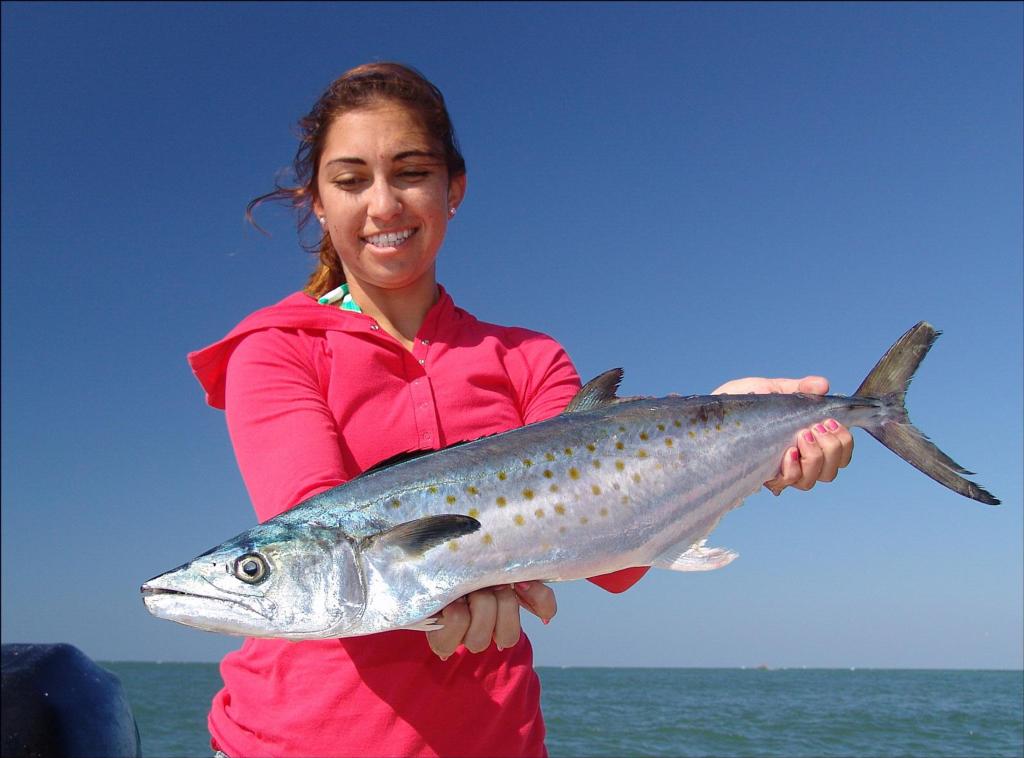
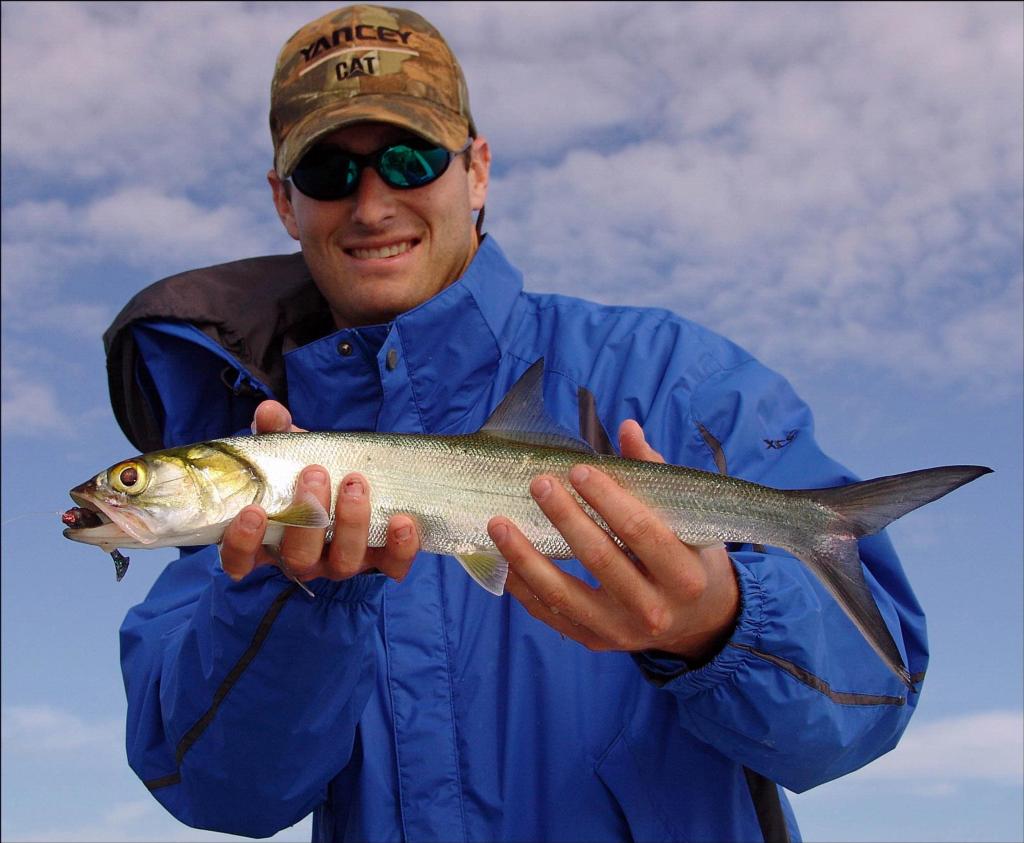
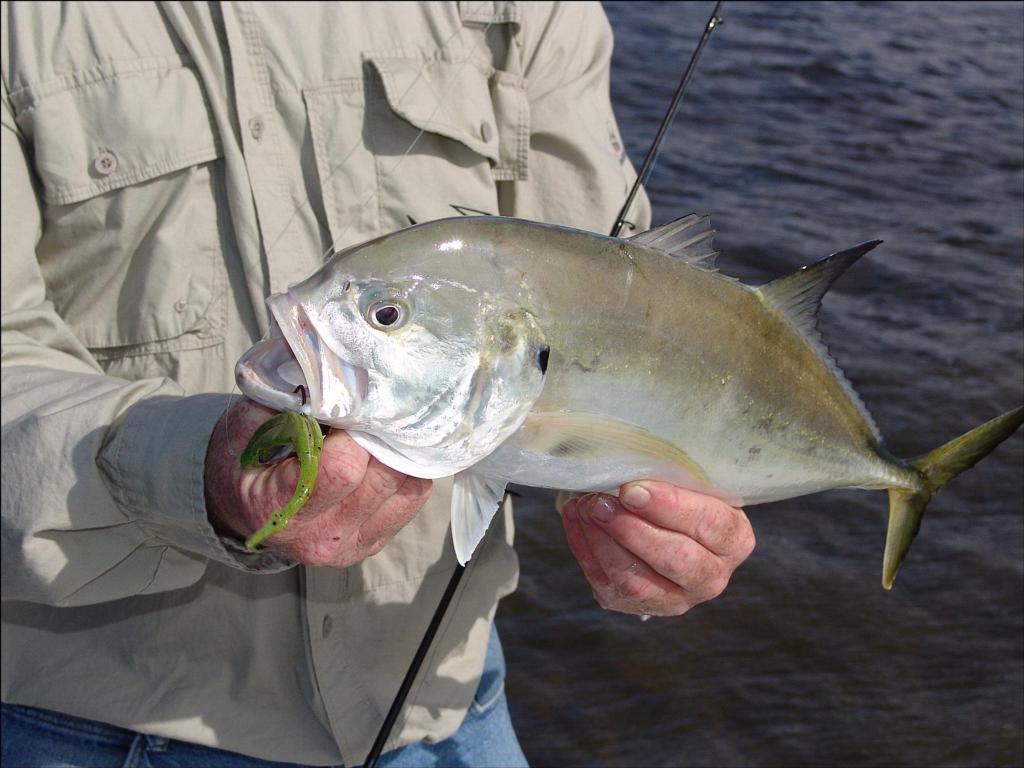
This annual occurrence congregates a formidable lineup of gamefish including tarpon, jacks, Spanish mackerel, kingfish, little tunny (bonita), sharks, cobia, ladyfish and even jumbo blue runners. Fish come from inshore, nearshore and offshore waters with one thing on their mind – filling their bellies as fast as they can. Finding a briny buffet in 10-20 feet of water certainly fits that plan and when the chewing starts, you’d practically have to fish without hooks to avoid catching something.
Finding the action
Bait balls will often hold over rocks, along channel edges and around coastal structure such as jetties and piers. The latter offers landbound anglers greater-than-usual access to a plethora of coastal species in close proximity. Tides will move the bait in and out during the day and that’s an important factor for the fisherman on foot. Boaters, on the other hand, have more flexibility to move with the moving bait.
Early mornings typically offer the best show, as the rising sun illuminates the shallow beach brine, thereby making the forage easier for predators to locate. Once the show starts, it’s a non-stop food fest that’s often as entertaining to watch as it is to fish.
Keep an eye on the school to see if there’s any discernable direction to where the gang is moving. With so many different species herding the bait like a chaotic cattle drive, the action will surface, subside, and pop up as far as a football field away.
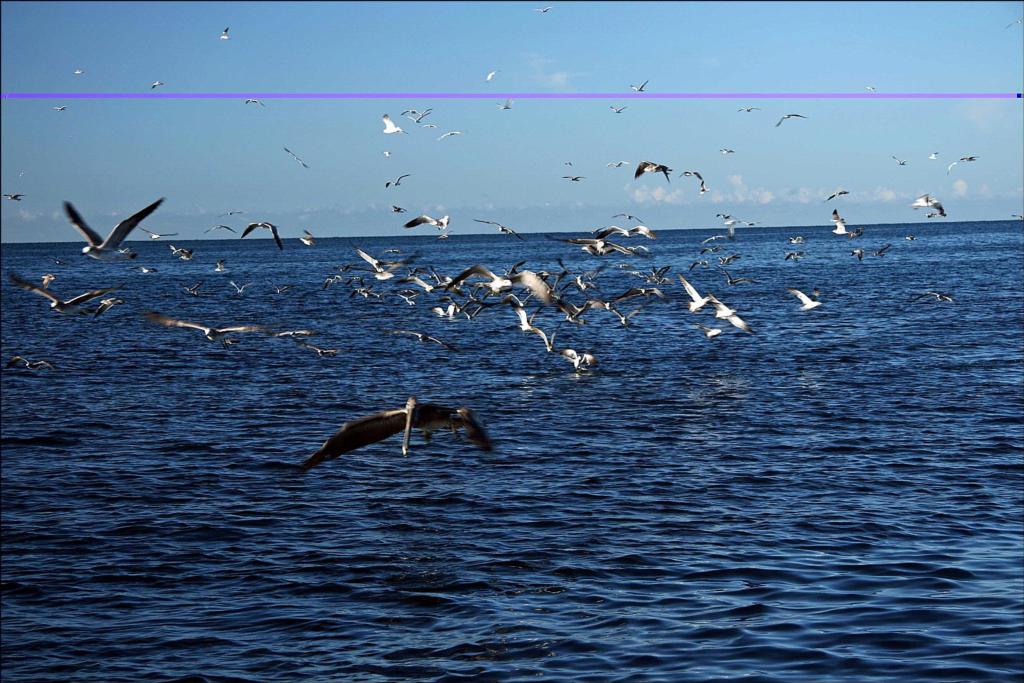 Between appearances, there’s no firm way to pattern where and when the show will emerge, but scan the sky for clues. Seabirds such as pelicans, terns and gulls will watch the bait school from above and dip down to grab their share of live and freshly chopped baits. Remember, fishermen play for fun, but birds do it for a living, so follow the feathers.
Hooking up
Fall baitfish migrations govern much of the seasonal gluttony, but anglers will find increasing receptiveness to artificials – especially as natural forage starts to diminish. From a time-management standpoint, casting the imposters allows you to cover the water more quickly, probe different depths and try various presentations to determine what will flip the food switch.
Noisy topwaters fit right into the surface mayhem, so don’t hesitate to walk-the-dog or chug away. Shallow diving plugs with rattles are a good choice for pulling predators from the outskirts of a school. For optimal versatility, throw ¼-ounce bucktail jigs or lead heads with plastic shad tails or soft plastic jerkbaits. With this route, you can quickly switch colors and shapes until you find what the fish prefer.
If you can get close enough for a good toss, a live baitfish under a cork will attract immediate attention. Of course, when a group of highly competitive fish turn their appetites toward the huge supply of natural forage, one might wonder why a hooked bait or an imposter would even stand a chance of getting noticed. In a word: “vulnerability” – work your baits and lures around the outskirts of the mayhem and your offering resembles a wounded straggler.
 Tarpon are probably the most fickle of the bunch, but a well-placed streamer or tarpon bunny flies presented on sink tip line with a 12-weight outfit often meet with approval. Jigs, shallow diving plugs and swimbaits will also put a silver missile in the air.
Artificial crabs may also work, but the real thing is better. During the commotion of beach feeding, tarpon and other fish will stir up the bottom, thereby flushing out a buffet of normally hidden snacks. If you spot small crabs floating at the surface, scoop them up, rig them on a 5/0-7/0 hook and fling them toward the active area.
If wind challenges your presentations, rig a weighted cork above your leader. This will improve your casting distance, keep your bait in the strike zone longer and allow you to drift your bait into the fish.
Mackerel mayhem
In the fall baitfish bash, king and Spanish mackerel are the breakout players that often create their own game. Both will mingle with other predators, but the speed with which mackerel move often serves as a natural segregator.
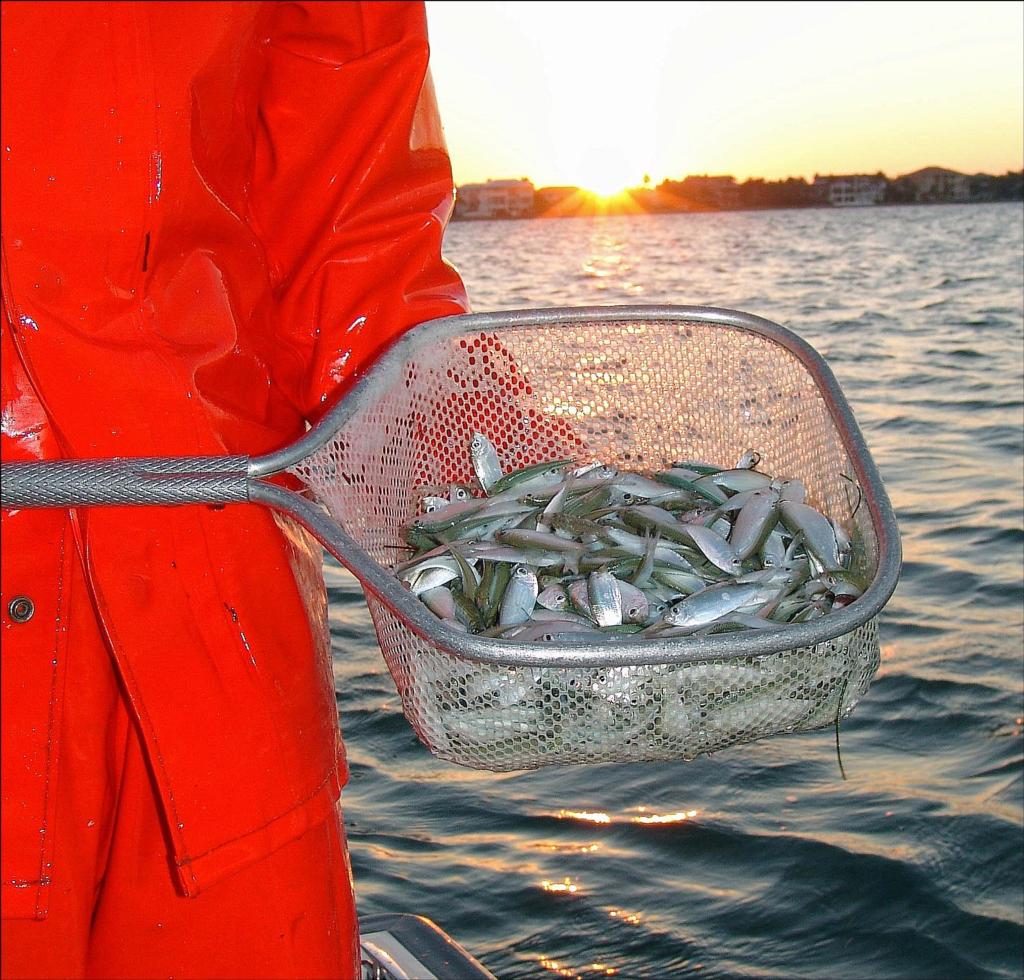 Net a bunch of the smaller baits that huddle inside the passes, usually against docks and seawalls, and use these tiny silver shards as live chum to hold the toothy tyrants near your boat. The key is to keep the chow coming. Mackerel will swarm an area as long as they find consistent food sources, but as soon as the chow ends, so does the mackerel’s interest.
Use an ice scoop or a plastic “chum bat” – essentially a plastic t-ball bat with the fat end cut off – to sling a couple dozen chummers behind your boat. With the waters seeded, just free-line live baits on simple wire rigs comprising an 18-inch length of No. 4 wire with a 2/0 hook at one end and a swivel at the other. Medium-heavy spinning outfits with 20-pound main line and three feet of 30-pound fluorocarbon leader will handle any mackerel you find on the beach.
While mackerel fishing, you’ll often catch blue runners and ladyfish, but don’t toss them – keep these hefty baits for the big kingfish that occasionally hunt the coastal shallows. Rig runners and ladies on stinger rigs with wire leaders and troll them around the perimeter of bait schools. When the rod goes off, it’s usually a fish worth the effort.
Beach fishing tips
Don’t chase fish: Staying with the fish and working from a comfortable distance can provide hours of nearly nonstop rod-bending action. Firing up the engine and running to the edge of a feeding frenzy each time the action surfaces will put the fish down and likely scatter them.
When tides and/or winds push the fish out of range, make a broad loop out and away from the school and reposition upcurrent so you drift into range. When the fish are chewing, most are so focused on filling their bellies that they either won’t notice or simply tolerate a dead boat.
Respect other boats: All it takes is one boat to run over the bait pod to put it down for hours. Pay attention to where adjacent boats are fishing and don’t crowd fellow anglers. Likewise, avoid cutting off another boat that is moving into position for a drift.
Remember the regs: When fish are breaking, rods are flexing and reels are spinning, it’s very easy to get so caught up in the euphoria that you lose track of what you’ve caught. No problem if you’re strictly catching and releasing, but if you’re keeping fish for dinner, stay on top of what goes into your cooler. Pleading the “I forgot” case to a marine patrol officer won’t meet with anything close to mercy.
 Keep everyone out of trouble with one of two strategies. First option: Assign one person to monitor and record who catches what. When you max out a bag limit, the catch warden gives the “No More” announcement and all subsequent catches of that species go back into the drink.
For a personal strategy, I employ Ziploc storage bags with dried beans ranging from four to six different varieties. Identify which bean represents each species and give each angler the appropriate number of beans to match the bag limit for each species. Each time an angler keeps a fish, he tosses one bean of that type overboard. When you run out of a bean variety, you stop keeping that species. Simple, cheap and environmentally sensitive, this strategy puts the responsibility on each angler, but the captain should still maintain oversight to make sure everyone remains legal.