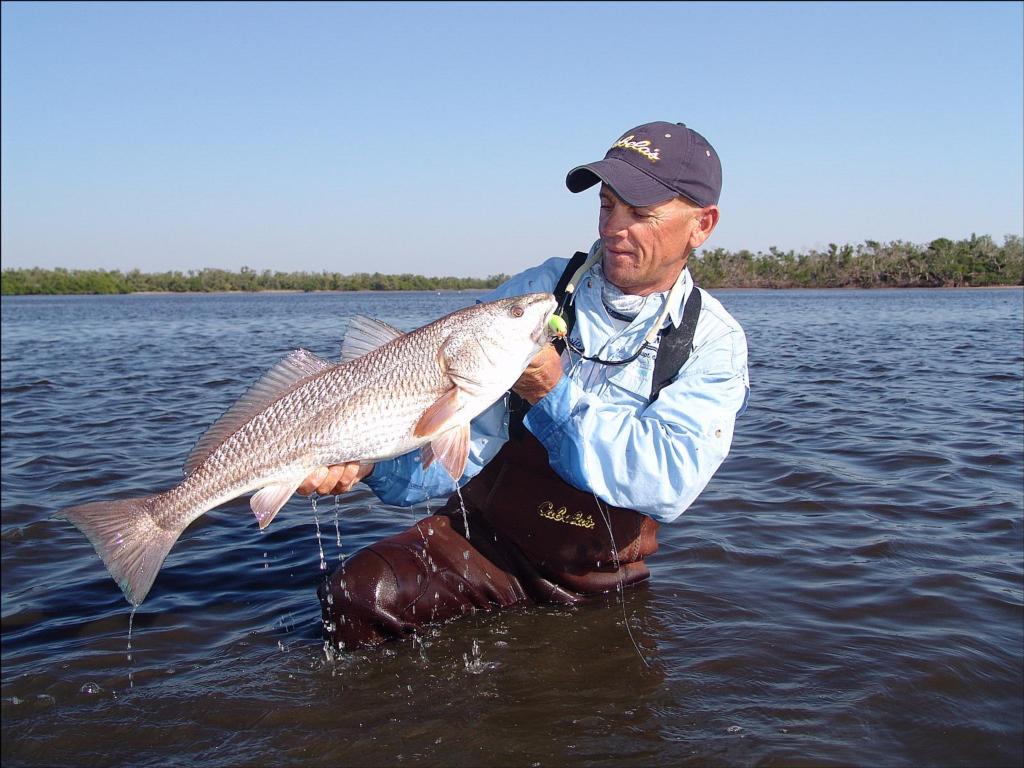
The herd rumbles and eager patrons line up for the sea’s version of a free lunch. Such is the annual scene when massive schools of mullet gathering in Florida’s Gulf Coast backwaters create a briny buffet for a host of prized gamefish and a target-rich environment for the anglers who seek them.
Mullet traverse Florida’s inshore waters throughout the year until prespawn grouping instinct draws them into large schools. From mid-November through February, these big-eyed vegetarians gather in bays and estuaries in preparation for offshore procreation that follows each major cold front. As they move across shallow grass beds, the mullet stir up shrimp, crabs and baitfish hiding in the tender blades. Recognizing this, snook, trout and redfish mingle with mullet to pick off these easy meals.
Occasionally, the smaller and weaker mullet may fall prey to the largest of the predators, but this is more commonly a relationship of mutual tolerance with gamefish more interested in the byproduct of mullet movement. For the mullet, this is a fine arrangement as crustaceans and baitfish are about as appealing to them as gum drops are to a woodpecker.
Florida’s top inshore gamefish are well versed at capturing prey independently – they do just fine throughout the rest of the year. However, even top-shelf predators are opportunists at heart. That said, the prospect of cashing in on someone else’s effort sits well with these fish.
Locating a food source almost always means locating predators. Fall mullet schools exemplify this, but certain conditions illuminate the scene and create an ideal scenario for fishing on foot.
Walking (not so) tall
During higher tide stages, a trolling motor, push pole or wind drift may bring you within casting range of mullet schools, but don’t push your luck. Although the mullet’s rumbling masses shield their guests and heighten their comfort level, stealth matters.
Constant threats from dolphins, ospreys, eagles and sharks keep the gang so wary that they’ll literally boil the surface with white-water scrambling if a bird’s shadow crosses their face. Intrusive anglers who overlook this fact can blow the game even before the first cast. Bottom line: spook the mullet and they’ll take your gamefish with them.
Maximize the fall mullet school potential – especially that of extreme low tides – by slipping into a pair of neoprene chest waders and stepping into the fish’s neighborhood. Sneak into the hot zone and you’ll have a captive audience that provides outrageous action for several hours, until the tide returns.
Effective wading starts with minimal gear. You don’t need your entire tackle bag, so carry a handful of trusted lures in a small chest pack or place them in a tackle tray or Ziploc bag stuffed into the front of your waders (more on this shortly). Sticking with one rod works best, but if you want a backup, use a wading belt with a rod holder or stick the spare rod in the back of your waders.
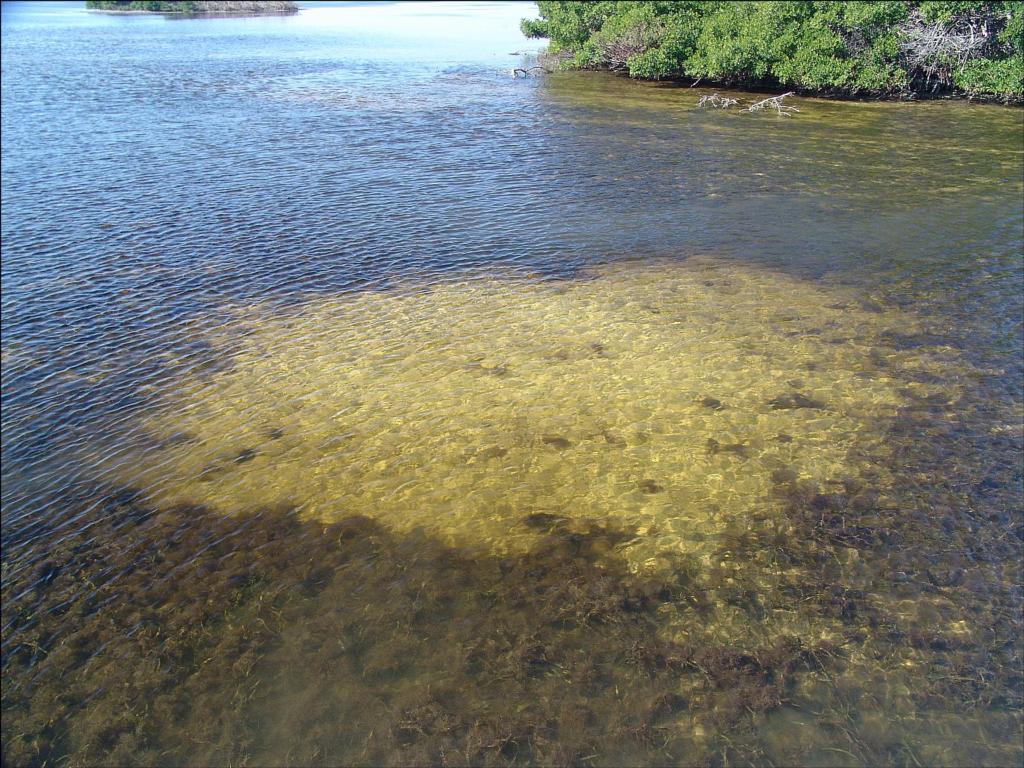 As you walk, stick to the lighter areas as much as possible. Yellowish-white bottom means sand, whereas green or brown means muddy grass beds. The latter are softer and therefore less stable footing, plus you’ll stir up a mud trail that can alert the fish to your approach.
Consider also that the distance you walk from the boat will be the same upon your return. Front end enthusiasm typically overlooks back end fatigue, so make sure you conserve enough energy for the return trek. For extended walks, stick a bottle of water and a light snack in your waders or shirt pocket.
Another option: Secure a bow line to your boat and tether the other end to your waist. A floating boat tracks easily as you walk and remains conveniently close for when it’s time to leave.
The meal deal
Looking at what the mullet kick up, it’s easy to see the promise of free-lining plastic shrimp into the pack. Live shrimp is no waste but artificials allow you to cover more area with probing casts to locate where the gamefish are positioning within the school.
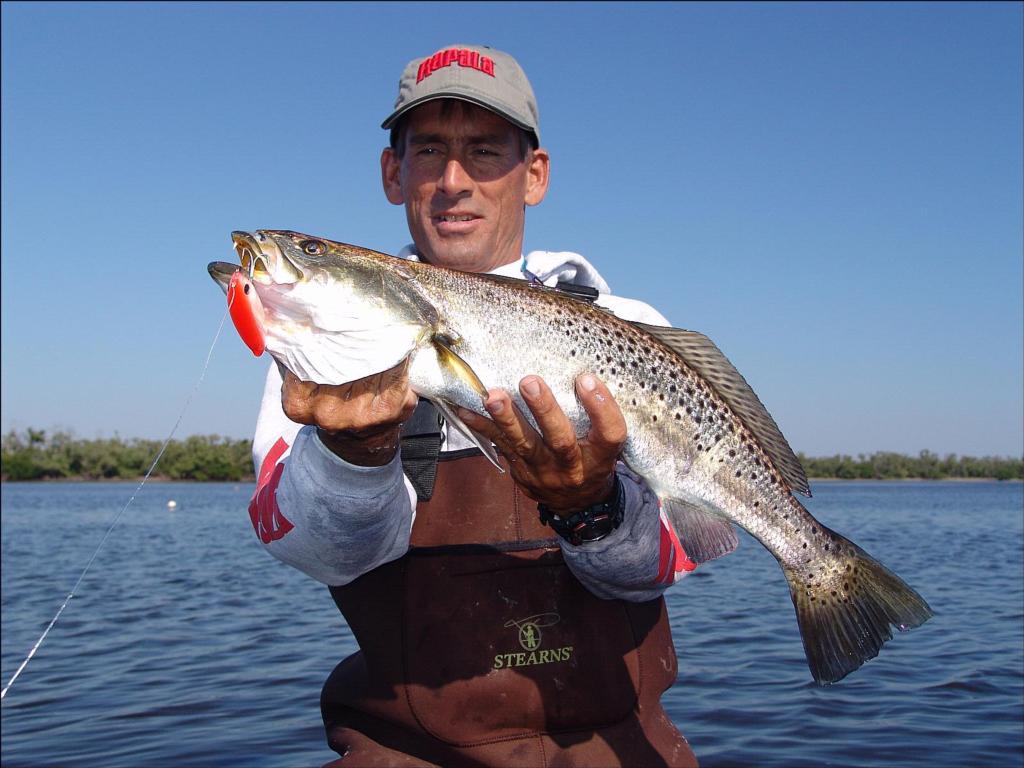 Grubs, curl tails and soft plastic jerk baits on 1/8- to ¼-ounce jig heads or 4/0 weighted hooks offer the optimal blend of diversity and versatility. Experimenting with different sizes, shapes and colors takes only a few seconds to switch plastics. Darker colors like avocado, green pumpkin and root beer are typically your best bet, but sunny days may find gold, silver flake and glow patterns producing. Weedless gold spoons may also work in bright conditions.
Scented soft plastics like Berkley Gulp! or Exude can’t hurt, but with all the ruckus of a mullet school, the aroma gets pushed around and diluted. However, when the action is slow – during times when the mullet are scattered – dead-sticking a scented bait or a plastic body doused with a scent attractant will generate some interest, particularly among redfish.
For all-out fun, topwater plugs can produce some of the most vicious strikes of the mullet game. Despite the conventional wisdom about mullet being spooky, the fish are pretty tolerant to plugs bumping their backs because they get a lot of that from schoolmates. A few may jump from fright, but after touching down, a large splashy plug just looks like a baitfish scrambling for cover. And that brings out the beast in big trout, snook and even a hostile redfish.
Whatever you throw, 7- to 7 1/2-foot, medium-action spinning outfits with 10- to 15-pound braided line will allow for long casts with optimal sensitivity. Thirty inches of 20-pound fluorocarbon leader improves strength and stealth.
Finding the fish
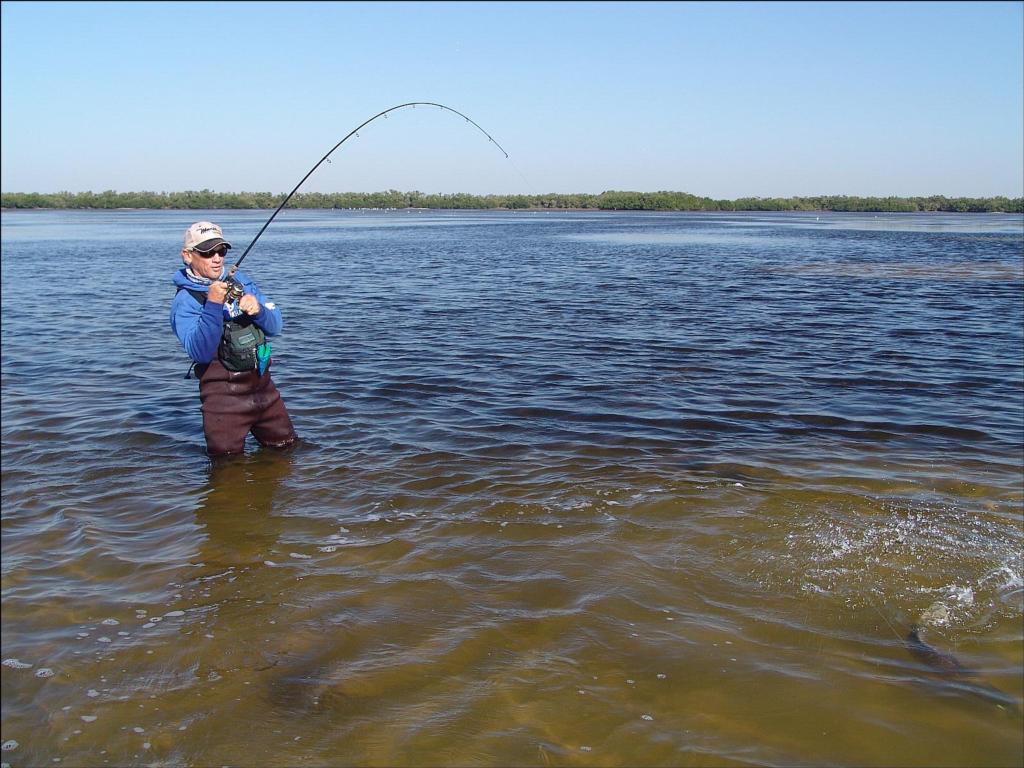 Inshore anglers plan their trips around tide schedules, as water level influences when and where marine fish position. Late fall-winter seasons see the year’s lowest tides, several of which drop well beneath average. Add the hard north winds that accompany seasonal cold fronts and suddenly anglers will find outgoing tides shoved farther than normal and incoming tides road blocked by the big blow.
This dramatic drop in coastal water levels lays bare miles of shallow grass flats and sand bars bordering backwater holes, depressions and troughs. These inner sanctuaries will retain several feet of water during the extreme low tides and with their perimeters high and dry, any fish that held their ground will be trapped until the tide returns. There’s usually plenty of room to roam, but mullet schools and their accompanying predators are easy picking for anglers who can reach them.
Now gamefish follow mullet beyond isolated bays and they’ll stick close to the herd through high tide. Also, anglers can certainly catch gamefish at full tide. However, the low-tide bonanzas offer matchless opportunity, as shrinking the playing field reduces the amount of hunting involved.
The last half of the outgoing tide and the first of the incoming tide usually offers the best action. You’ll catch fish at either stage, as long as the water’s moving. When strong winds make it tough to determine what the water is doing, just look at the sea grass and note which way the blades are leaning.
Wading birds like herons, great egrets, wood storks and roseate spoonbills can also reveal some promising areas. A spot that holds the birds’ attention through a low tide clearly abounds in food – and that will also keep gamefish in the area.
Wading pointers
Stay warm: Wader styles and designs vary, but don’t skimp. Hypothermia remains a constant winter threat, even in Florida waters, and neoprene offers the best choice for affordable waders that will protect you from the chill. Waders of 3 millimeter thickness will suffice, but you’ll appreciate 5-mil waders on those brutally cold mornings. You can always roll down the tops of heavy waders, but you can’t make thin waders any warmer.
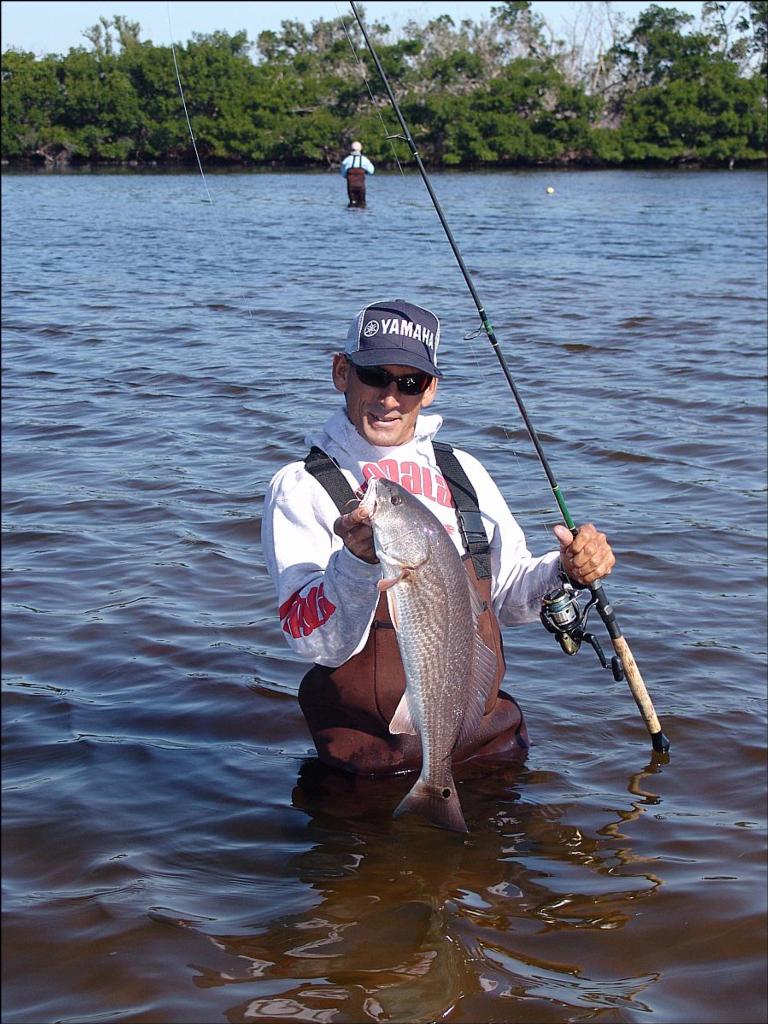 Foot style: For Florida’s coastal waters, go with stocking-foot waders slipped into wading boots. In soft, muddy bottom, feet tend to slip out of boot-foot waders when oatmeal-type terrain grips your soles. Trying to wiggle free compromises balance. In a pinch, you can make boot-foot waders a little more mud-resistant by wrapping heavy-duty rubber bands, duct tape, or strips of inner tube around your ankles.
Keep it shallow: If a deep cut separates you and a group of fish, spending a few extra minutes to walk around the perimeter beats trudging through and hoping your waders are high enough. Getting a little damp is just part of wading, but if the waterline breaches your waders, you’ll face the double dilemma of wrapping your body in cold water and increasing your weight to the point of tipping into the chilly drink. Considering that the mullet fishery occurs deep in the backwaters, generally a significant distance from human eyes and ears, mishaps can prove tragic.
Escape plan: The buddy system provides the best safeguard against mishaps, but for solo missions, keep a knife handy for slicing open the neoprene in case you slip and fill up your waders.